Miss North Maths

Full paper G1

Paper 1 style · Non-calculator · 80 marks · 1 hour 30 minutes

How it works. Type each answer in its box. Tap any underlined word on the paper to see what it wants you to do. Stuck? Open the fact sheet under the question. When you finish, press Mark my paper, then check each question against the mark scheme and give yourself the marks you earned, including method marks.

1 Change 70 centimetres into millimetres. millimetres (1) 📄 sheet: Converting units (Total for Question 1 is 1 mark)

2 Simplify g + g + g + g + g (1) 📄 sheet: Expressions (Total for Question 2 is 1 mark)
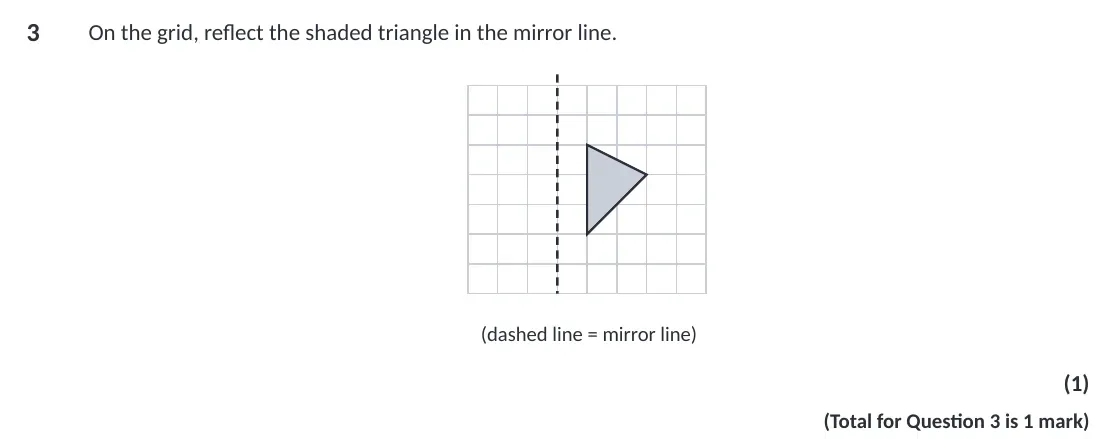
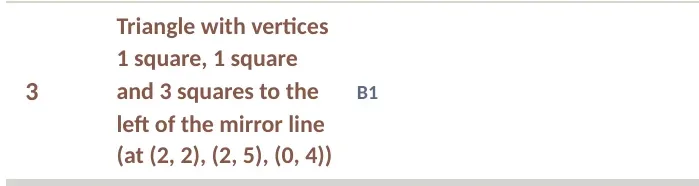
3 On the grid, reflect the shaded triangle in the mirror line. (dashed line = mirror line) 📄 sheet: Reflection (1) (Total for Question 3 is 1 mark)
4 Write down the value of the 8 in the number 18 053 📄 sheet: Place value and number facts (1) (Total for Question 4 is 1 mark)
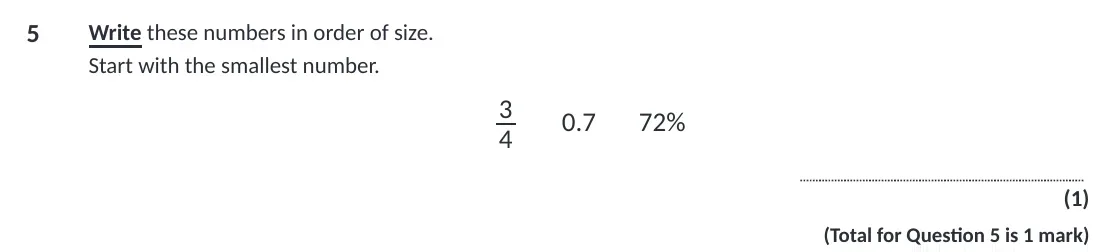
5 Write these numbers in order of size. Start with the smallest number. 3 4 0.7 72% (1) 📄 sheet: Ordering fractions and mixed lists (Total for Question 5 is 1 mark)
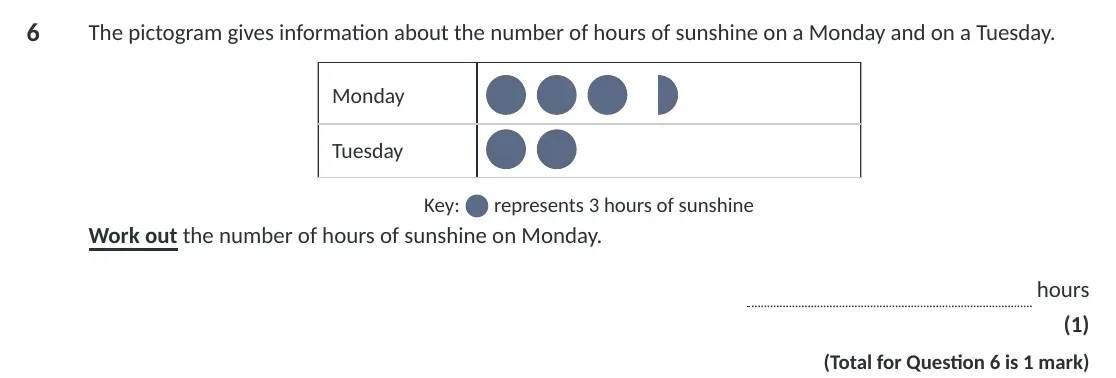
6 The pictogram gives information about the number of hours of sunshine on a Monday and on a Tuesday. Monday Tuesday Key: represents 3 hours of sunshine Work out the number of hours of sunshine on Monday. hours 📄 sheet: Pictograms and tally charts (1) (Total for Question 6 is 1 mark)
7 Max buys some pens. Each pen costs £3 Max pays with a £50 note. He gets £14 change. Work out the number of pens Max buys. Remember Change = money paid − total cost. Add up all the costs first. 📄 sheet: Shopping, change and offers (3) (Total for Question 7 is 3 marks)
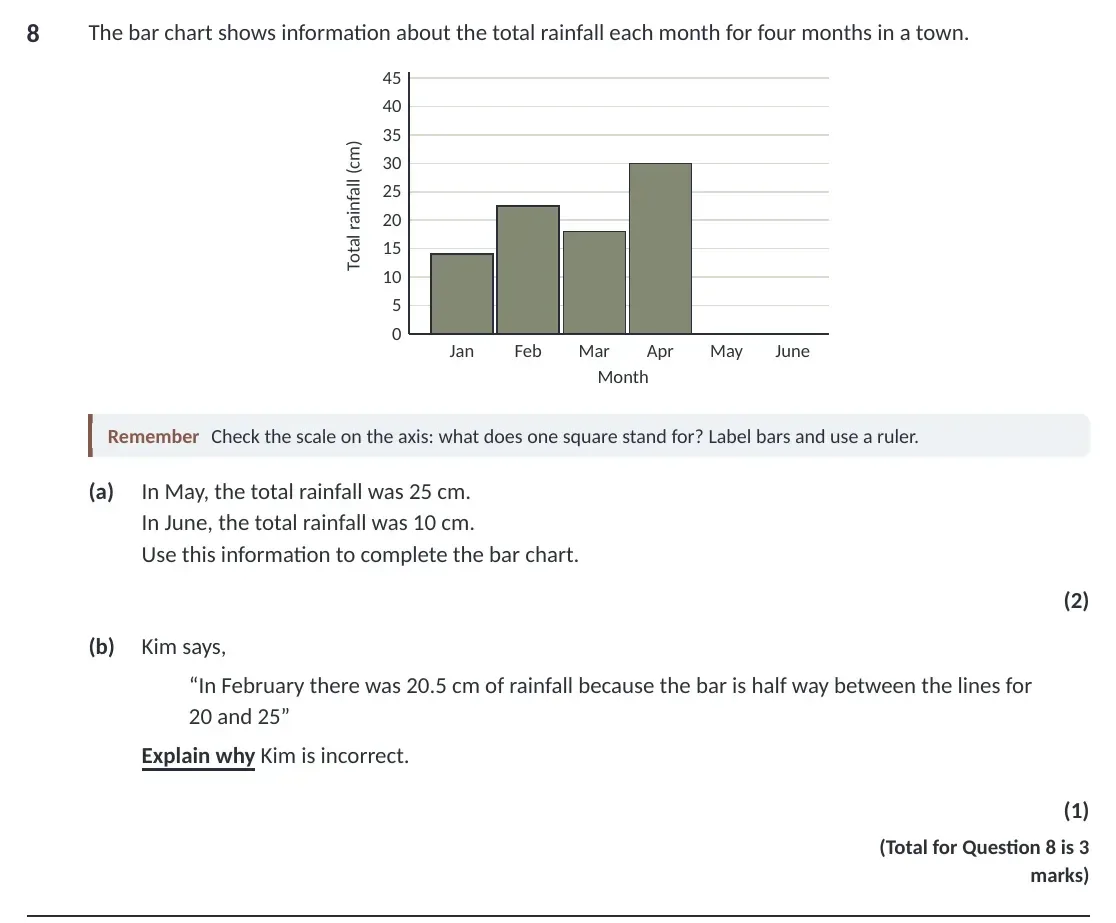
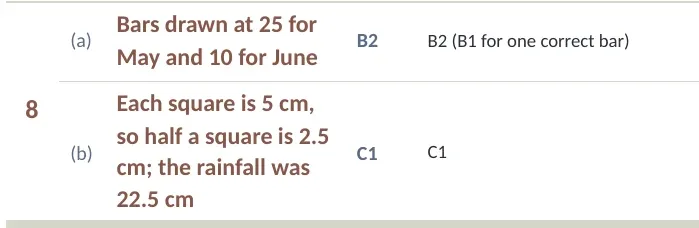
8 The bar chart shows information about the total rainfall each month for four months in a town. 45 Total rainfall (cm) 40 35 30 25 20 15 10 5 0 Jan Feb Mar Apr Month May June Remember Check the scale on the axis: what does one square stand for? Label bars and use a ruler. (a) In May, the total rainfall was 25 cm. In June, the total rainfall was 10 cm. Use this information to complete the bar char
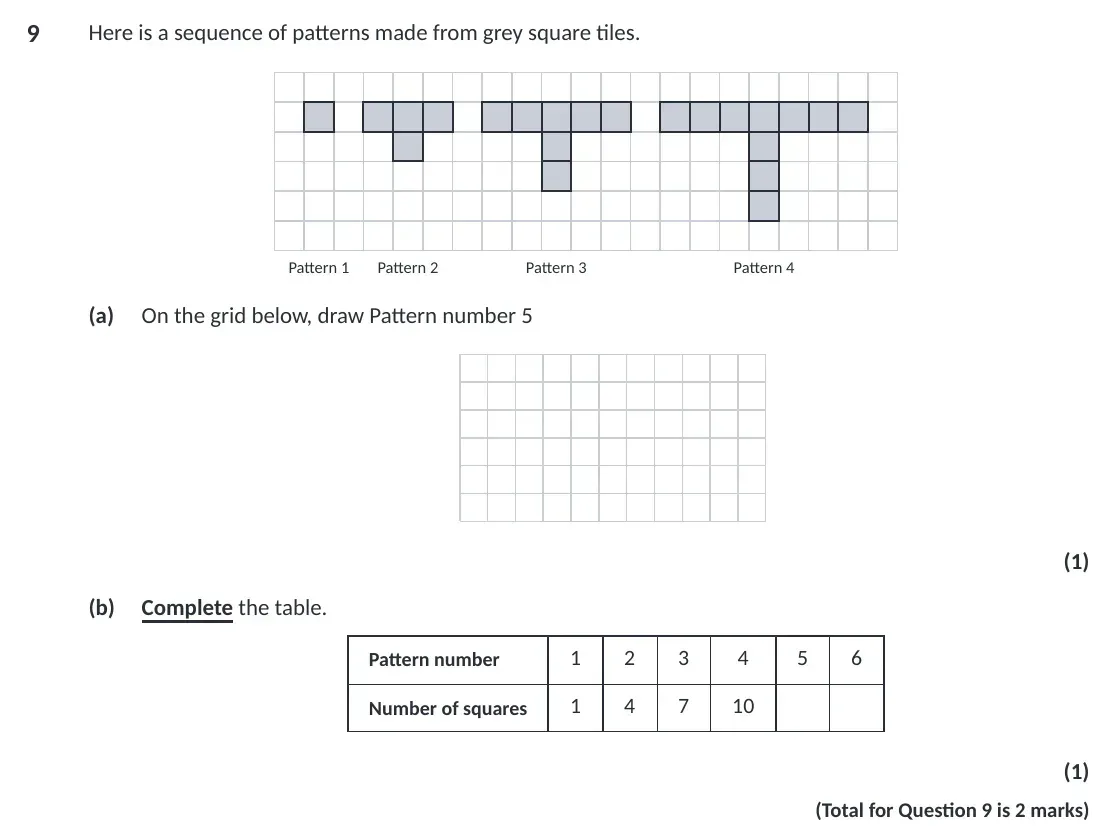
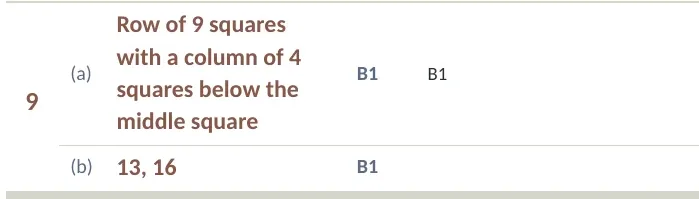
9 Here is a sequence of patterns made from grey square tiles. Pattern 1 (a) Pattern 2 Pattern 3 Pattern 4 On the grid below, draw Pattern number 5 (1) (b) Complete the table. Pattern number 1 2 3 4 Number of squares 1 4 7 10 📄 sheet: Term-to-term rules and patterns 5 6 (1) (Total for Question 9 is 2 marks)
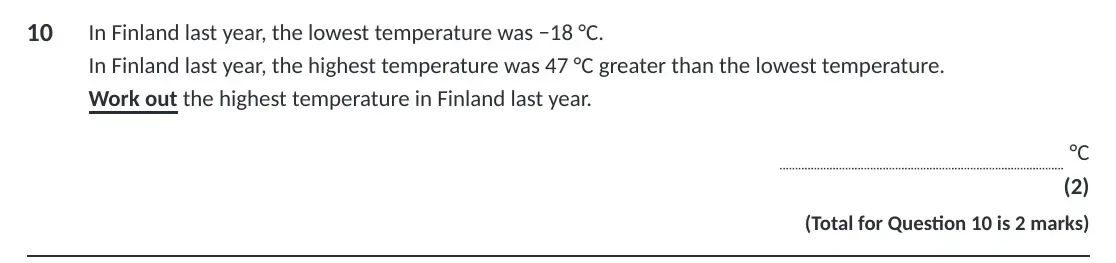
10 In Finland last year, the lowest temperature was −18 °C. In Finland last year, the highest temperature was 47 °C greater than the lowest temperature. Work out the highest temperature in Finland last year. °C 📄 sheet: Calculating with negative numbers (2) (Total for Question 10 is 2 marks)
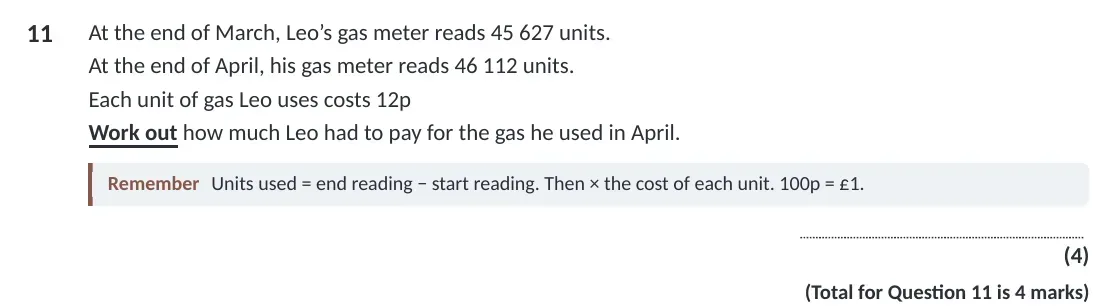
11 At the end of March, Leo’s gas meter reads 45 627 units. At the end of April, his gas meter reads 46 112 units. Each unit of gas Leo uses costs 12p Work out how much Leo had to pay for the gas he used in April. Remember Units used = end reading − start reading. Then × the cost of each unit. 100p = £1. 📄 sheet: Wages, bills and payments (4) (Total for Question 11 is 4 marks)
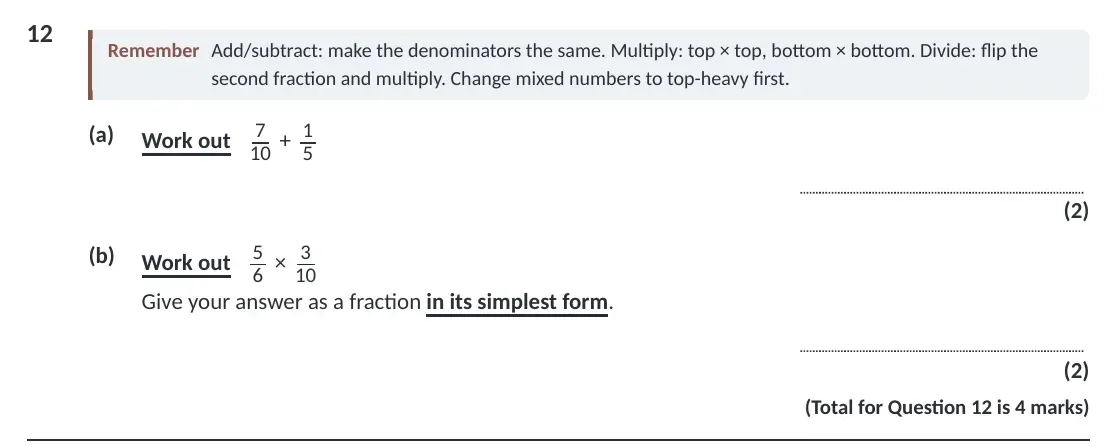
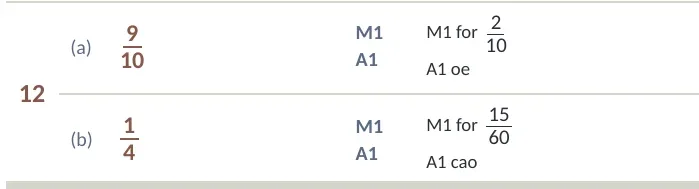
12 Remember Add/subtract: make the denominators the same. Multiply: top × top, bottom × bottom. Divide: flip the second fraction and multiply. Change mixed numbers to top-heavy first. (a) Work out 7 + 1 10 5 (2) (b) Work out 5 × 3 6 10 Give your answer as a fraction in its simplest form. 📄 sheet: Calculating with fractions (2) (Total for Question 12 is 4 marks)
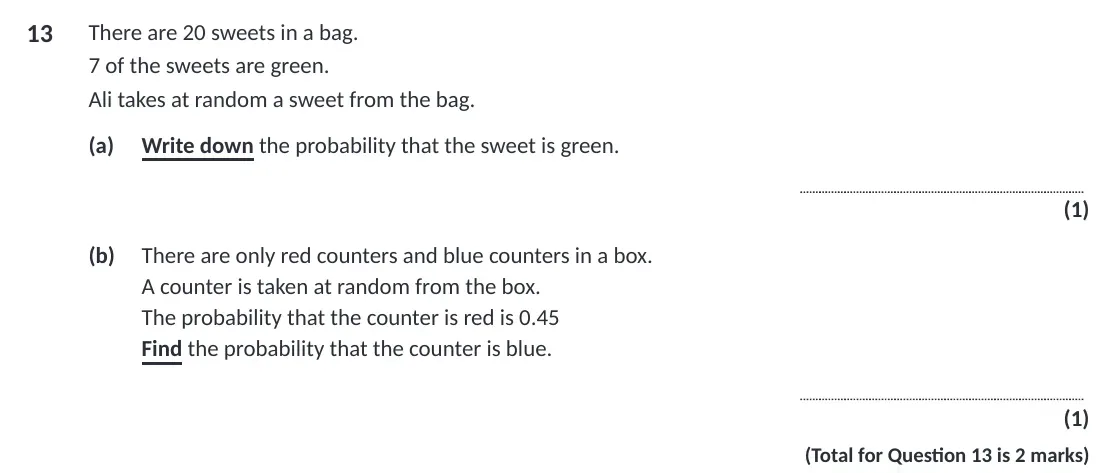
13 There are 20 sweets in a bag. 7 of the sweets are green. Ali takes at random a sweet from the bag. (a) Write down the probability that the sweet is green. (1) (b) There are only red counters and blue counters in a box. A counter is taken at random from the box. The probability that the counter is red is 0.45 Find the probability that the counter is blue. (1) 📄 sheet: Probability of single event
14 y = 7x − 3 Work out the value of y when x = 5 y = 📄 sheet: Substituting into formulae (2) (Total for Question 14 is 2 marks)
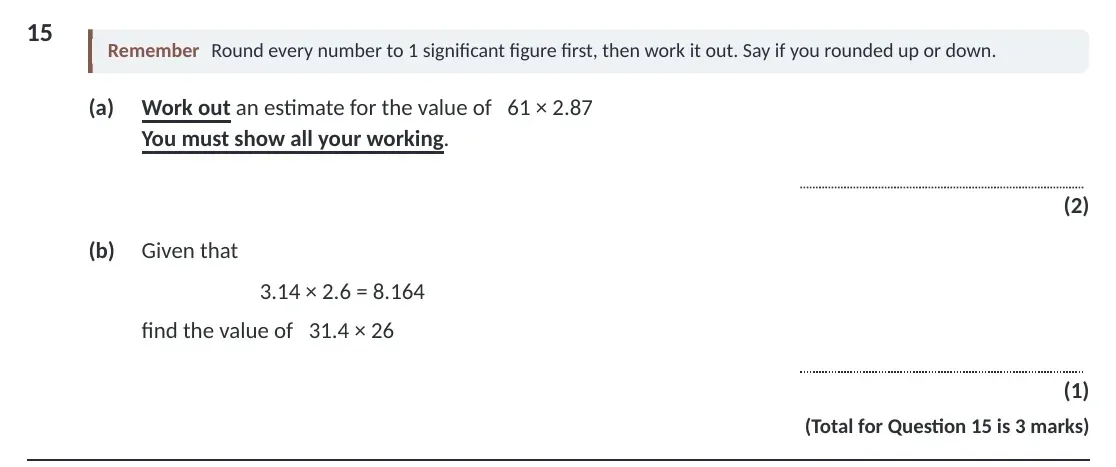
15 Remember Round every number to 1 significant figure first, then work it out. Say if you rounded up or down. (a) Work out an estimate for the value of 61 × 2.87 You must show all your working. (2) (b) Given that 3.14 × 2.6 = 8.164 find the value of 31.4 × 26 📄 sheet: Estimating (1) (Total for Question 15 is 3 marks)
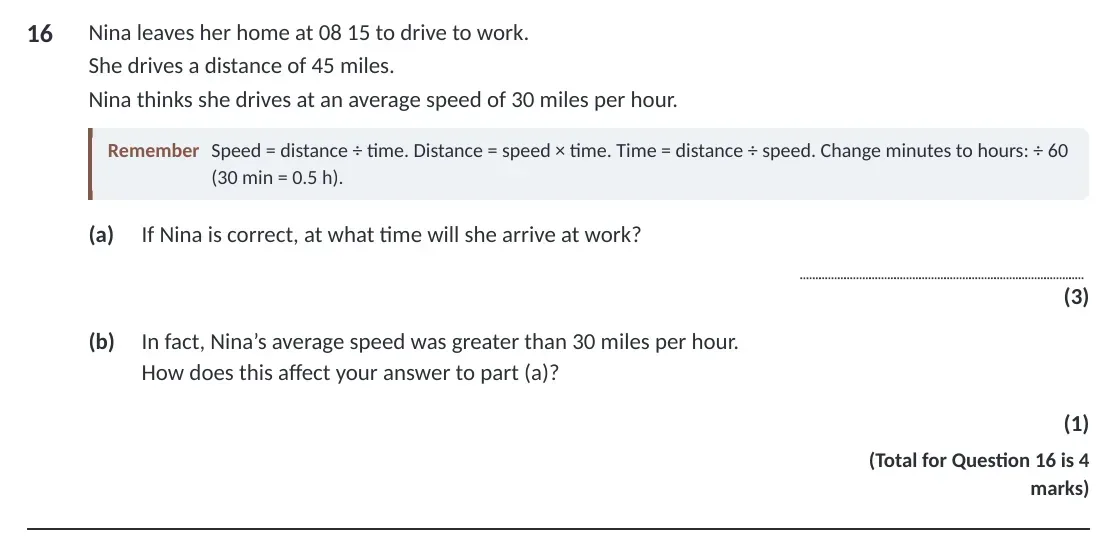
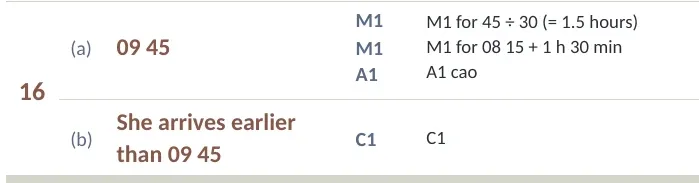
16 Nina leaves her home at 08 15 to drive to work. She drives a distance of 45 miles. Nina thinks she drives at an average speed of 30 miles per hour. Remember Speed = distance ÷ time. Distance = speed × time. Time = distance ÷ speed. Change minutes to hours: ÷ 60 (30 min = 0.5 h). (a) If Nina is correct, at what time will she arrive at work? (3) (b) In fact, Nina’s average speed was greater than
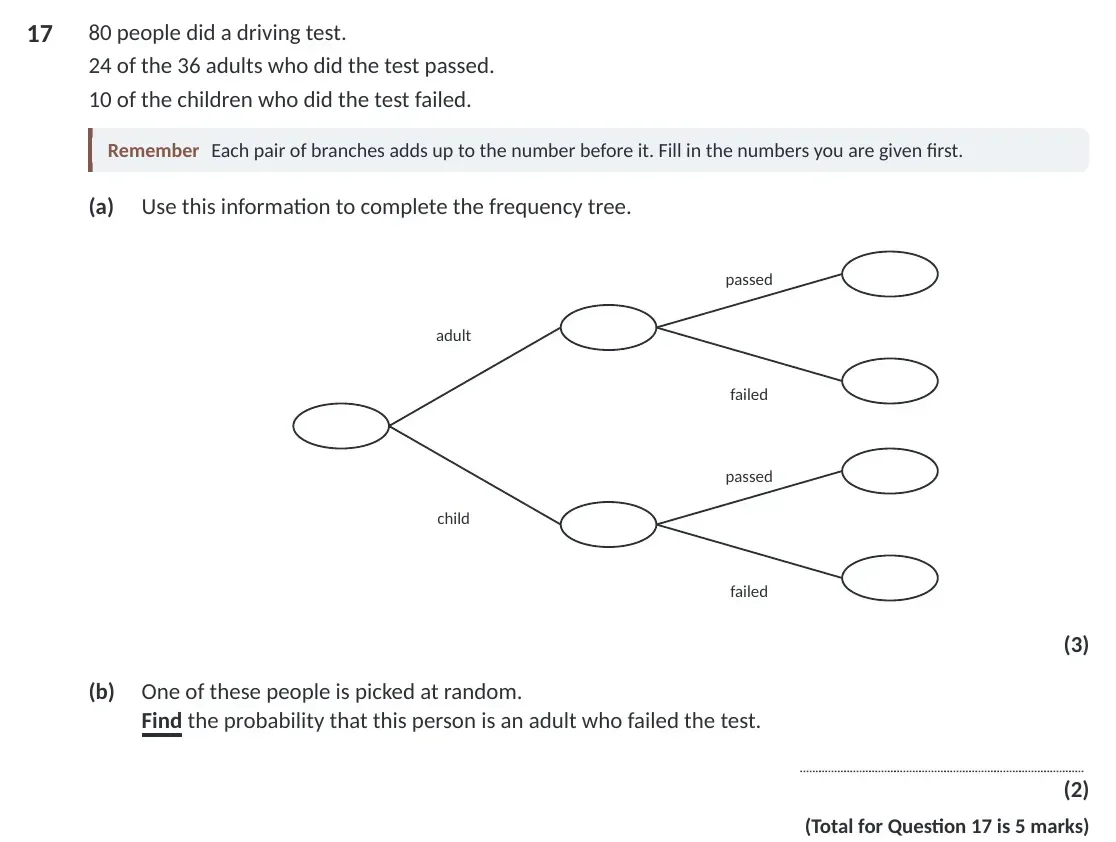
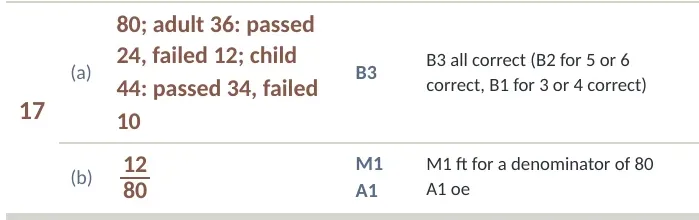
17 80 people did a driving test. 24 of the 36 adults who did the test passed. 10 of the children who did the test failed. Remember Each pair of branches adds up to the number before it. Fill in the numbers you are given first. (a) Use this information to complete the frequency tree. passed adult failed passed child failed (3) (b) One of these people is picked at random. Find the probability that t
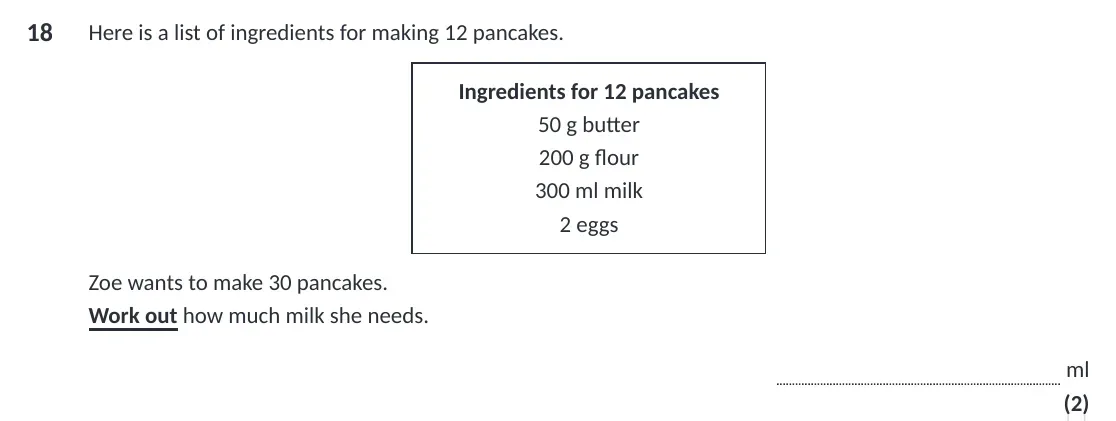
18 Here is a list of ingredients for making 12 pancakes. Ingredients for 12 pancakes 50 g butter 200 g flour 300 ml milk 2 eggs Zoe wants to make 30 pancakes. Work out how much milk she needs. ml 📄 (2)
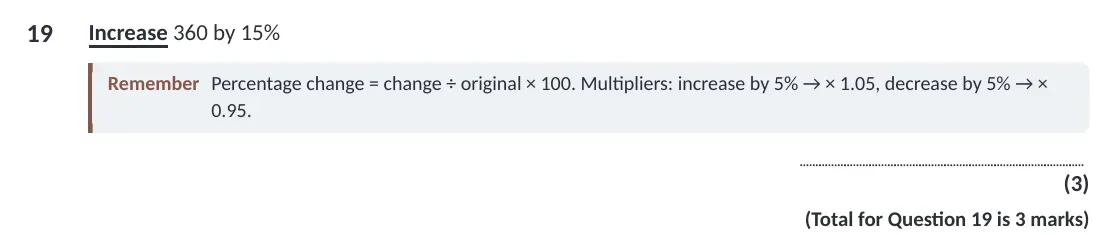
19 Increase 360 by 15% Remember Percentage change = change ÷ original × 100. Multipliers: increase by 5% → × 1.05, decrease by 5% → × 0.95. (3) 📄 sheet: Finding percentages (Total for Question 19 is 3 marks)
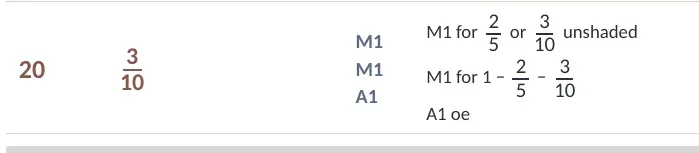
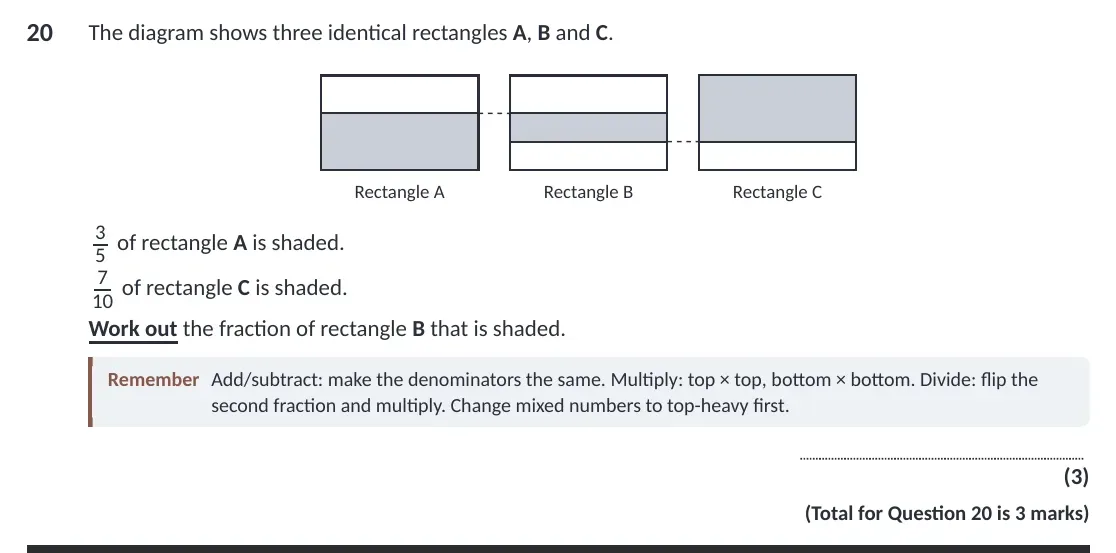
20 The diagram shows three identical rectangles A, B and C. Rectangle A Rectangle B Rectangle C 3 of rectangle A is shaded. 5 7 of rectangle C is shaded. 10 Work out the fraction of rectangle B that is shaded. Remember Add/subtract: make the denominators the same. Multiply: top × top, bottom × bottom. Divide: flip the second fraction and multiply. Change mixed numbers to top-heavy first. 📄 sheet:
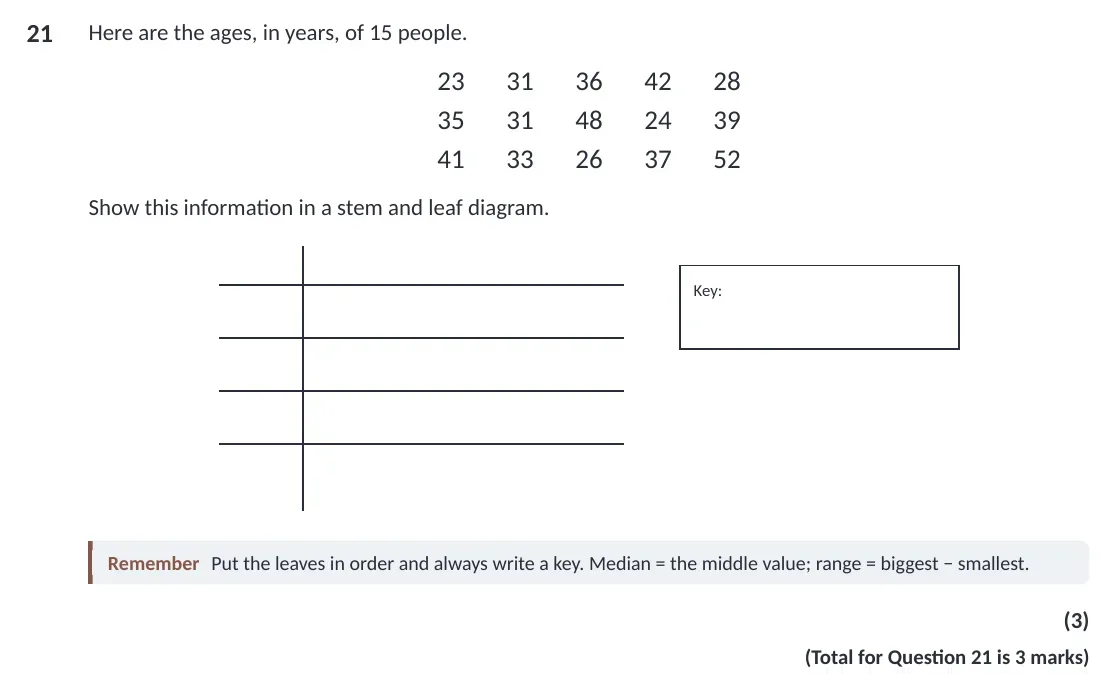
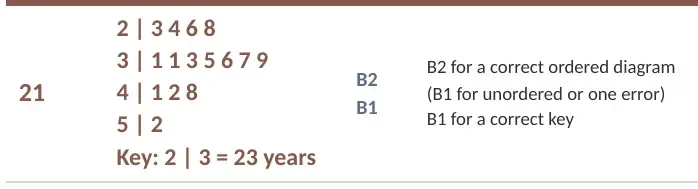
21 Here are the ages, in years, of 15 people. 23 35 41 31 31 33 36 48 26 42 24 37 28 39 52 Show this information in a stem and leaf diagram. Key: Remember Put the leaves in order and always write a key. Median = the middle value; range = biggest − smallest. (3) 📄 sheet: Stem and leaf diagrams (Total for Question 21 is 3 marks)
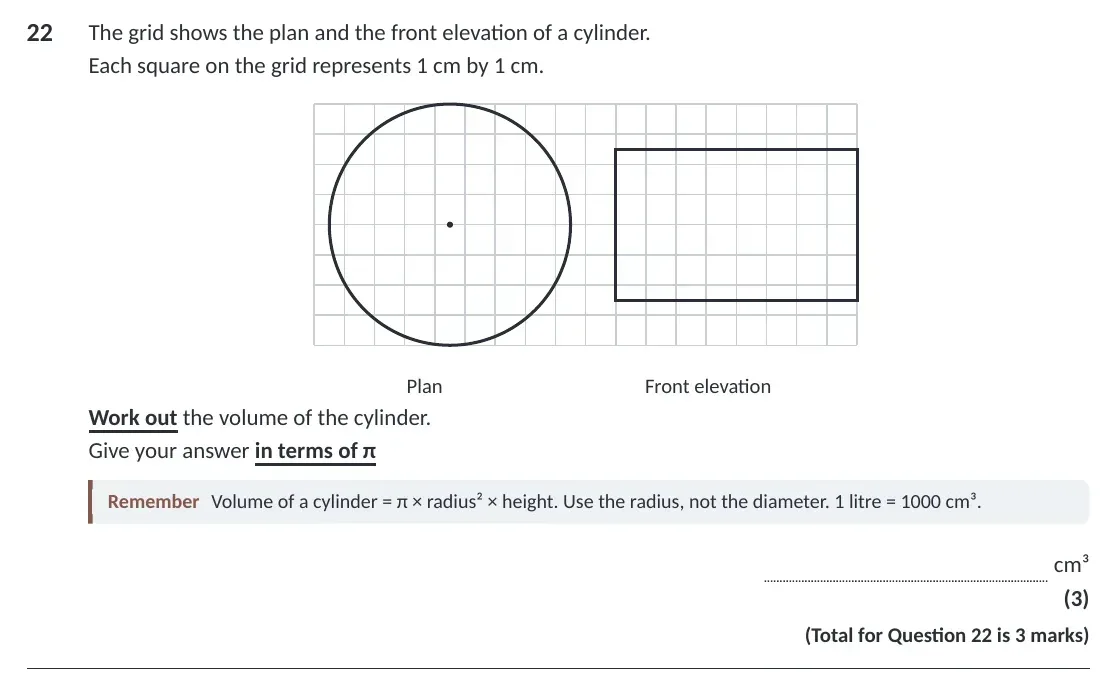
22 The grid shows the plan and the front elevation of a cylinder. Each square on the grid represents 1 cm by 1 cm. Plan Front elevation Work out the volume of the cylinder. Give your answer in terms of π Remember Volume of a cylinder = π × radius² × height. Use the radius, not the diameter. 1 litre = 1000 cm³. cm³ 📄 sheet: Volume of cylinders (3) (Total for Question 22 is 3 marks)
23 Solve 5x + 13 < 48 📄 sheet: Solving inequalities (2) (Total for Question 23 is 2 marks)
24 Write 132 as a product of its prime factors. 📄 sheet: Product of prime factors (2) (Total for Question 24 is 2 marks)
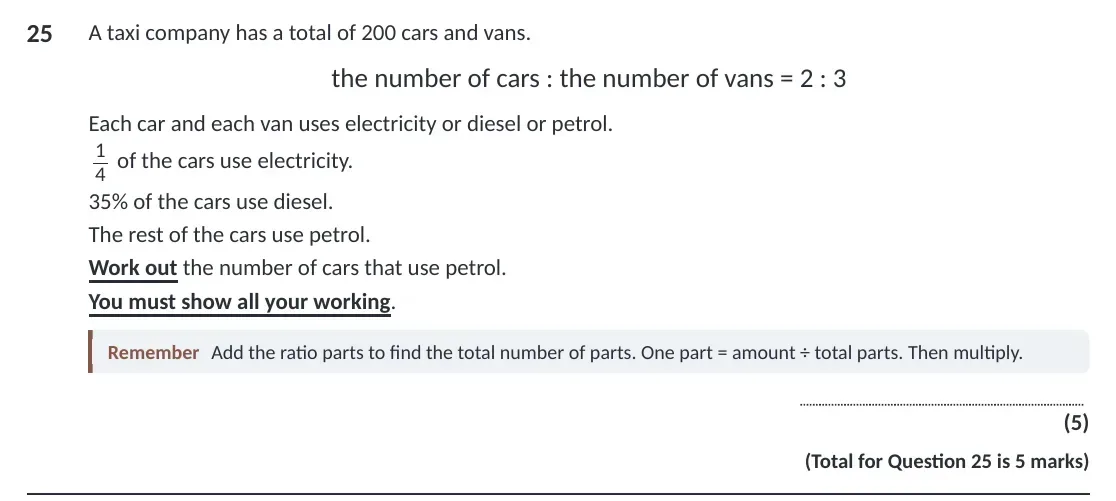
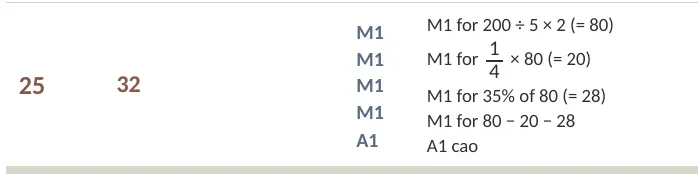
25 A taxi company has a total of 200 cars and vans. the number of cars : the number of vans = 2 : 3 Each car and each van uses electricity or diesel or petrol. 1 of the cars use electricity. 4 35% of the cars use diesel. The rest of the cars use petrol. Work out the number of cars that use petrol. You must show all your working. Remember Add the ratio parts to find the total number of parts. One p
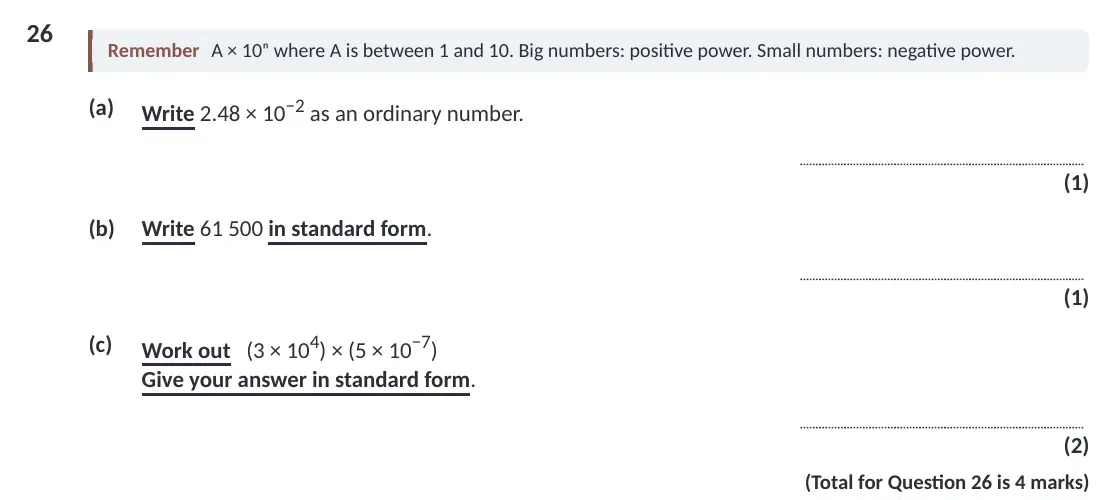
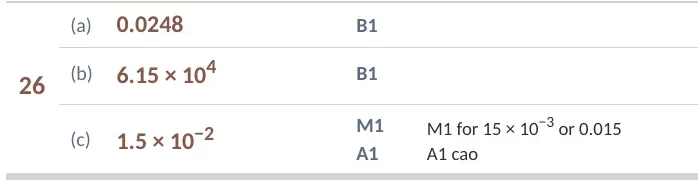
26 Remember A × 10ⁿ where A is between 1 and 10. Big numbers: positive power. Small numbers: negative power. (a) Write 2.48 × 10 −2 as an ordinary number. (1) (b) Write 61 500 in standard form. (1) (c) Work out (3 × 10 4 ) × (5 × 10 −7 ) Give your answer in standard form. (2) 📄 sheet: Calculating with standard form (Total for Question 26 is 4 marks)
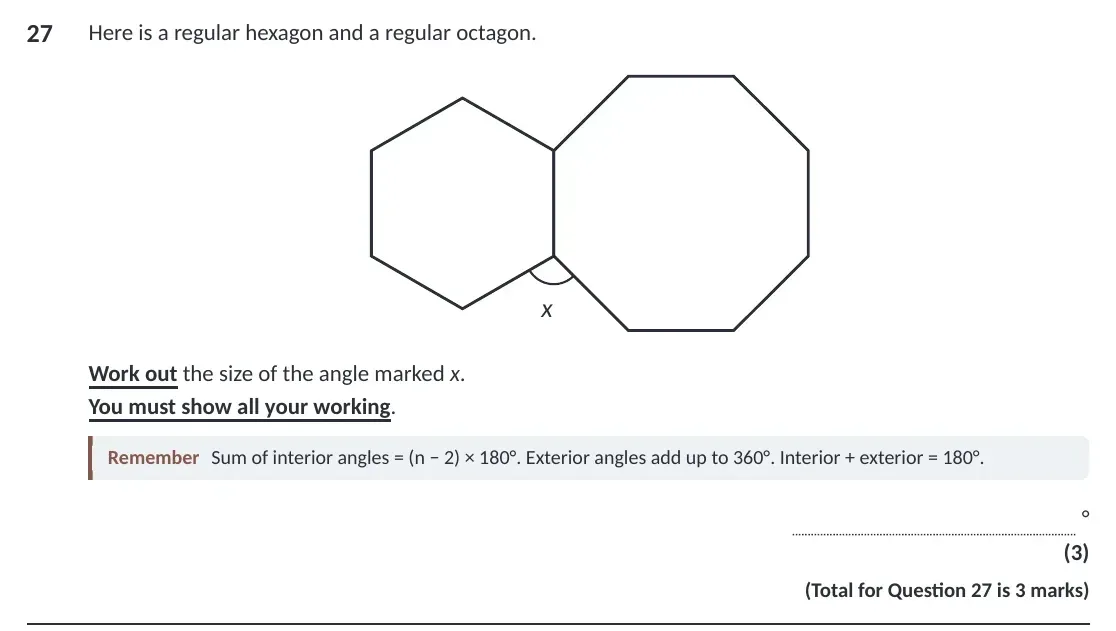
27 Here is a regular hexagon and a regular octagon. x Work out the size of the angle marked x. You must show all your working. Remember Sum of interior angles = (n − 2) × 180°. Exterior angles add up to 360°. Interior + exterior = 180°. ° 📄 sheet: Angles in polygons (3) (Total for Question 27 is 3 marks)
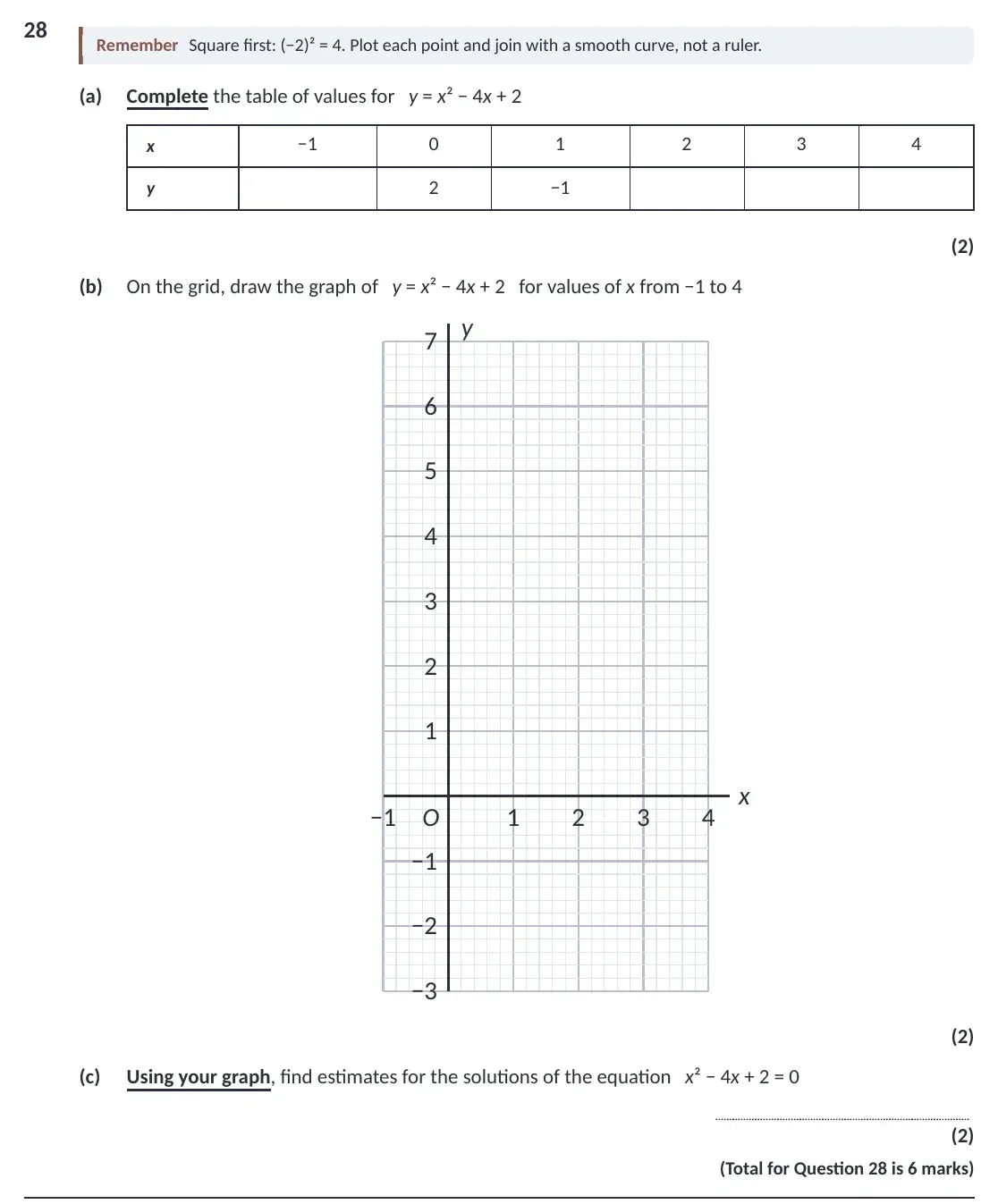
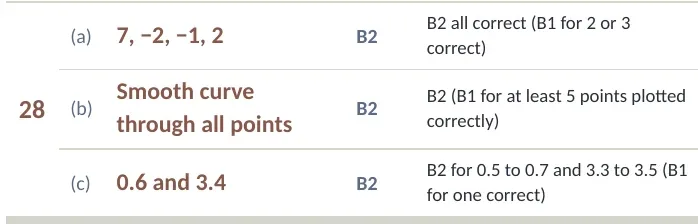
28 Remember Square first: (−2)² = 4. Plot each point and join with a smooth curve, not a ruler. (a) Complete the table of values for y = x² − 4x + 2 x −1 y 0 1 2 −1 2 3 4 (2) (b) On the grid, draw the graph of y = x² − 4x + 2 for values of x from −1 to 4 7 y 6 5 4 3 2 1 −1 O 1 2 3 4 x −1 −2 −3 (2) (c) Using your graph, find estimates for the solutions of the equation x² − 4x + 2 = 0 📄 sheet: Drawi
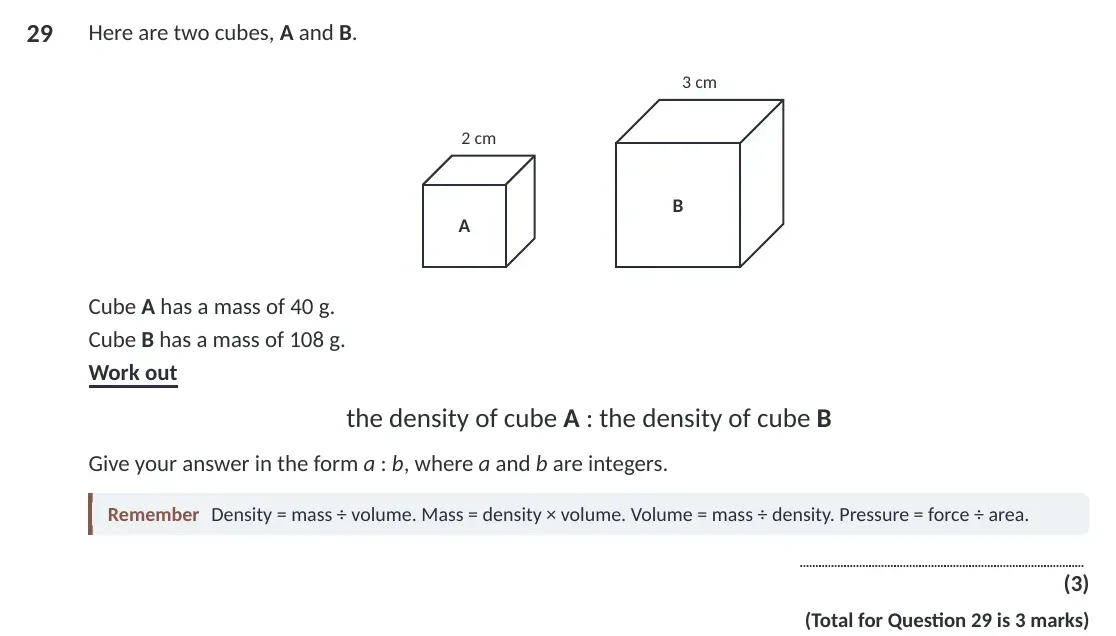
29 Here are two cubes, A and B. 3 cm 2 cm A B Cube A has a mass of 40 g. Cube B has a mass of 108 g. Work out the density of cube A : the density of cube B Give your answer in the form a : b, where a and b are integers. Remember Density = mass ÷ volume. Mass = density × volume. Volume = mass ÷ density. Pressure = force ÷ area. (3) 📄 sheet: Density (Total for Question 29 is 3 marks)
30 Write down the value of tan 45° (1) 📄 sheet: Trigonometry (Total for Question 30 is 1 mark)
◀ F3All papersG2 ▶
Answer the questions, then mark your paper.