Miss North Maths
GCSE Foundation › Geometry and measures

Angles in polygons

Everything you need to know, on one fact sheet. On the Year 11 revision planner in week 13.
1. Watch

Miss North: Angles in polygonsVideo coming soon. Use the fact sheet below in the meantime.

2. Learn the facts

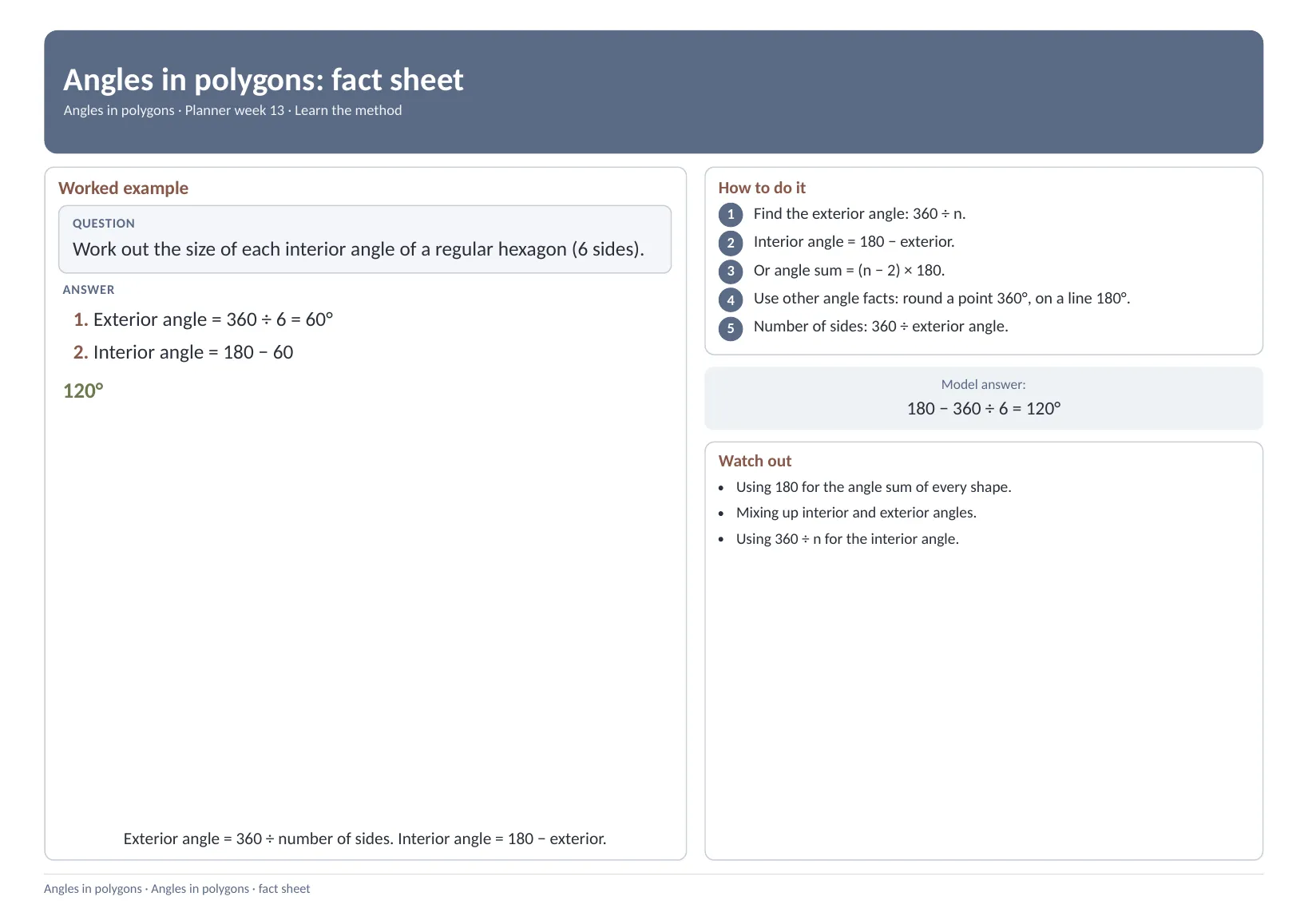
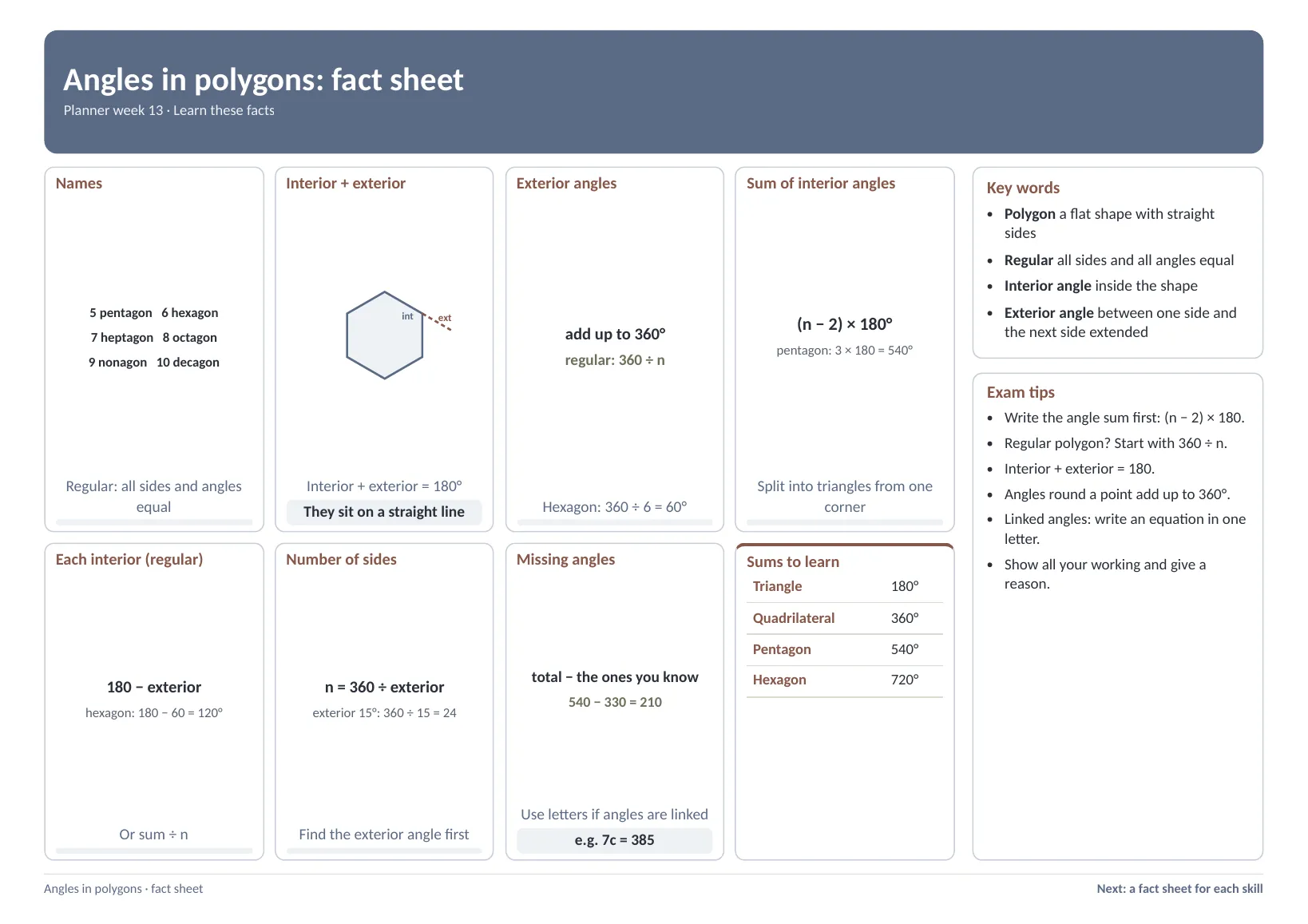
Angles in polygons fact sheet: Overview
1 of 2 · OverviewTap the sheet to open it full size
Angles in polygons fact sheet: Angles in polygons
2 of 2 · Angles in polygonsTap the sheet to open it full size

Which method? Follow the flowchart

Start at the top, answer each question and follow the arrows to the method you need. Tap it to open it full size.
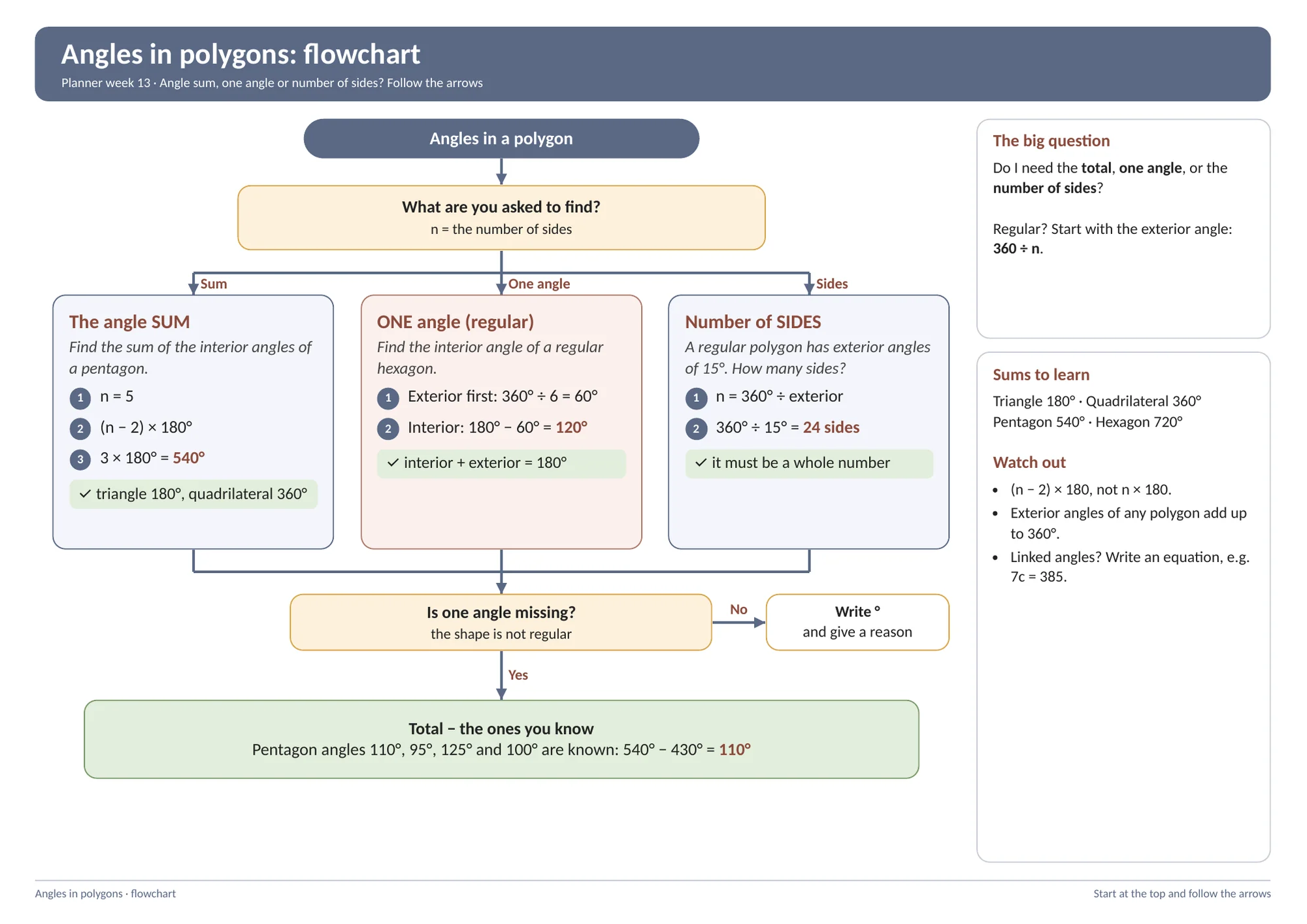
Angles in polygons flowchart: which method to use
Angles in polygons flowchartPrint the flowchart (PDF)

3. Practice questions

Try each one on paper first, then check.

Your score: 0 / 5 marks
1
Grade 3Non-calculator2 marks

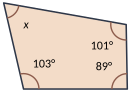
The diagram shows a quadrilateral.Diagram for this question, with the measurements and labels from the questionWork out the size of angle x. (2)

Show the answer
67°
M1 360 − (103 + 89 + 101); A1 67°
Watch out: Using 180°. A quadrilateral splits into two triangles: its angles add up to 360°.
2
Grade 4Calculator3 marks

The diagram shows a regular pentagon.Diagram for this question, with the measurements and labels from the questionWork out the size of angle x. (3)

Show the answer
108°
M1 exterior angle 360 ÷ 5 = 72 (or the total (5 − 2) × 180 = 540); M1 180 − 72 (or 540 ÷ 5); A1 108°
Watch out: Giving the exterior angle (72°), or 360 ÷ 5 as the answer. x is INSIDE the shape: 180 − 72.
Give the reasonMatch each step of an angle answer to the reason, in the words the examiner wants.

4. Quiz yourself

The Blooket for this topic is coming soon.

5. Print it

The whole angles in polygons fact sheet as a PDF, 2 pages, ready to print or keep on your phone.

Download the fact sheet (PDF)