Miss North Maths

Full paper F3

Paper 3 style · Calculator · 80 marks · 1 hour 30 minutes

How it works. Type each answer in its box. Tap any underlined word on the paper to see what it wants you to do. Stuck? Open the fact sheet under the question. When you finish, press Mark my paper, then check each question against the mark scheme and give yourself the marks you earned, including method marks.
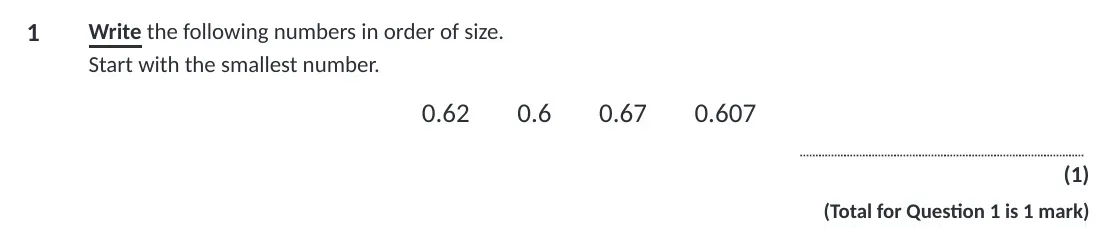
1 Write the following numbers in order of size. Start with the smallest number. 0.62 0.6 📄 sheet: Ordering decimals (1) (Total for Question 1 is 1 mark) 0.607 0.67
2 (1) (Total for Question 2 is 1 mark) Write down the value of the 4 in the number 24 517 📄 sheet: Place value and number facts
Write 3 as a decimal. 5 📄 sheet: Converting fractions, decimals and percentages 3 (1) (Total for Question 3 is 1 mark)
4 Write 27.4949 correct to the nearest whole number. 📄 sheet: Rounding to the nearest 10, 100 or 1000 (1) (Total for Question 4 is 1 mark)
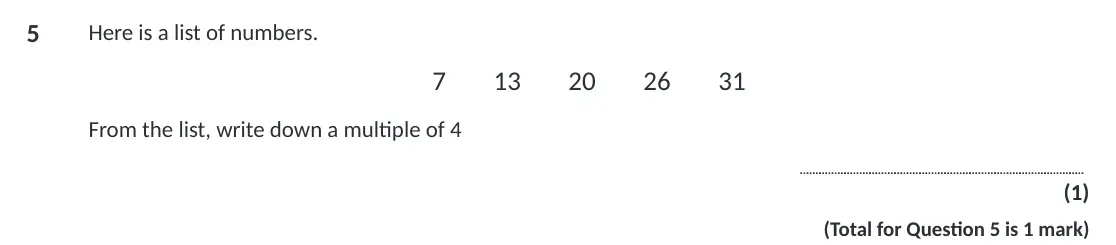
5 Here is a list of numbers. 7 13 20 26 31 From the list, write down a multiple of 4 (1) 📄 sheet: and multiples (Total for Question 5 is 1 mark)
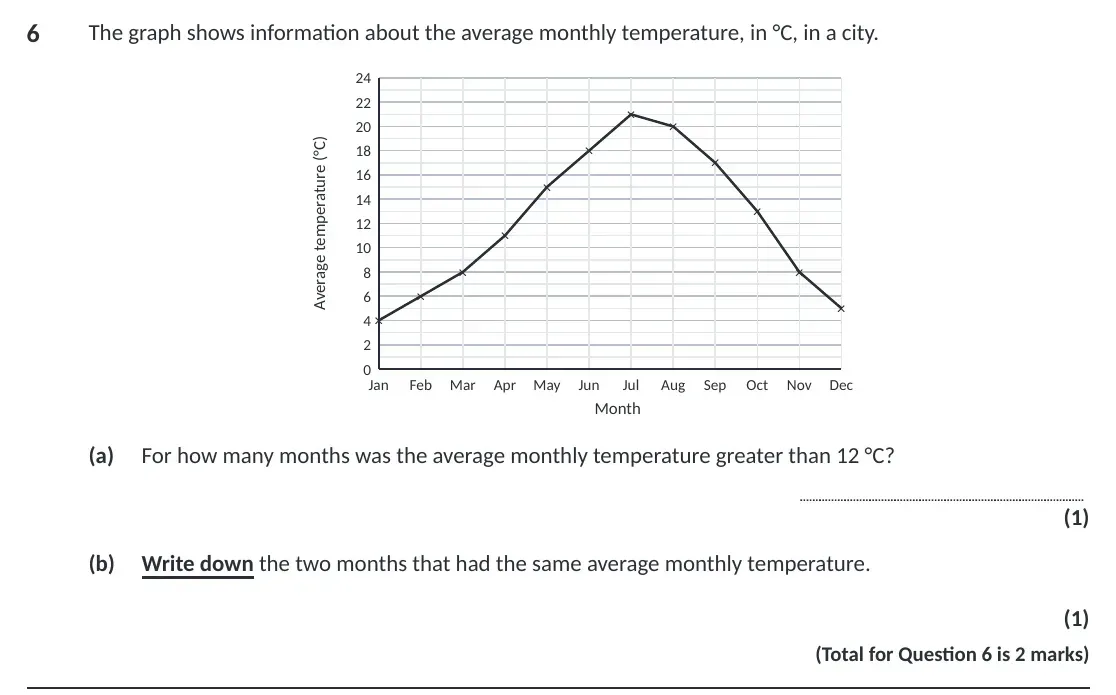
6 The graph shows information about the average monthly temperature, in °C, in a city. 24 Average temperature (°C) 22 × 20 16 × × 14 × 12 × 10 × 8 6 × × 18 × × × 4 × 2 0 Jan Feb Mar Apr May Jun Jul Aug Sep Oct Nov Dec Month (a) For how many months was the average monthly temperature greater than 12 °C? (1) (b) Write down the two months that had the same average monthly temperature. 📄 sheet: Bar ch
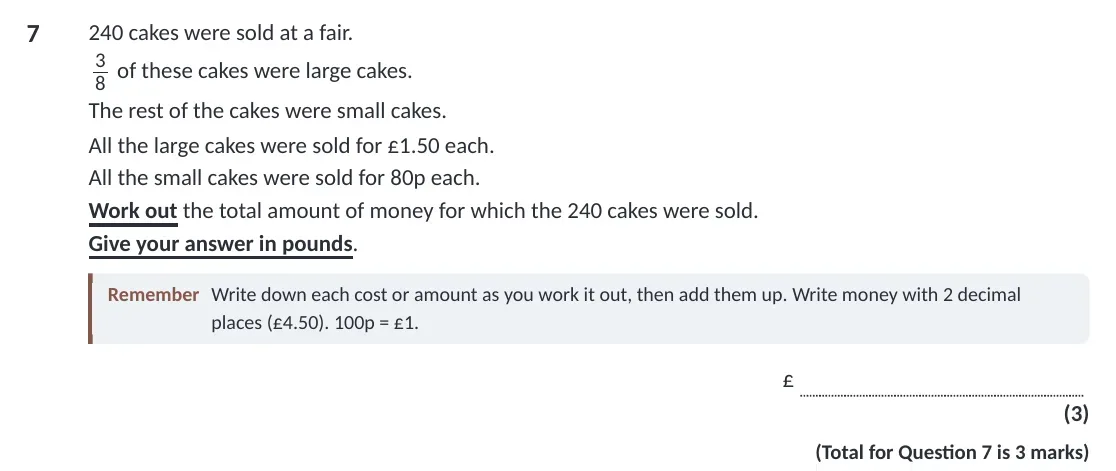
7 240 cakes were sold at a fair. 3 of these cakes were large cakes. 8 The rest of the cakes were small cakes. All the large cakes were sold for £1.50 each. All the small cakes were sold for 80p each. Work out the total amount of money for which the 240 cakes were sold. Give your answer in pounds. Remember Write down each cost or amount as you work it out, then add them up. Write money with 2 decim
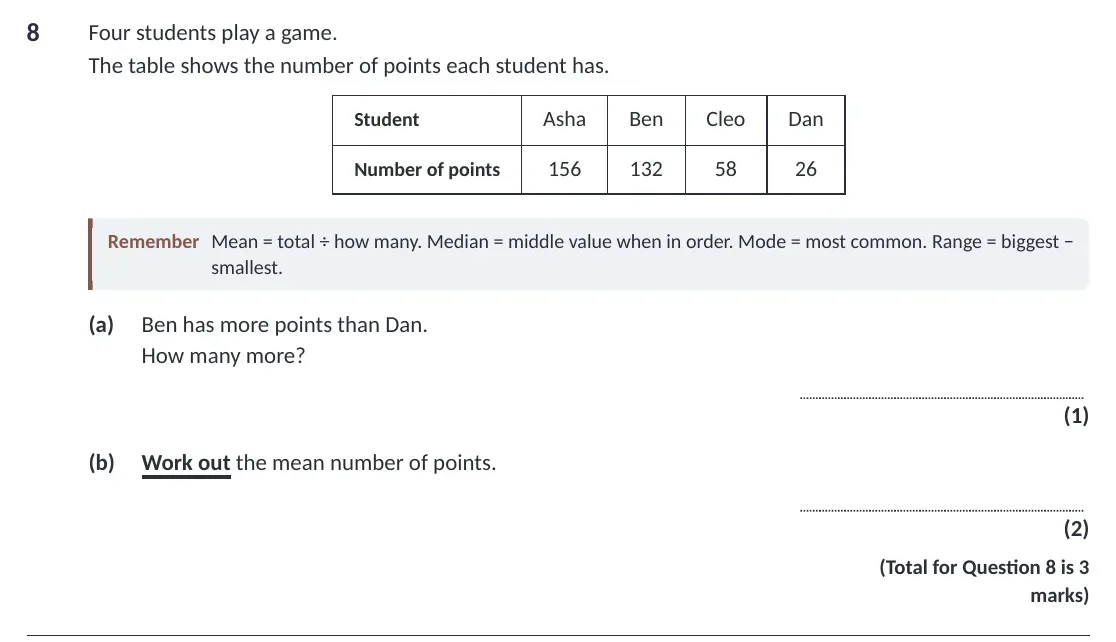
8 Four students play a game. The table shows the number of points each student has. Student Asha Ben Cleo Dan Number of points 156 132 58 26 Remember Mean = total ÷ how many. Median = middle value when in order. Mode = most common. Range = biggest − smallest. (a) Ben has more points than Dan. How many more? (1) (b) Work out the mean number of points. 📄 sheet: Mean, median, mode and range, card 1 📄
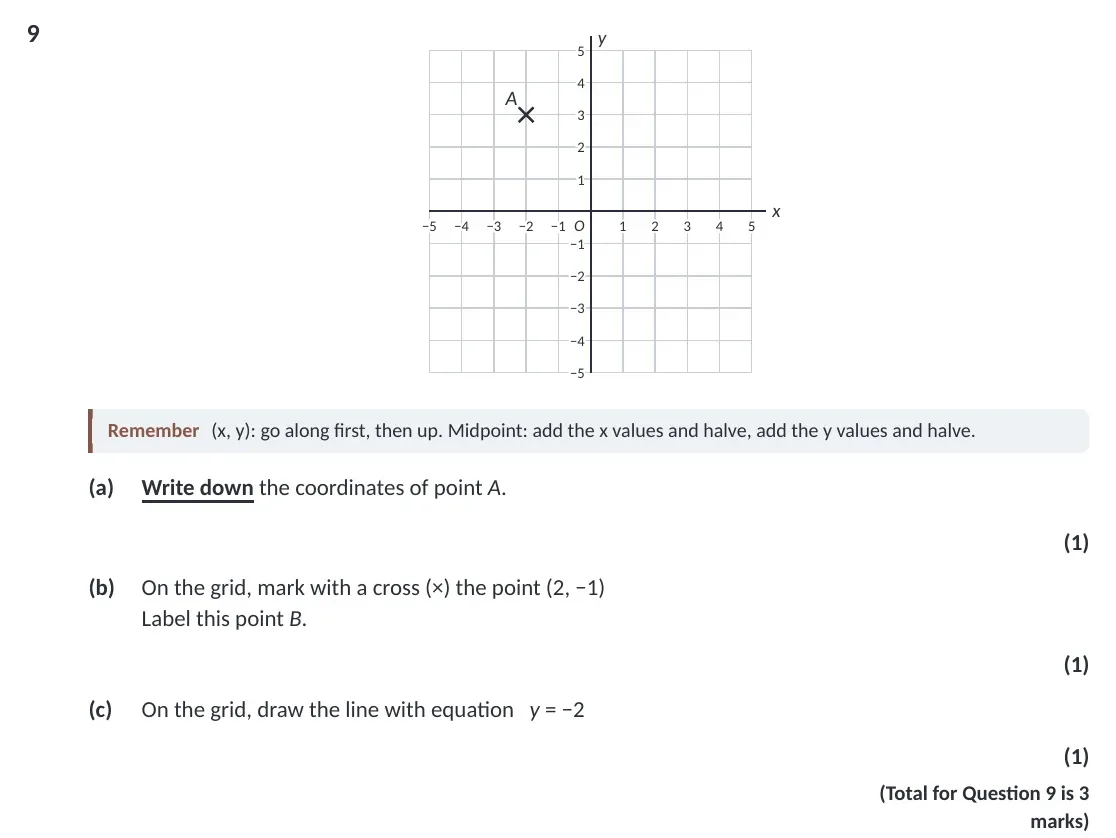
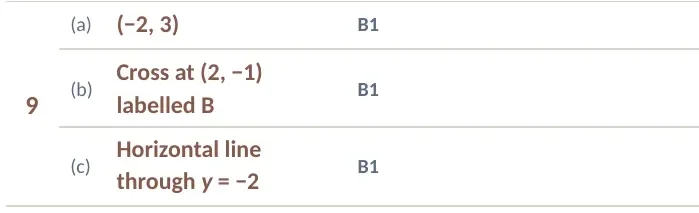
9 5 y 4 A 3 2 1 −5 −4 −3 −2 −1 O −1 1 2 3 4 5 x −2 −3 −4 −5 Remember (x, y): go along first, then up. Midpoint: add the x values and halve, add the y values and halve. (a) Write down the coordinates of point A. (1) (b) On the grid, mark with a cross (×) the point (2, −1) Label this point B. (1) (c) On the grid, draw the line with equation y = −2 (1) 📄 sheet: Coordinates and midpoints 📄 sheet: Equa
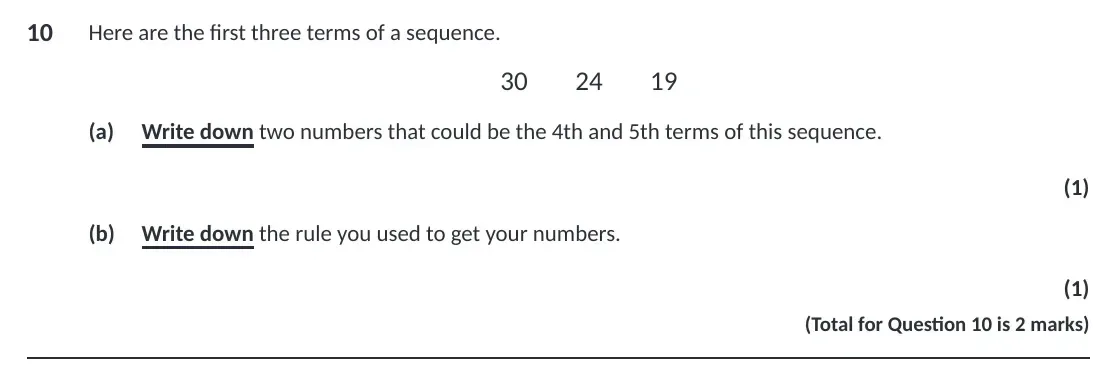
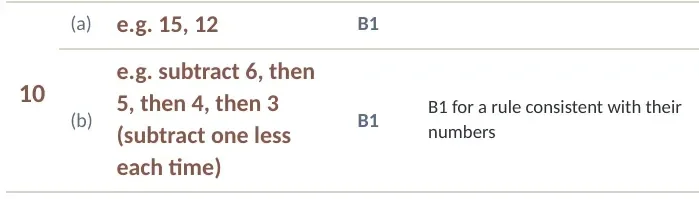
10 Here are the first three terms of a sequence. 30 (a) 24 19 Write down two numbers that could be the 4th and 5th terms of this sequence. (1) (b) Write down the rule you used to get your numbers. 📄 sheet: Term-to-term rules and patterns (1) (Total for Question 10 is 2 marks)
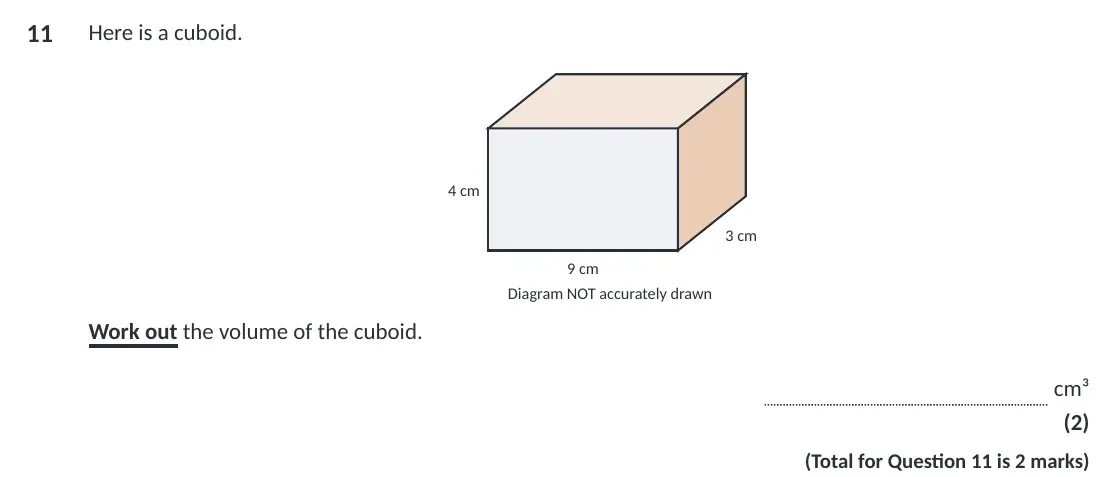
11 Here is a cuboid. 4 cm 3 cm 9 cm Diagram NOT accurately drawn Work out the volume of the cuboid. cm³ 📄 sheet: Volume of cuboids and prisms (2) (Total for Question 11 is 2 marks)
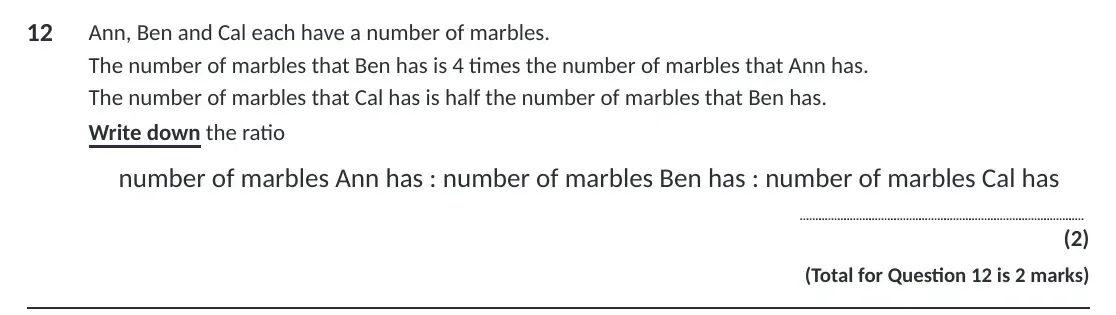
12 Ann, Ben and Cal each have a number of marbles. The number of marbles that Ben has is 4 times the number of marbles that Ann has. The number of marbles that Cal has is half the number of marbles that Ben has. Write down the ratio number of marbles Ann has : number of marbles Ben has : number of marbles Cal has 📄 sheet: Writing and simplifying ratios (2) (Total for Question 12 is 2 marks)
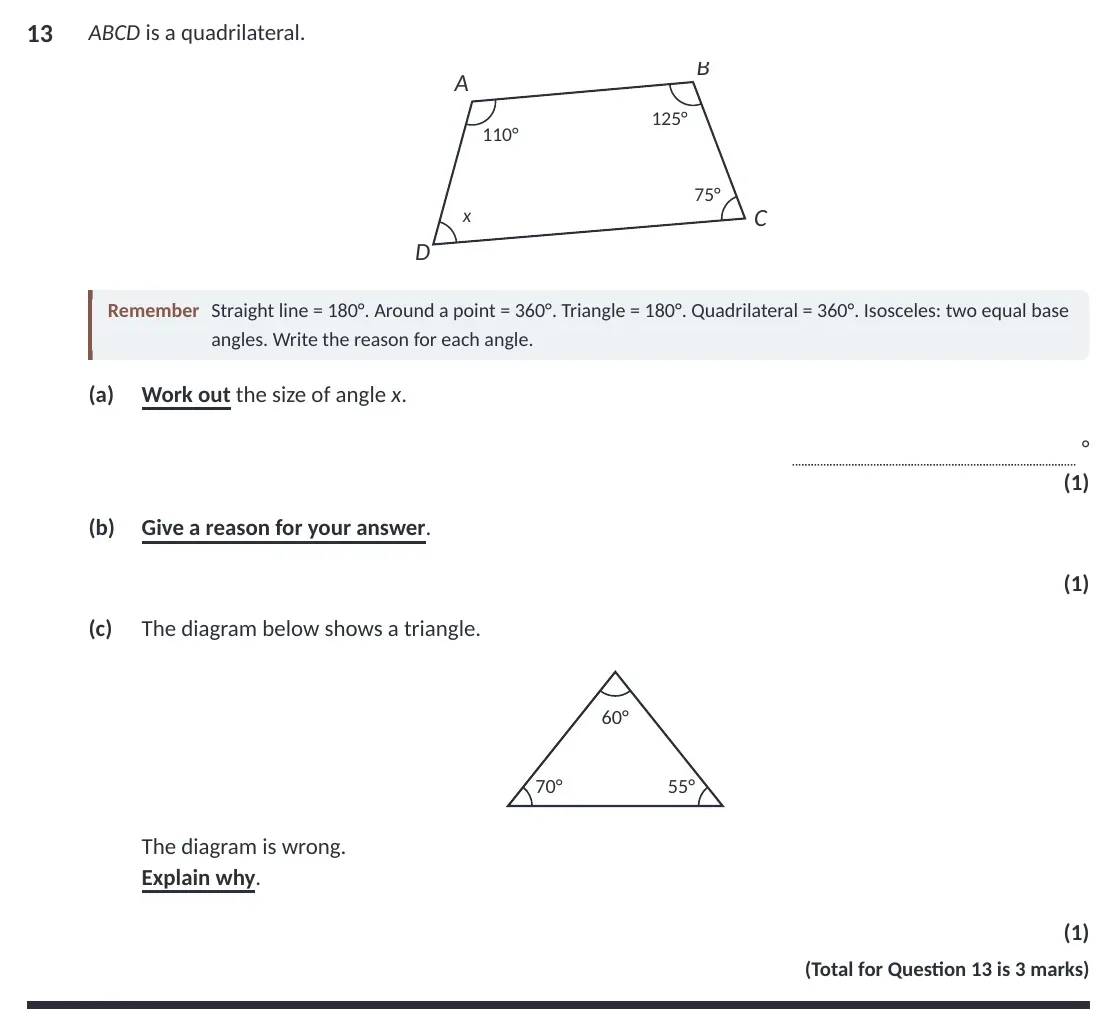
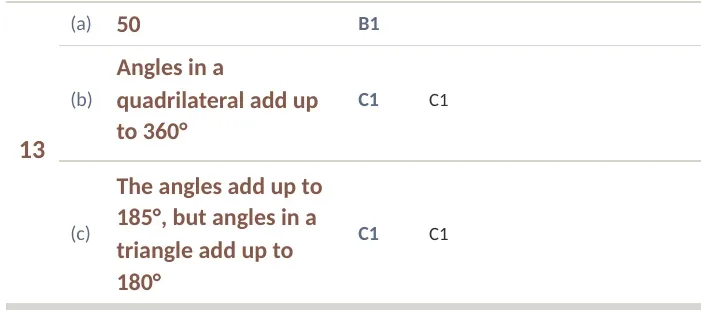
13 ABCD is a quadrilateral. B A 125° 110° 75° x C D Remember Straight line = 180°. Around a point = 360°. Triangle = 180°. Quadrilateral = 360°. Isosceles: two equal base angles. Write the reason for each angle. (a) Work out the size of angle x. ° (1) (b) Give a reason for your answer. (1) (c) The diagram below shows a triangle. 60° 70° 55° The diagram is wrong. Explain why. 📄 sheet: Angle facts 📄
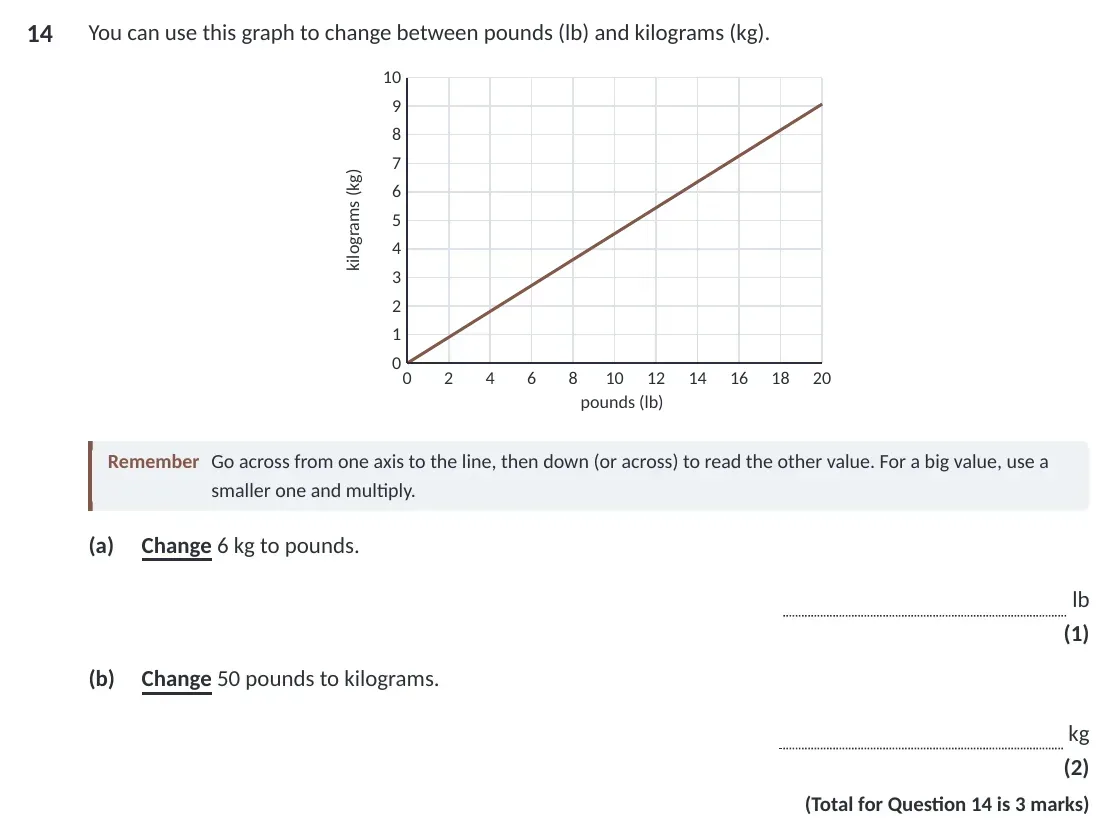
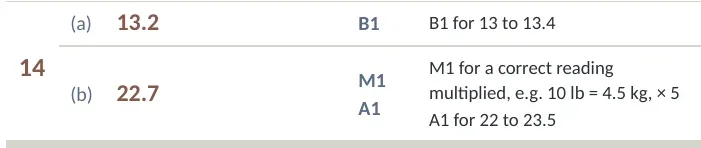
14 You can use this graph to change between pounds (lb) and kilograms (kg). 10 9 kilograms (kg) 8 7 6 5 4 3 2 1 0 0 2 4 6 8 10 12 pounds (lb) 14 16 18 20 Remember Go across from one axis to the line, then down (or across) to read the other value. For a big value, use a smaller one and multiply. (a) Change 6 kg to pounds. lb (1) (b) Change 50 pounds to kilograms. kg 📄 sheet: Measuring and reading s
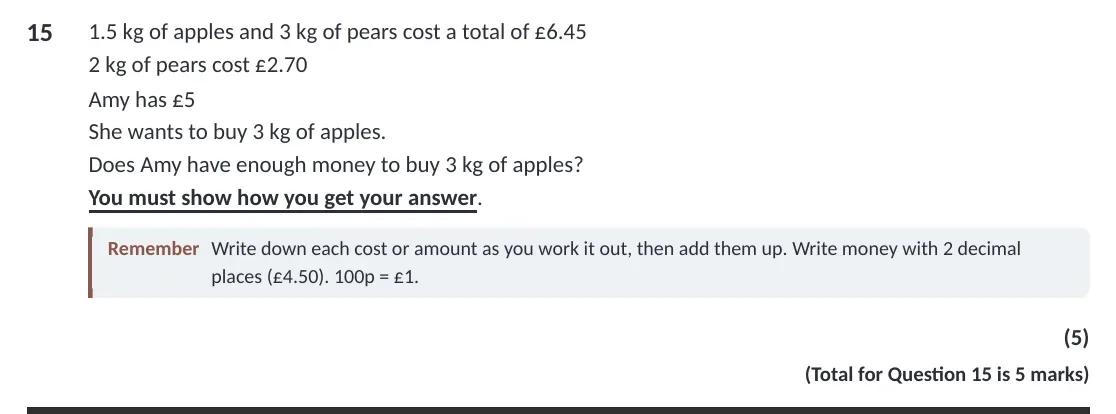
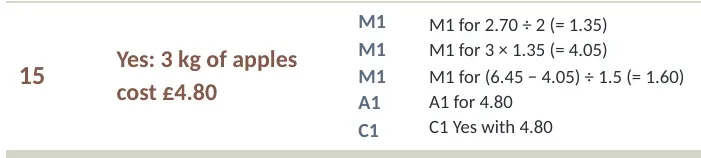
15 1.5 kg of apples and 3 kg of pears cost a total of £6.45 2 kg of pears cost £2.70 Amy has £5 She wants to buy 3 kg of apples. Does Amy have enough money to buy 3 kg of apples? You must show how you get your answer. Remember Write down each cost or amount as you work it out, then add them up. Write money with 2 decimal places (£4.50). 100p = £1. 📄 sheet: Recipes and direct proportion, card 3 (5)
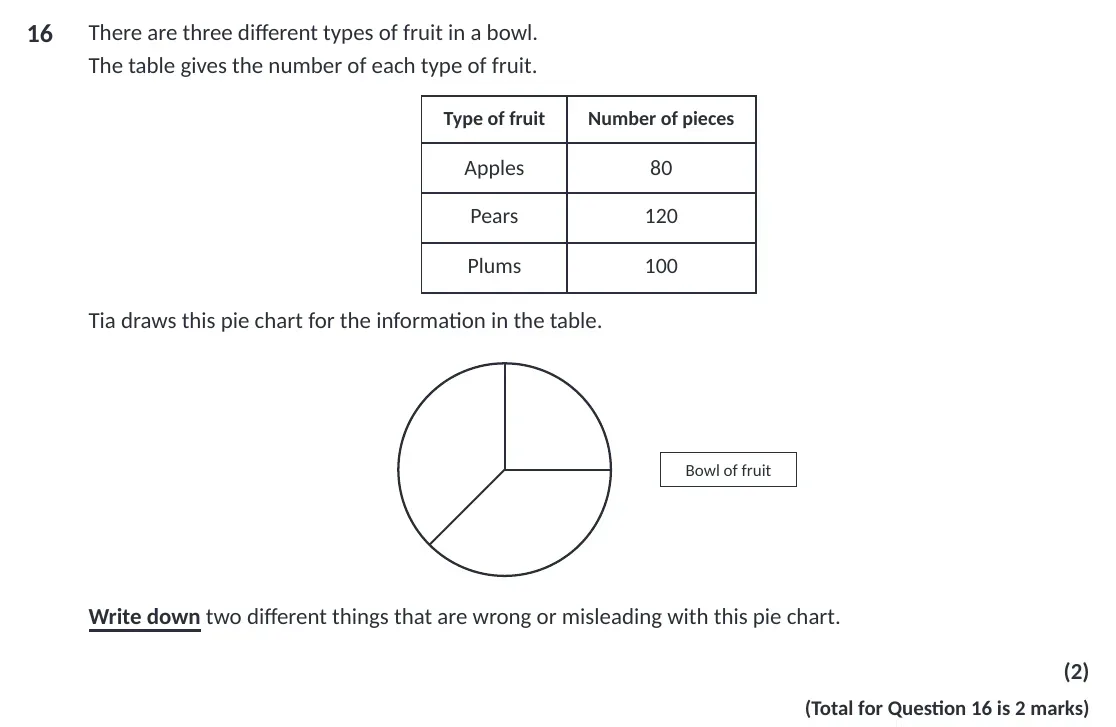
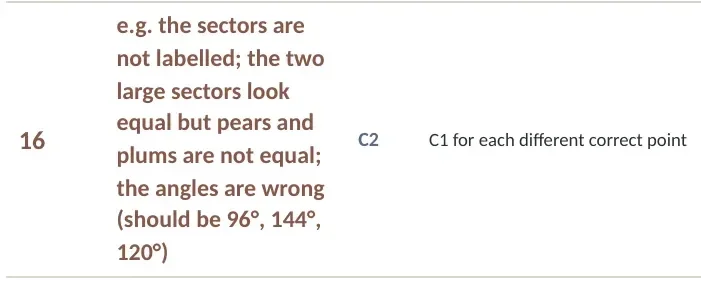
16 There are three different types of fruit in a bowl. The table gives the number of each type of fruit. Type of fruit Number of pieces Apples 80 Pears 120 Plums 100 Tia draws this pie chart for the information in the table. Bowl of fruit Write down two different things that are wrong or misleading with this pie chart. 📄 sheet: Pie charts (2) (Total for Question 16 is 2 marks)
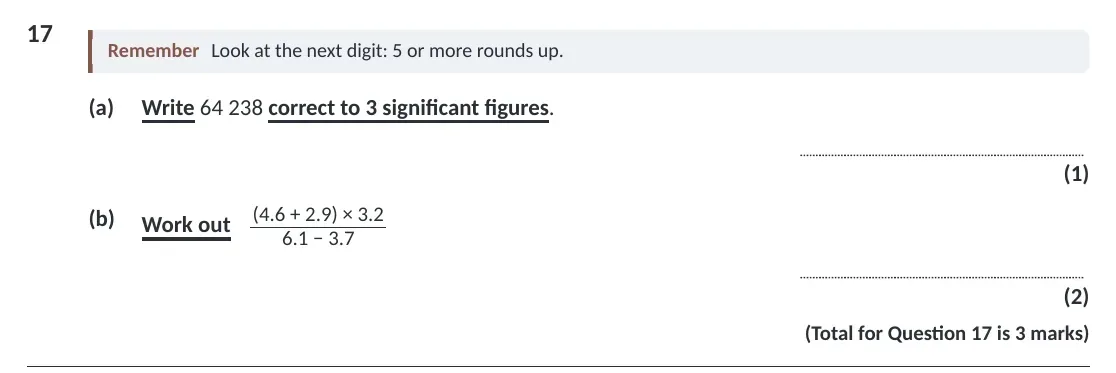
17 Remember Look at the next digit: 5 or more rounds up. (a) Write 64 238 correct to 3 significant figures. (1) (b) Work out (4.6 + 2.9) × 3.2 6.1 − 3.7 📄 sheet: Decimal places and significant figures (2) (Total for Question 17 is 3 marks)
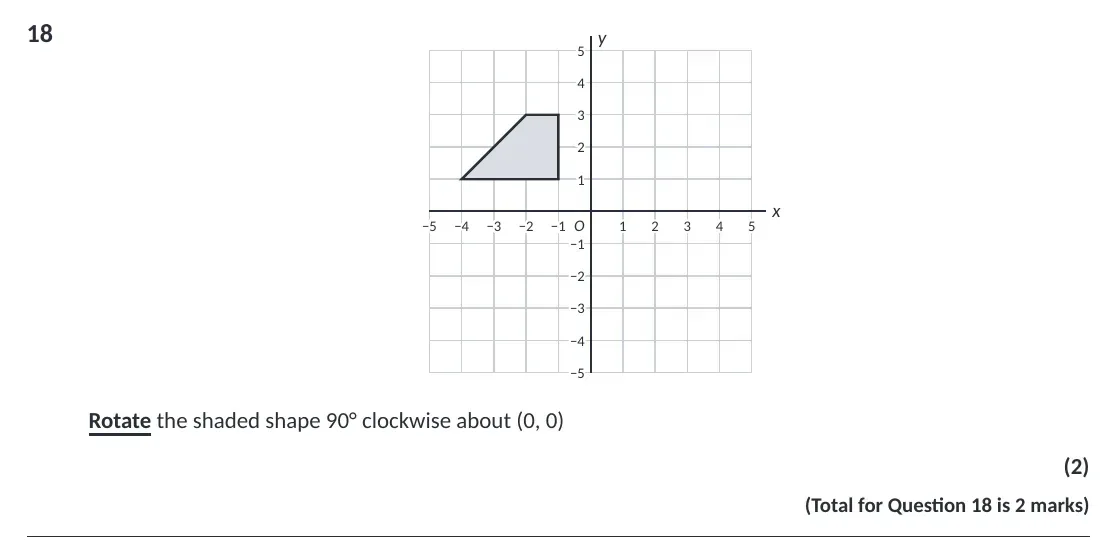
18 5 y 4 3 2 1 −5 −4 −3 −2 −1 O −1 1 2 3 4 5 x −2 −3 −4 −5 Rotate the shaded shape 90° clockwise about (0, 0) 📄 sheet: Rotation (2) (Total for Question 18 is 2 marks)
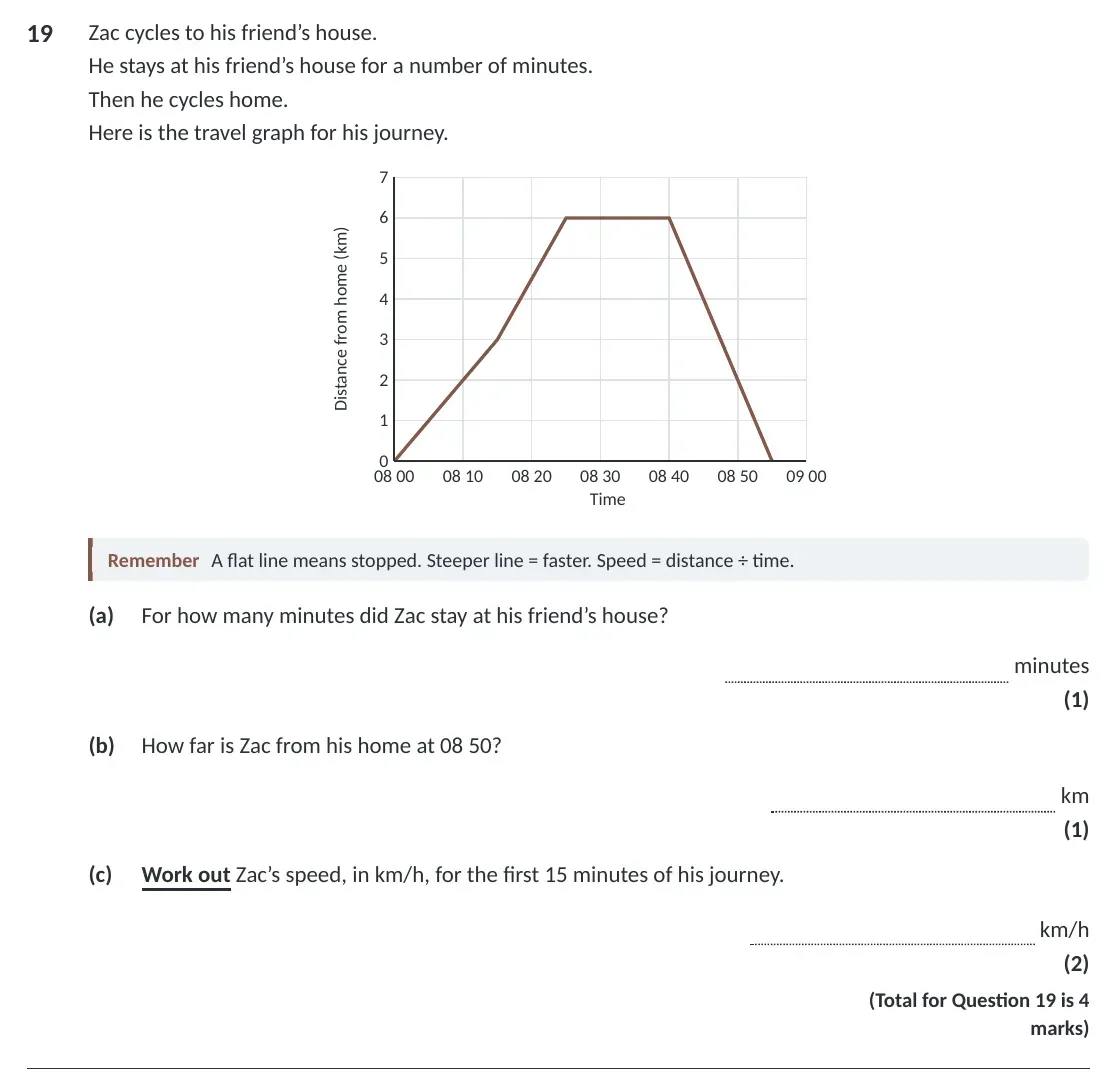
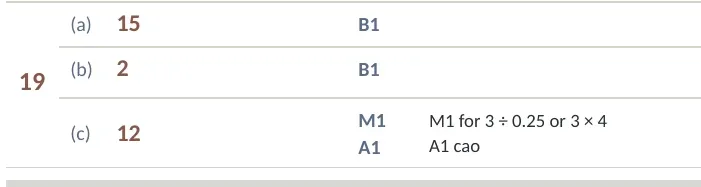
19 Zac cycles to his friend’s house. He stays at his friend’s house for a number of minutes. Then he cycles home. Here is the travel graph for his journey. Distance from home (km) 7 6 5 4 3 2 1 0 08 00 08 10 08 20 08 30 Time 08 40 08 50 09 00 Remember A flat line means stopped. Steeper line = faster. Speed = distance ÷ time. (a) For how many minutes did Zac stay at his friend’s house? minutes (1)
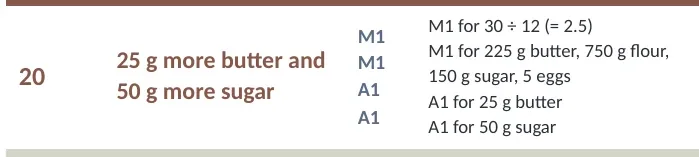
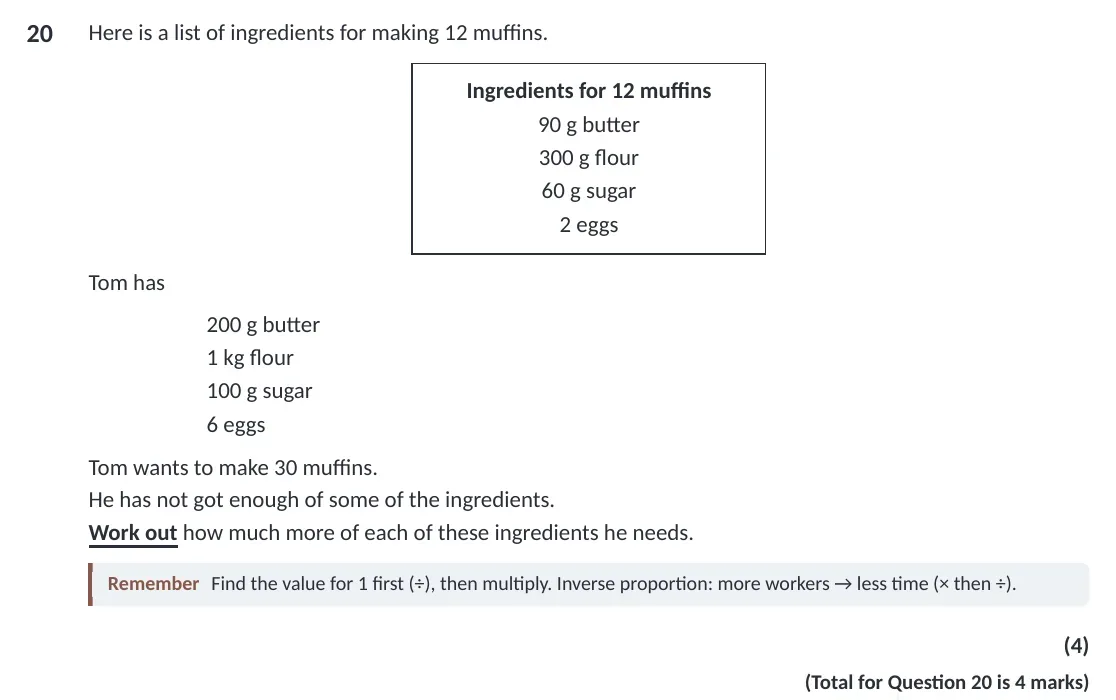
20 Here is a list of ingredients for making 12 muffins. Ingredients for 12 muffins 90 g butter 300 g flour 60 g sugar 2 eggs Tom has 200 g butter 1 kg flour 100 g sugar 6 eggs Tom wants to make 30 muffins. He has not got enough of some of the ingredients. Work out how much more of each of these ingredients he needs. Remember Find the value for 1 first (÷), then multiply. Inverse proportion: more w
21 Make b the subject of the formula q = 4b + 7 (2) 📄 sheet: Rearranging formulae (Total for Question 21 is 2 marks)
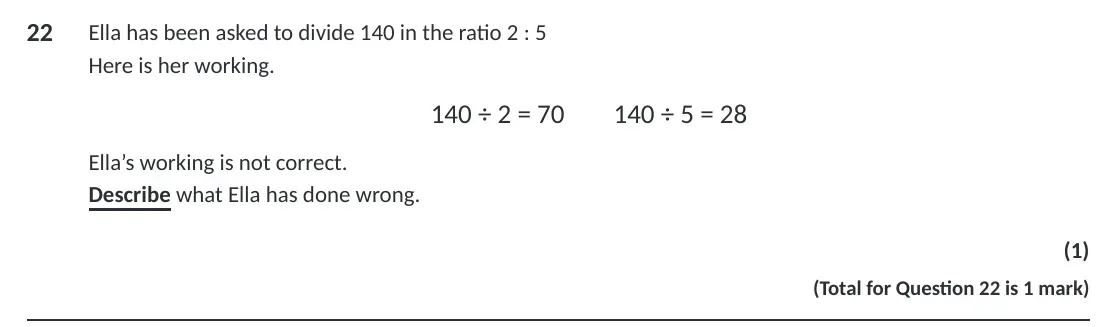
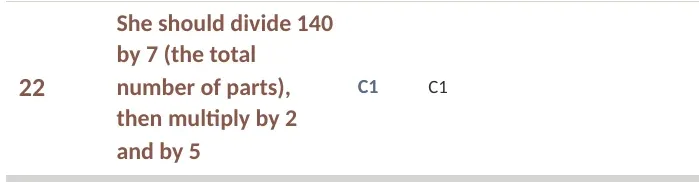
22 Ella has been asked to divide 140 in the ratio 2 : 5 Here is her working. 140 ÷ 2 = 70 140 ÷ 5 = 28 Ella’s working is not correct. Describe what Ella has done wrong. 📄 sheet: Sharing in a ratio (1) (Total for Question 22 is 1 mark)
23 180 students chose one sport to play. Each student chose one sport from football or hockey or netball. Of the 180 students, 100 are boys and the rest of the students are girls 50 chose hockey 50 of the 92 students who chose football are boys 20 girls chose hockey. Work out how many boys chose netball. Remember Rows and columns add up to the totals. Fill in the easy gaps first, then use them to
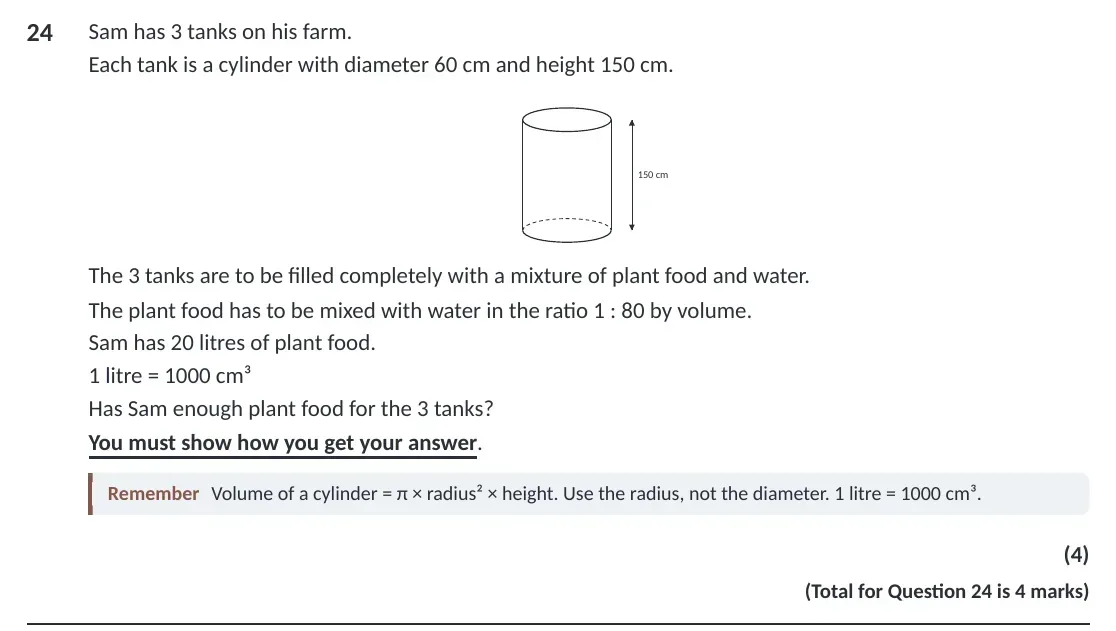
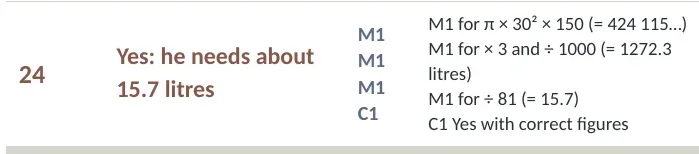
24 Sam has 3 tanks on his farm. Each tank is a cylinder with diameter 60 cm and height 150 cm. 150 cm The 3 tanks are to be filled completely with a mixture of plant food and water. The plant food has to be mixed with water in the ratio 1 : 80 by volume. Sam has 20 litres of plant food. 1 litre = 1000 cm³ Has Sam enough plant food for the 3 tanks? You must show how you get your answer. Remember Vo
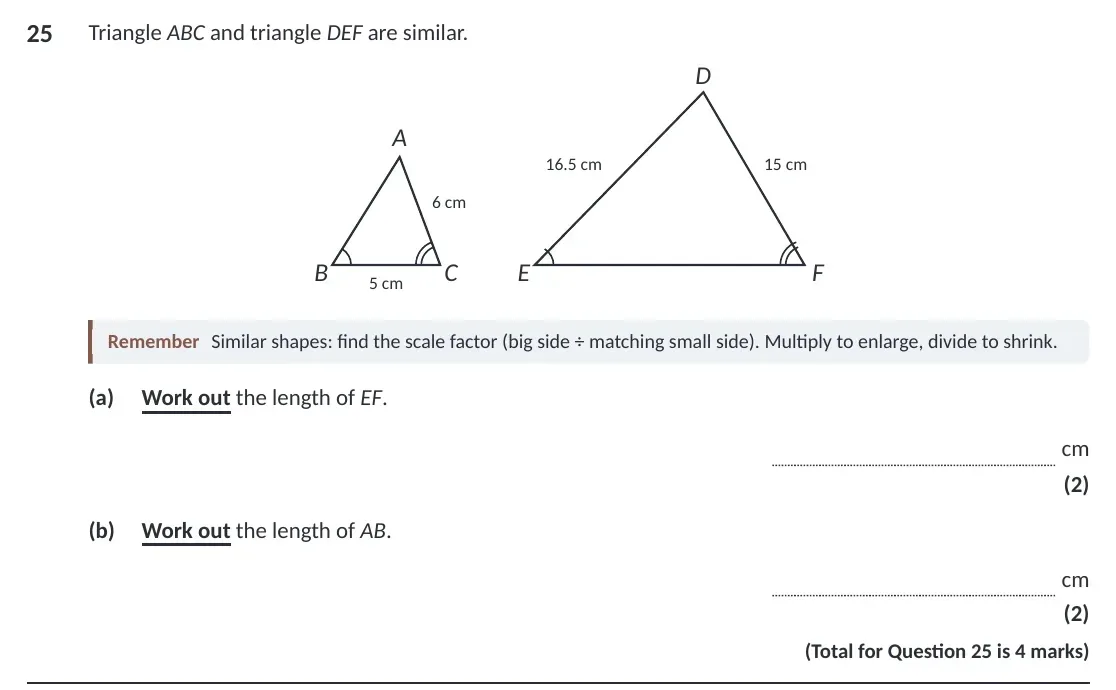
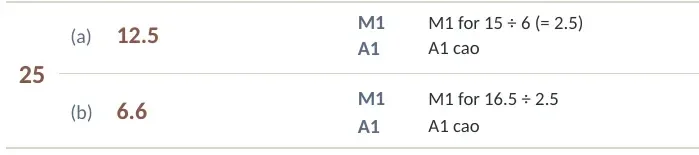
25 Triangle ABC and triangle DEF are similar. D A 16.5 cm 15 cm 6 cm B 5 cm C E F Remember Similar shapes: find the scale factor (big side ÷ matching small side). Multiply to enlarge, divide to shrink. (a) Work out the length of EF. cm (2) (b) Work out the length of AB. cm 📄 sheet: Similar shapes 📄 sheet: Similar shapes (2) (Total for Question 25 is 4 marks)
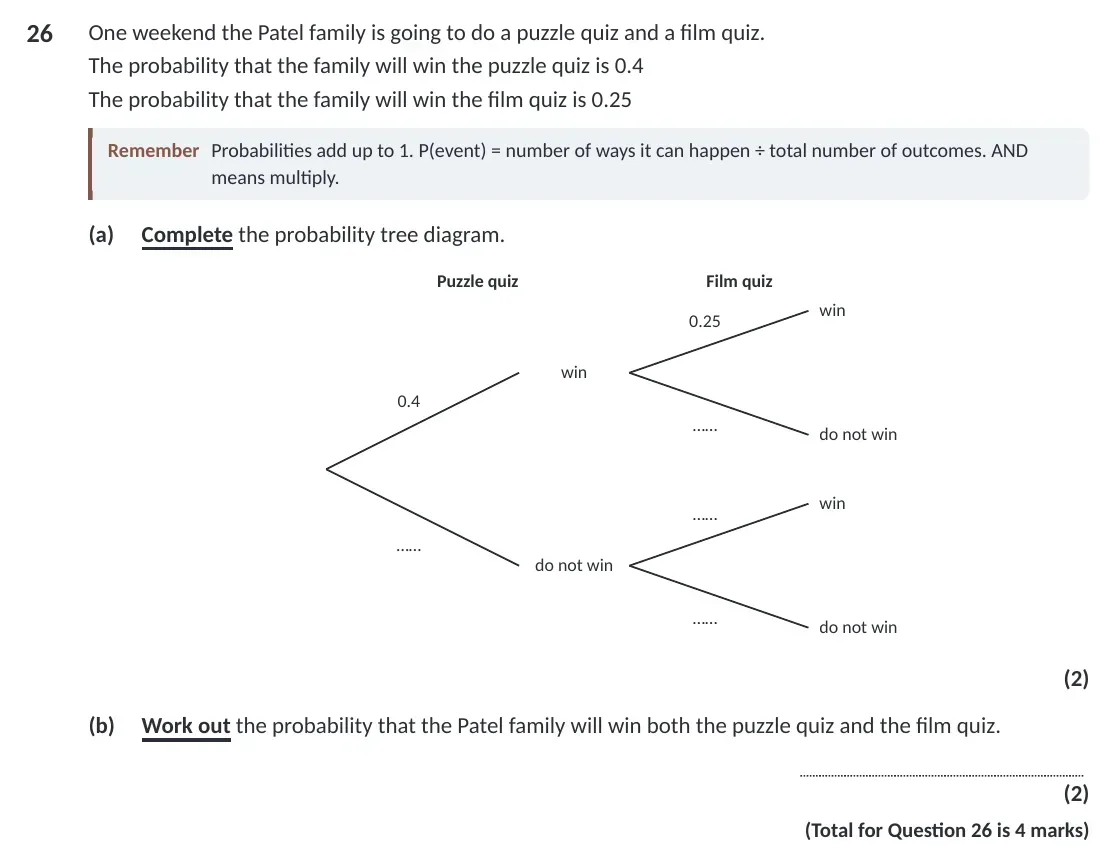
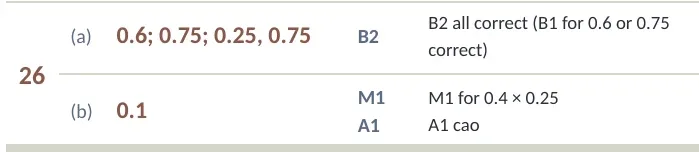
26 One weekend the Patel family is going to do a puzzle quiz and a film quiz. The probability that the family will win the puzzle quiz is 0.4 The probability that the family will win the film quiz is 0.25 Remember Probabilities add up to 1. P(event) = number of ways it can happen ÷ total number of outcomes. AND means multiply. (a) Complete the probability tree diagram. Puzzle quiz Film quiz 0.25 w
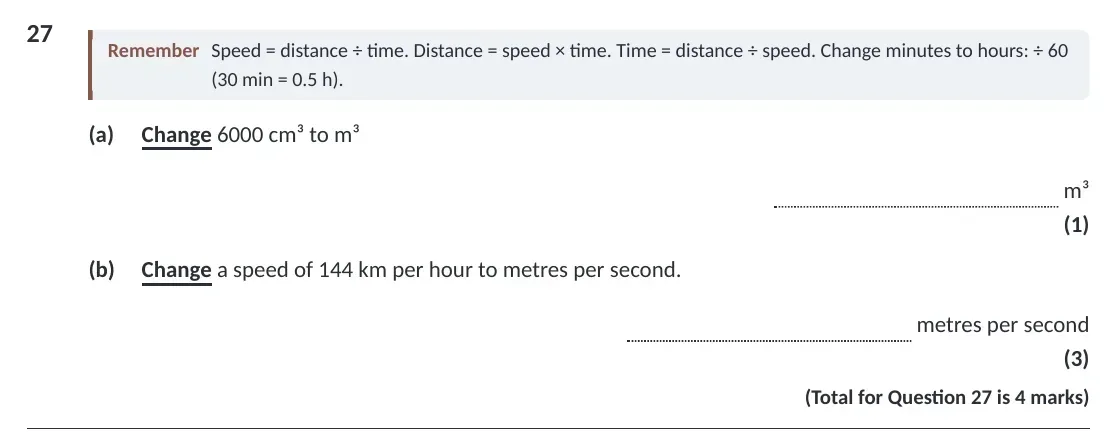
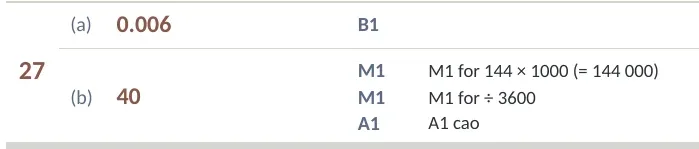
27 Remember Speed = distance ÷ time. Distance = speed × time. Time = distance ÷ speed. Change minutes to hours: ÷ 60 (30 min = 0.5 h). (a) Change 6000 cm³ to m³ m³ (1) (b) Change a speed of 144 km per hour to metres per second. metres per second 📄 sheet: Compound measures (3) (Total for Question 27 is 4 marks)
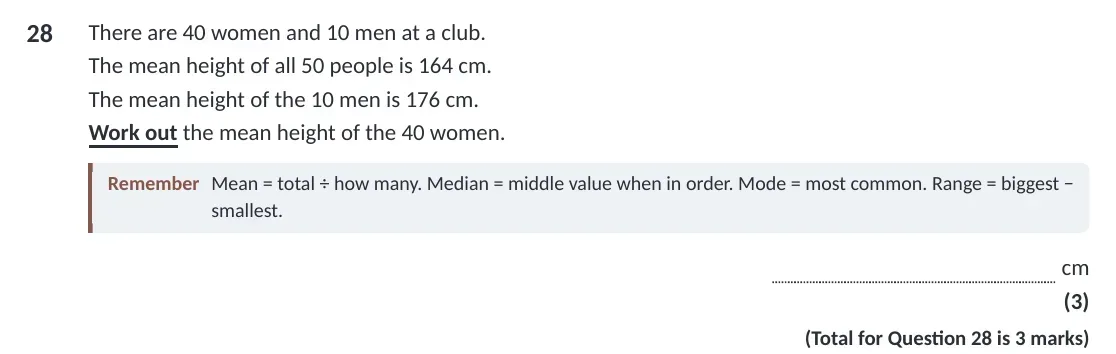
28 There are 40 women and 10 men at a club. The mean height of all 50 people is 164 cm. The mean height of the 10 men is 176 cm. Work out the mean height of the 40 women. Remember Mean = total ÷ how many. Median = middle value when in order. Mode = most common. Range = biggest − smallest. cm 📄 sheet: Working backwards from the mean, card 1 (3) (Total for Question 28 is 3 marks)
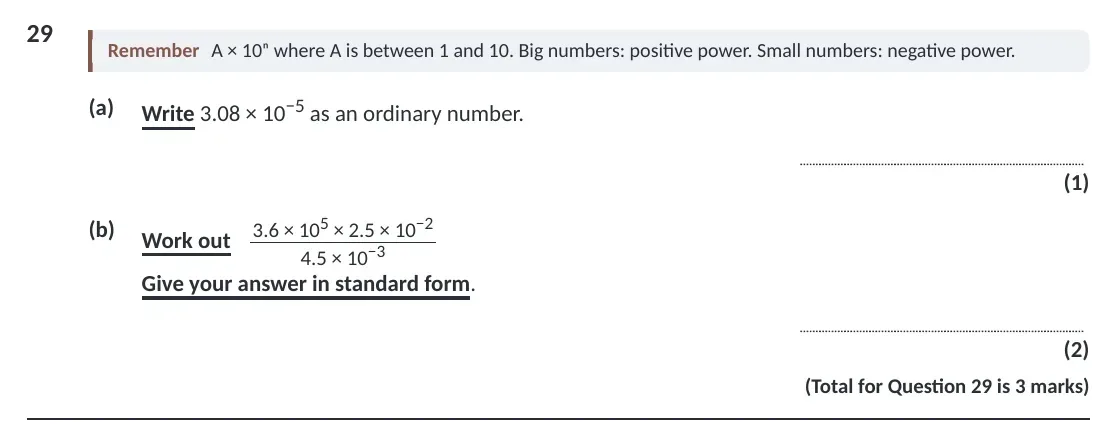
29 Remember A × 10ⁿ where A is between 1 and 10. Big numbers: positive power. Small numbers: negative power. (a) Write 3.08 × 10 −5 as an ordinary number. (1) (b) 5 −2 Work out 3.6 × 10 × 2.5 −3 × 10 4.5 × 10 Give your answer in standard form. 📄 sheet: Calculating with standard form (2) (Total for Question 29 is 3 marks)
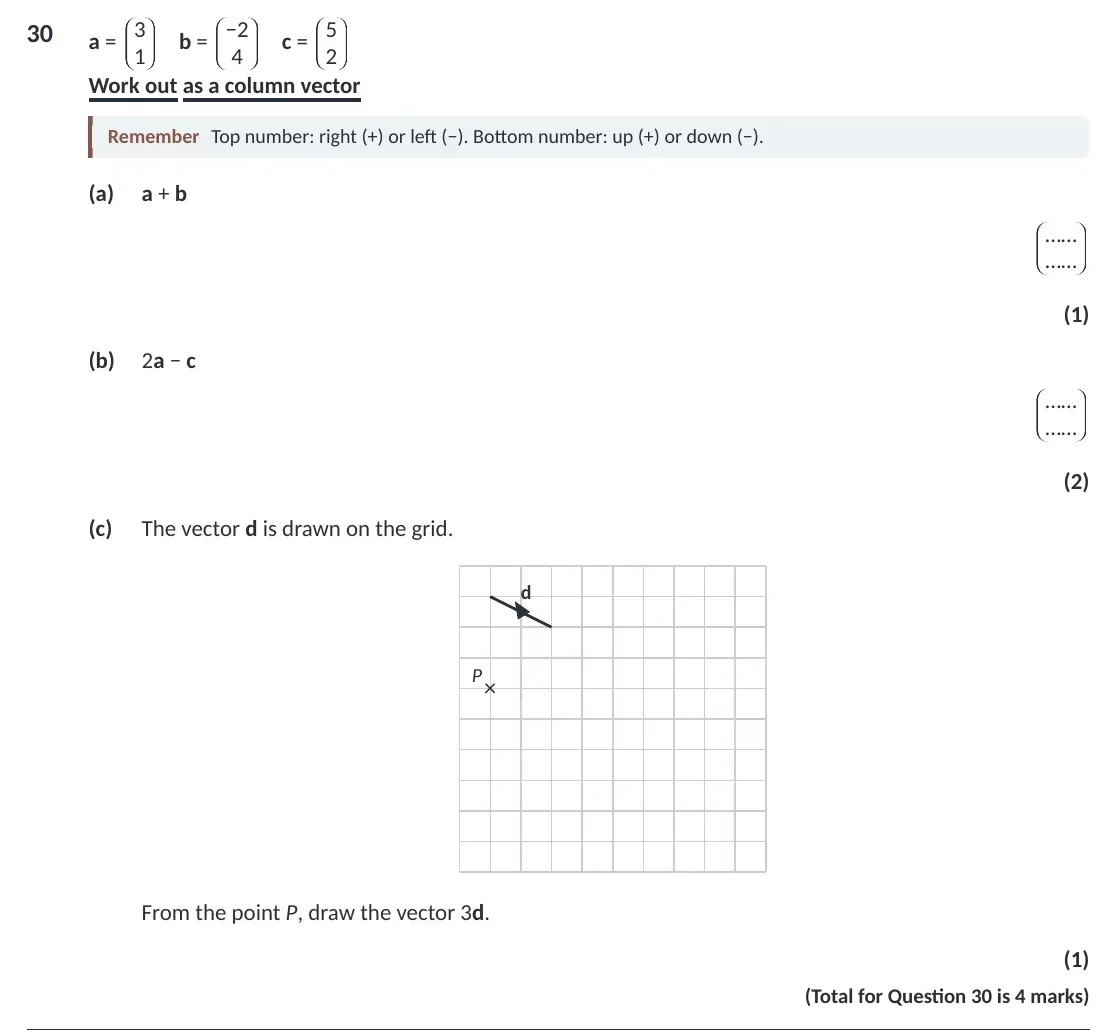
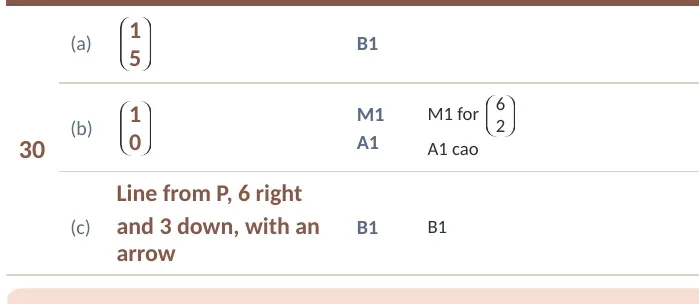
30 3 −2 5 b = c = 1 4 2 Work out as a column vector a = Remember Top number: right (+) or left (−). Bottom number: up (+) or down (−). (a) a + b …… …… (1) (b) 2a − c …… …… (2) (c) The vector d is drawn on the grid. d P × From the point P, draw the vector 3d. 📄 sheet: Vectors 📄 sheet: Place value and written calculation (1) (Total for Question 30 is 4 marks)
◀ F2All papersG1 ▶
Answer the questions, then mark your paper.