Miss North Maths

Full paper E3

Paper 3 style · Calculator · 80 marks · 1 hour 30 minutes

How it works. Type each answer in its box. Tap any underlined word on the paper to see what it wants you to do. Stuck? Open the fact sheet under the question. When you finish, press Mark my paper, then check each question against the mark scheme and give yourself the marks you earned, including method marks.

1 Write the number five thousand and forty-two in figures. (1) 📄 sheet: Place value and number facts (Total for Question 1 is 1 mark)
2 Write 7 as a percentage. 10 % (1) 📄 sheet: Finding percentages (Total for Question 2 is 1 mark)
3 Simplify k + k + k (1) 📄 sheet: Expressions (Total for Question 3 is 1 mark)
4 Change 3000 metres into kilometres. kilometres (1) 📄 sheet: Converting units (Total for Question 4 is 1 mark)
5 6 −4 2 8 −1 Write these numbers in order of size. Start with the smallest number. (1)
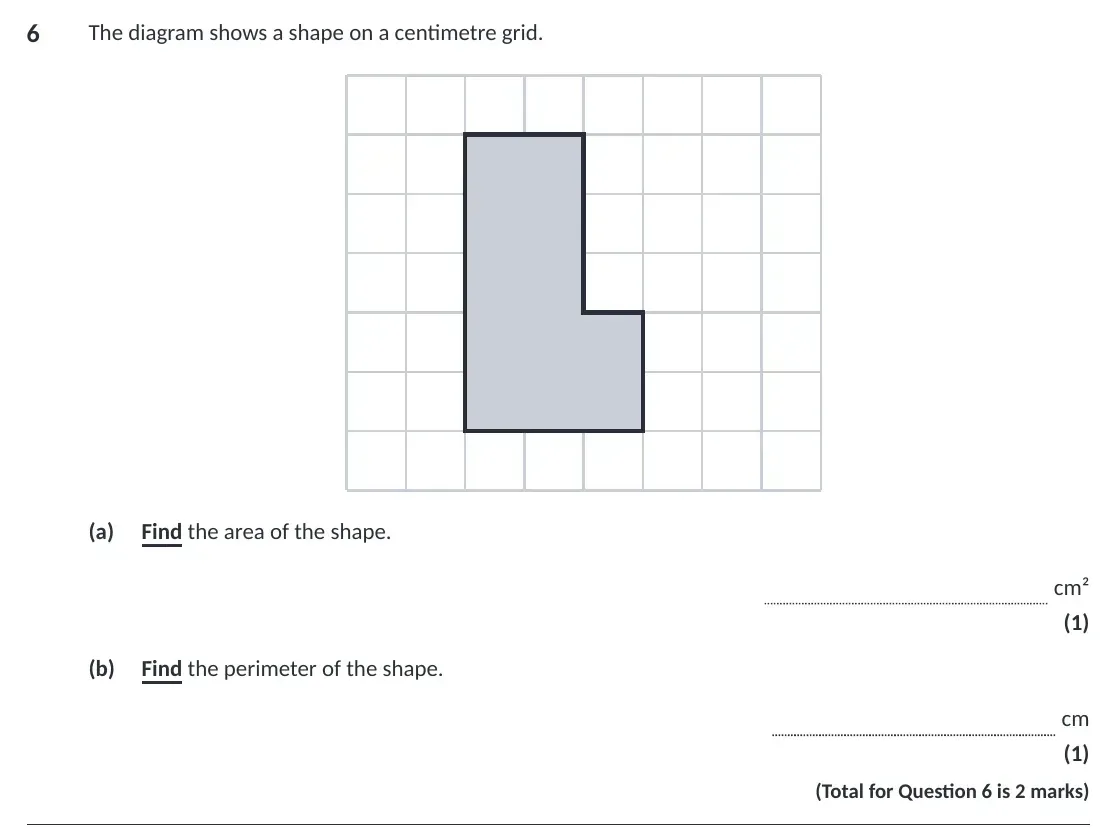
6 The diagram shows a shape on a centimetre grid. (a) Find the area of the shape. cm² (1) (b) Find the perimeter of the shape. cm 📄 sheet: Area (1) (Total for Question 6 is 2 marks)
Fact sheet: Area
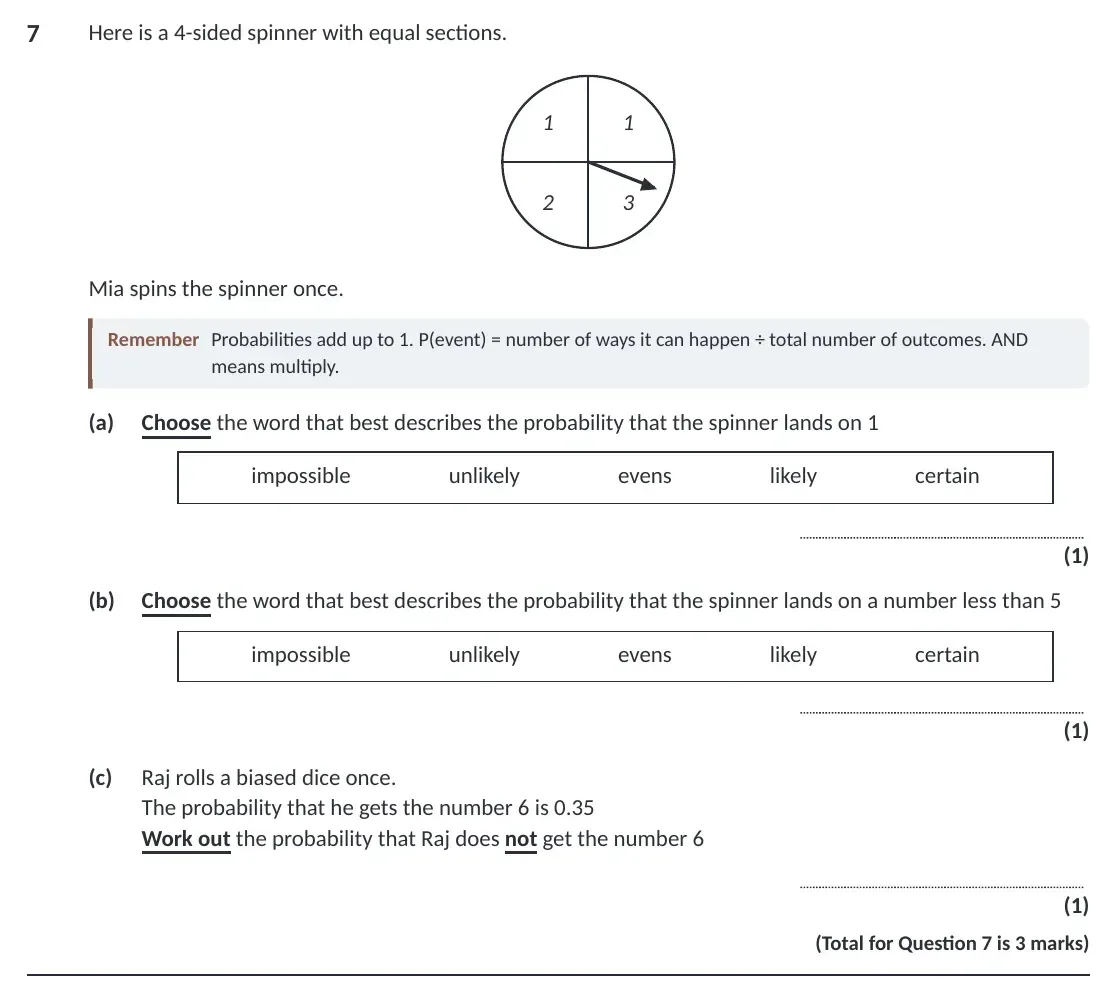
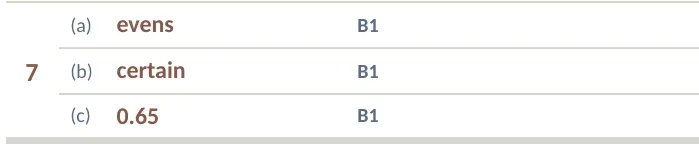
7 Here is a 4-sided spinner with equal sections. 1 1 2 3 Mia spins the spinner once. Remember Probabilities add up to 1. P(event) = number of ways it can happen ÷ total number of outcomes. AND means multiply. (a) Choose the word that best describes the probability that the spinner lands on 1 impossible unlikely evens likely certain (1) (b) Choose the word that best describes the probability that t
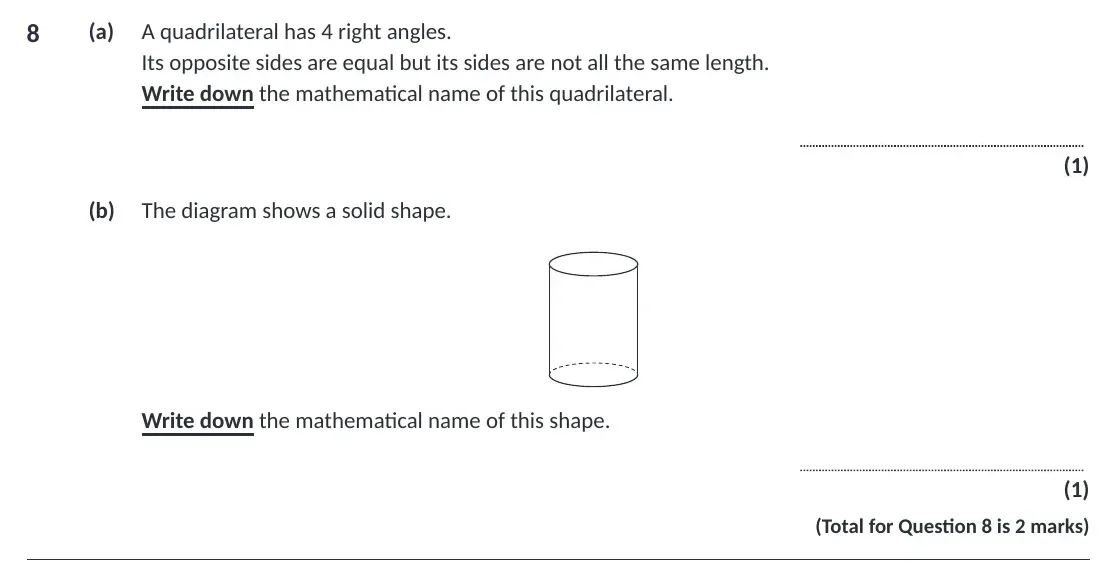
8 (a) A quadrilateral has 4 right angles. Its opposite sides are equal but its sides are not all the same length. Write down the mathematical name of this quadrilateral. (1) (b) The diagram shows a solid shape. Write down the mathematical name of this shape. 📄 sheet: 2-D shapes 📄 sheet: Place value and written calculation (1) (Total for Question 8 is 2 marks)
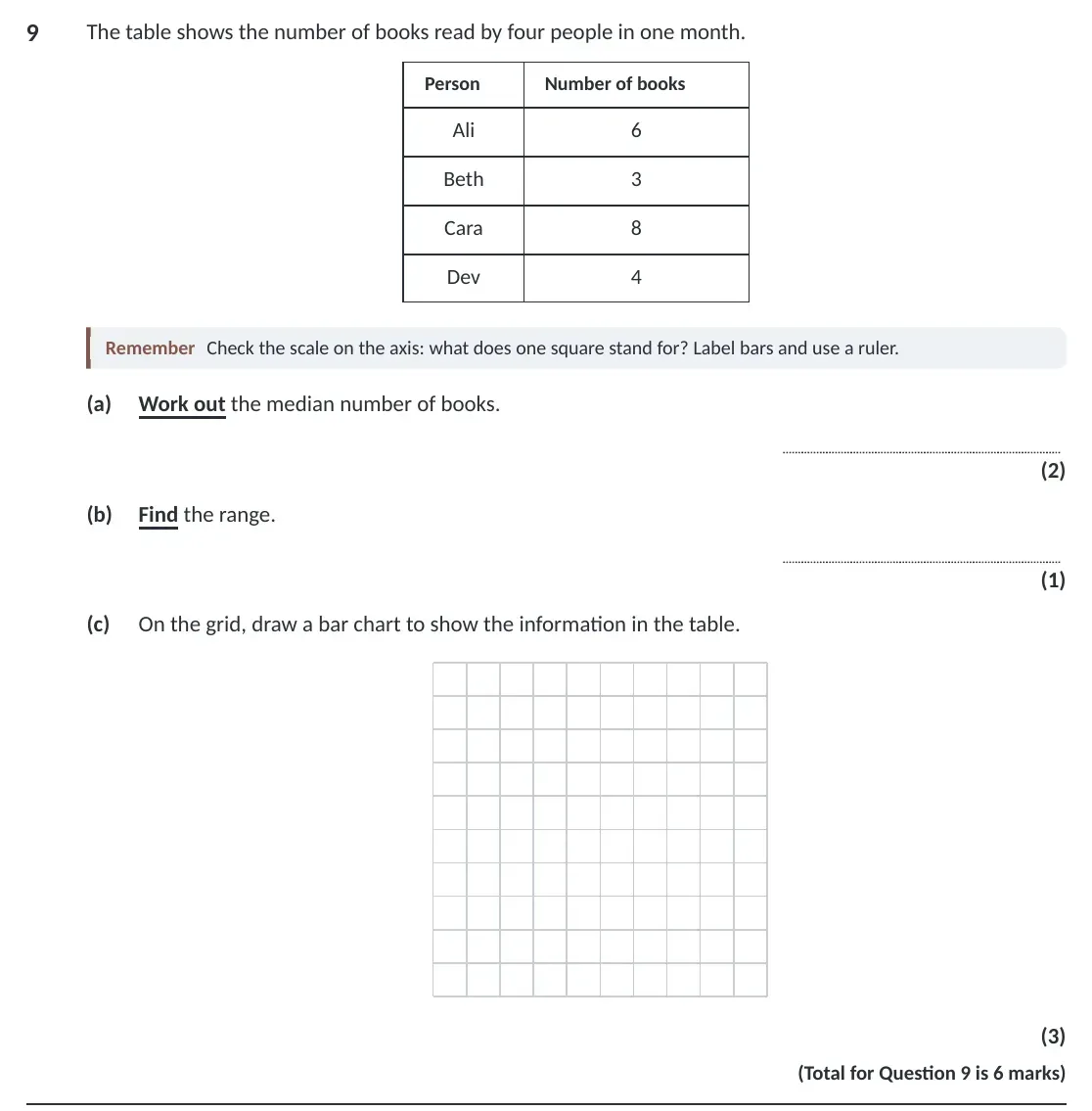
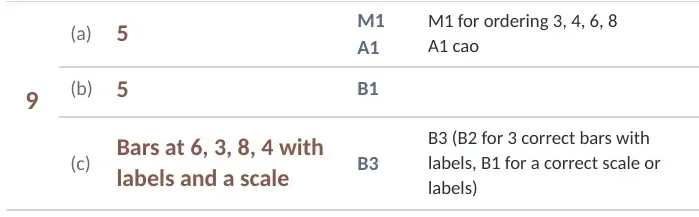
9 The table shows the number of books read by four people in one month. Person Number of books Ali 6 Beth 3 Cara 8 Dev 4 Remember Check the scale on the axis: what does one square stand for? Label bars and use a ruler. (a) Work out the median number of books. (2) (b) Find the range. (1) (c) On the grid, draw a bar chart to show the information in the table. 📄 sheet: Mean, median, mode and range, c
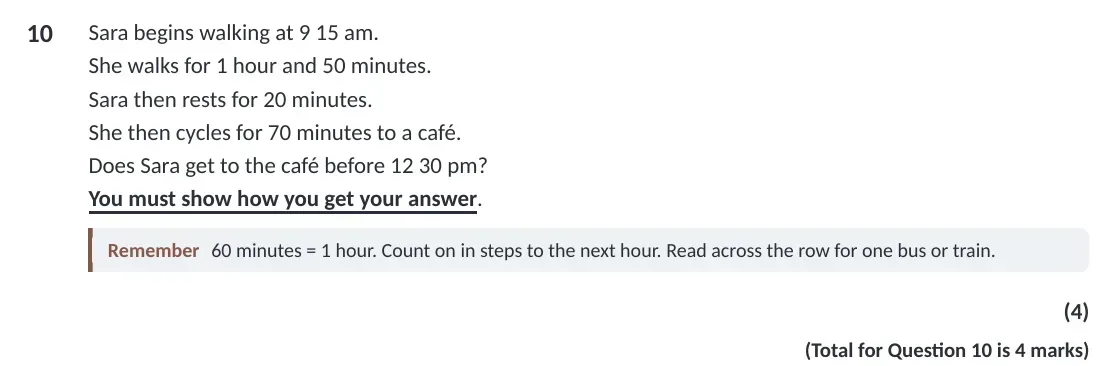
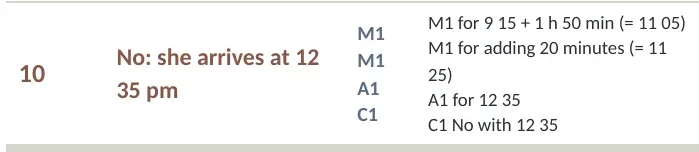
10 Sara begins walking at 9 15 am. She walks for 1 hour and 50 minutes. Sara then rests for 20 minutes. She then cycles for 70 minutes to a café. Does Sara get to the café before 12 30 pm? You must show how you get your answer. Remember 60 minutes = 1 hour. Count on in steps to the next hour. Read across the row for one bus or train. 📄 sheet: Time and timetables (4) (Total for Question 10 is 4 mar

11 Amir thinks of a number. He multiplies his number by 4 and then subtracts 9 His answer is 63 What number did Amir think of? Remember Go forwards through the machine for the output. To find the input, work backwards using the inverse (× becomes ÷). 📄 sheet: Number problems and number machines (3) (Total for Question 11 is 3 marks)
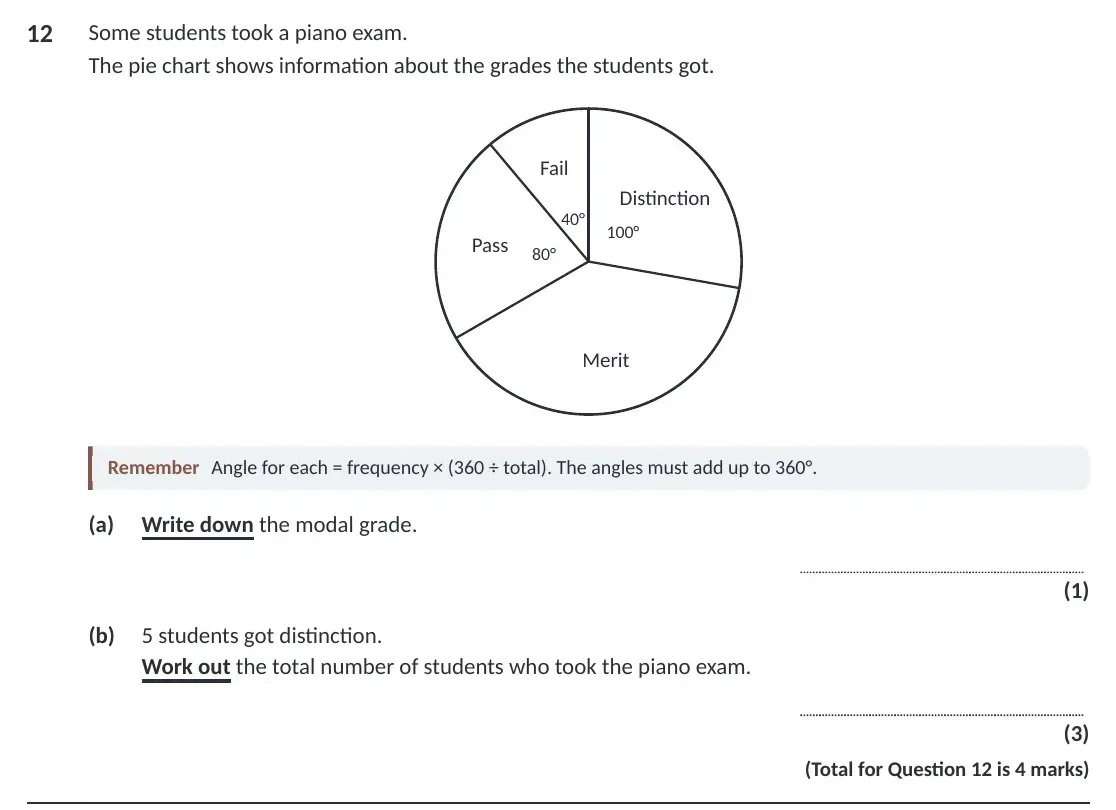
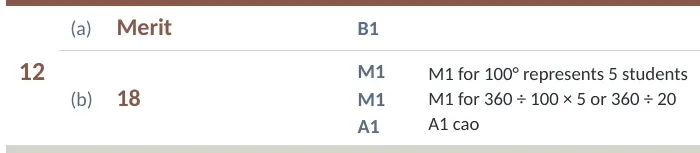
12 Some students took a piano exam. The pie chart shows information about the grades the students got. Fail 40° Pass 80° Distinction 100° Merit Remember Angle for each = frequency × (360 ÷ total). The angles must add up to 360°. (a) Write down the modal grade. (1) (b) 5 students got distinction. Work out the total number of students who took the piano exam. 📄 sheet: Pie charts (3) (Total for Quest
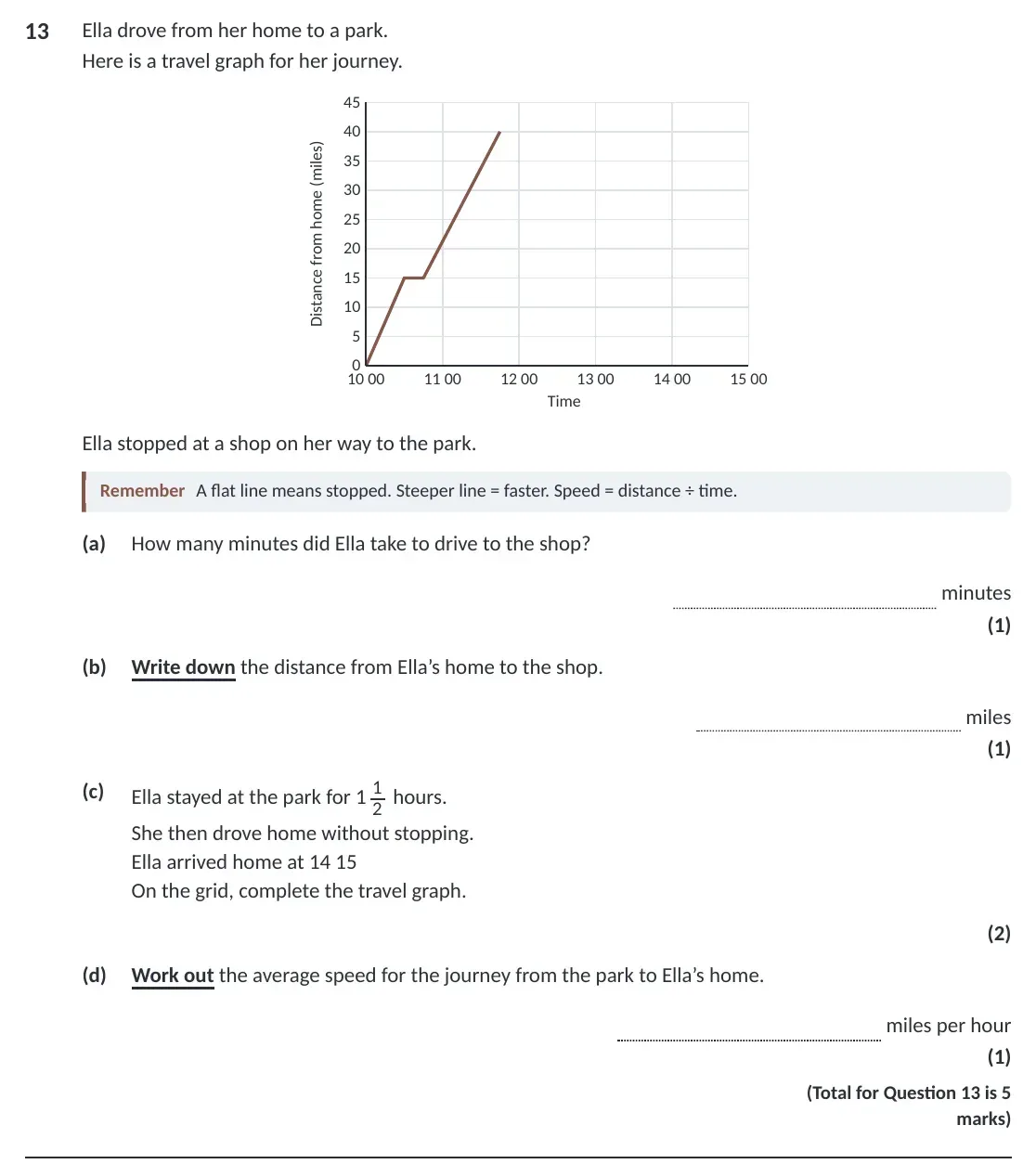
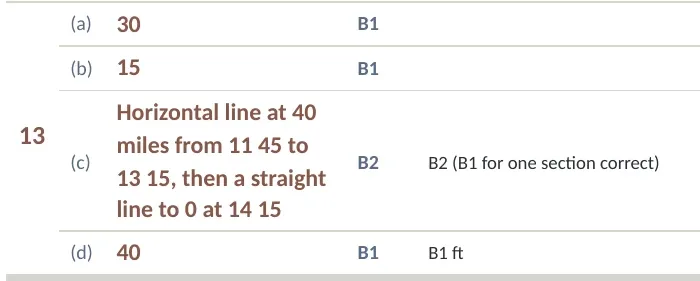
13 Ella drove from her home to a park. Here is a travel graph for her journey. Distance from home (miles) 45 40 35 30 25 20 15 10 5 0 10 00 11 00 12 00 13 00 Time 14 00 15 00 Ella stopped at a shop on her way to the park. Remember A flat line means stopped. Steeper line = faster. Speed = distance ÷ time. (a) How many minutes did Ella take to drive to the shop? minutes (1) (b) Write down the distan
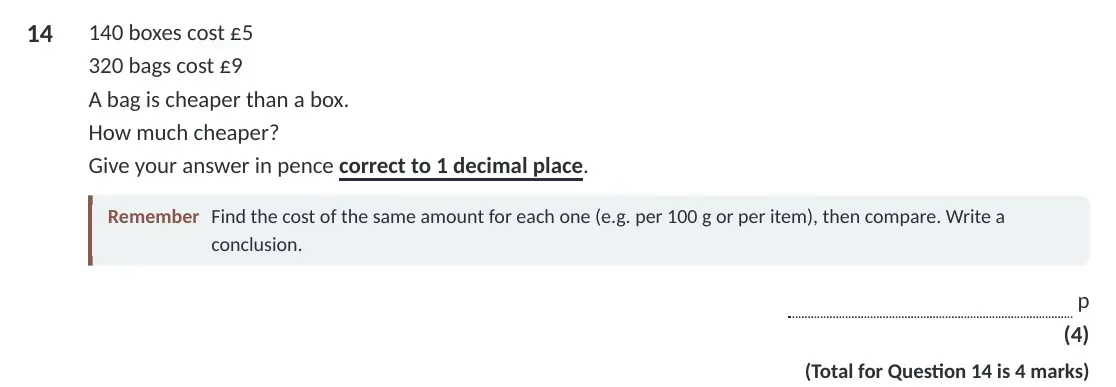
14 140 boxes cost £5 320 bags cost £9 A bag is cheaper than a box. How much cheaper? Give your answer in pence correct to 1 decimal place. Remember Find the cost of the same amount for each one (e.g. per 100 g or per item), then compare. Write a conclusion. p (4) 📄 sheet: Best buys (Total for Question 14 is 4 marks)
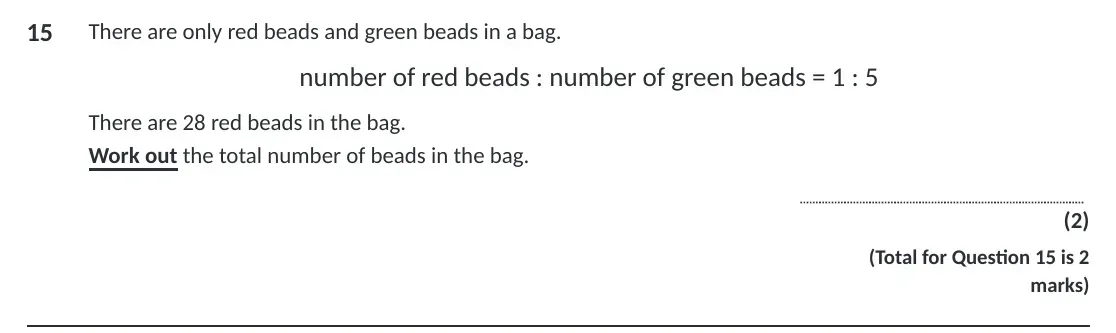
15 There are only red beads and green beads in a bag. number of red beads : number of green beads = 1 : 5 There are 28 red beads in the bag. Work out the total number of beads in the bag. 📄 sheet: Using one part, card 1 📄 sheet: Place value and written calculation (2) (Total for Question 15 is 2 marks)
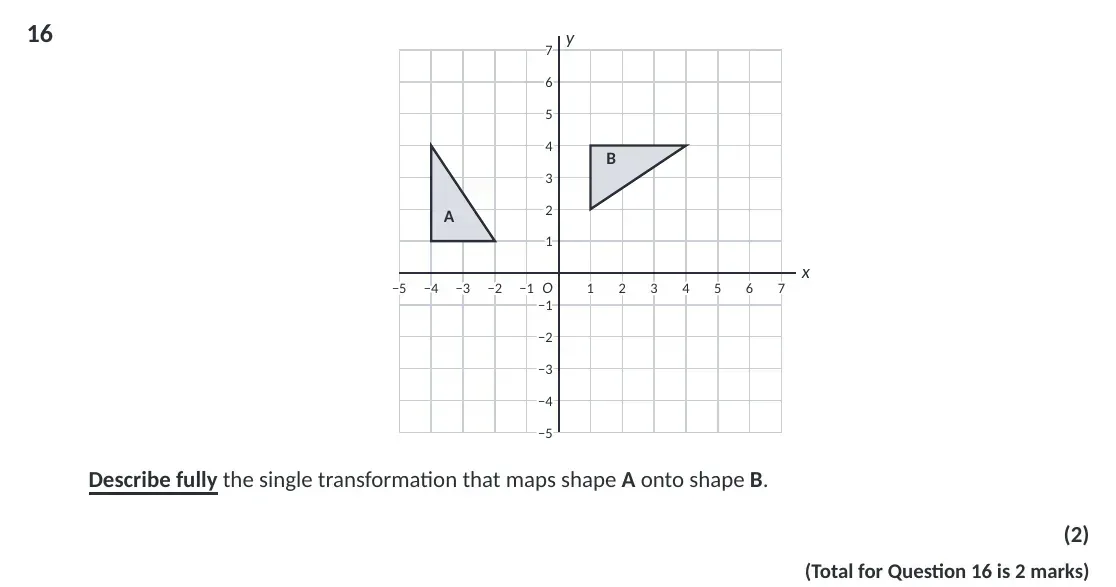
16 7 y 6 5 4 B 3 2 A 1 −5 −4 −3 −2 −1 O −1 1 2 3 4 5 6 7 x −2 −3 −4 −5 Describe fully the single transformation that maps shape A onto shape B. (2) 📄 sheet: Rotation (Total for Question 16 is 2 marks)
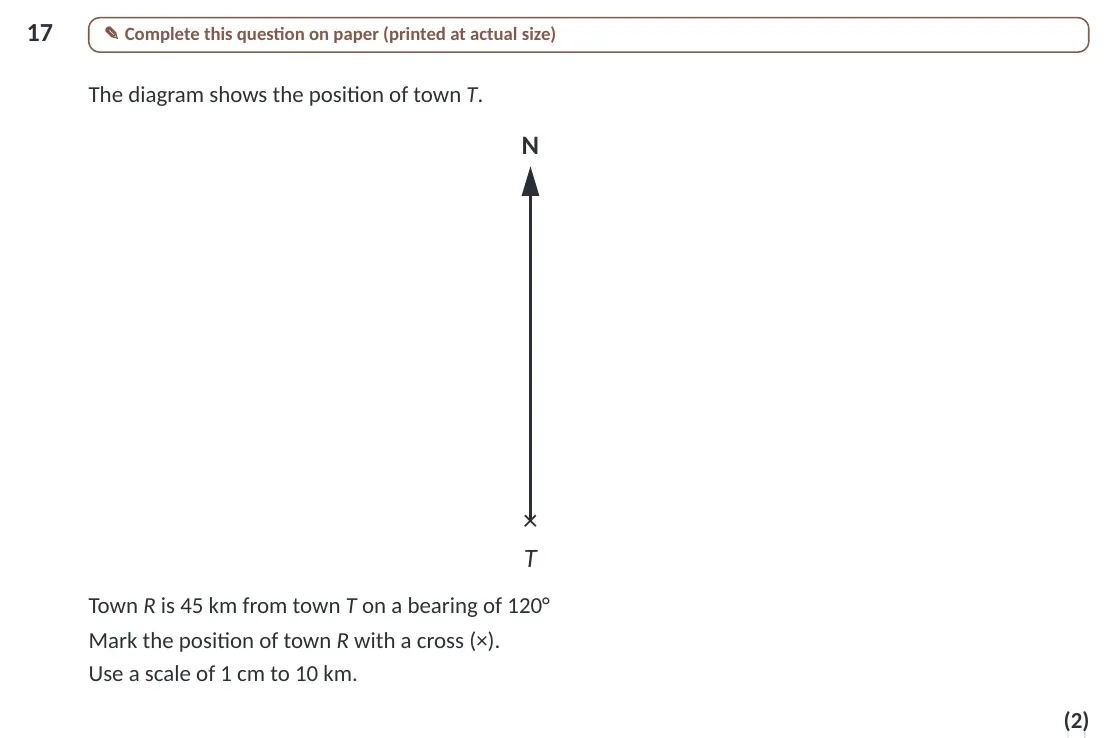
17 ✎ Complete this question on paper (printed at actual size) The diagram shows the position of town T. N × T Town R is 45 km from town T on a bearing of 120° Mark the position of town R with a cross (×). Use a scale of 1 cm to 10 km. 📄 (2)

✎ You need a ruler, protractor or compasses for this one. Do it on paper, then mark it below.

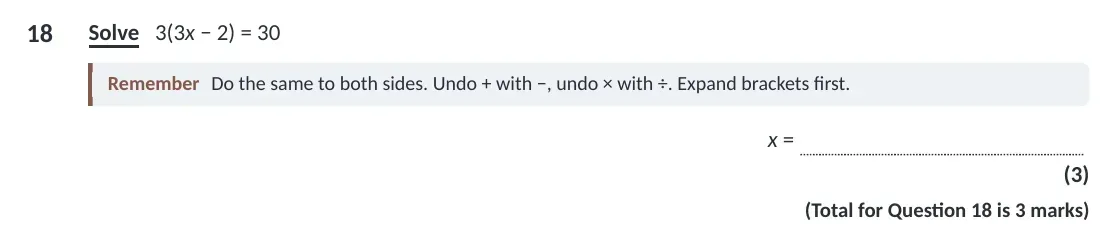
18 Solve 3(3x − 2) = 30 Remember Do the same to both sides. Undo + with −, undo × with ÷. Expand brackets first. x = (3) 📄 sheet: Solving equations, card 2 (Total for Question 18 is 3 marks)
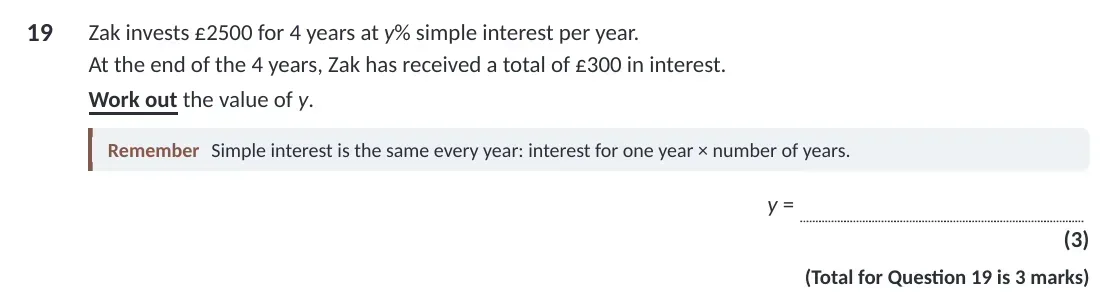
19 Zak invests £2500 for 4 years at y% simple interest per year. At the end of the 4 years, Zak has received a total of £300 in interest. Work out the value of y. Remember Simple interest is the same every year: interest for one year × number of years. y = 📄 sheet: Forming and solving equations (3) (Total for Question 19 is 3 marks)
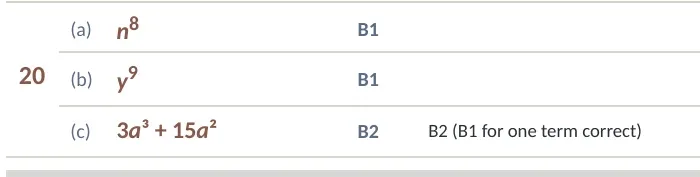
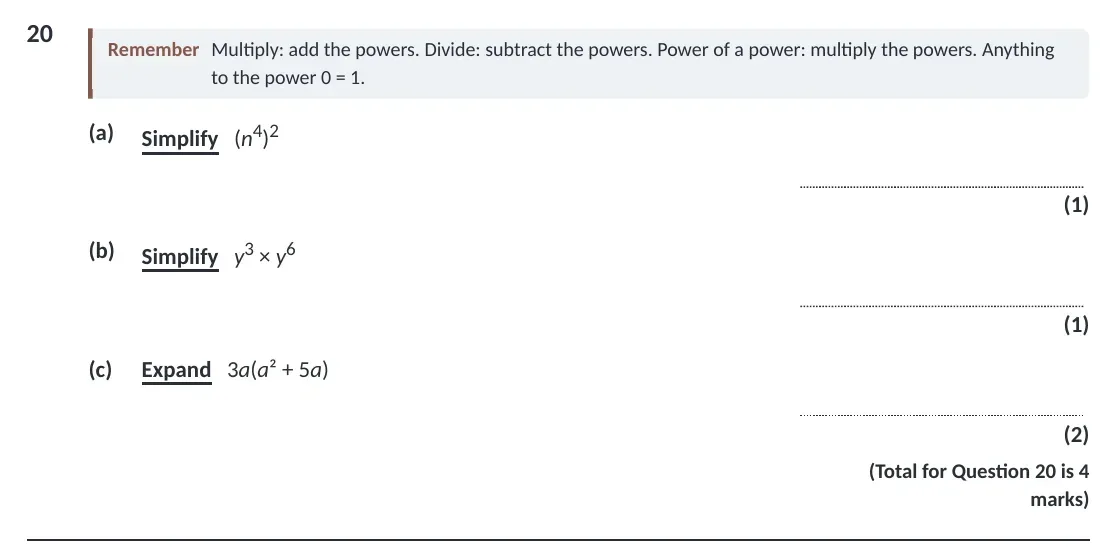
20 Remember Multiply: add the powers. Divide: subtract the powers. Power of a power: multiply the powers. Anything to the power 0 = 1. (a) Simplify (n 4 ) 2 (1) (b) Simplify y 3 × y 6 (1) (c) Expand 3a(a² + 5a) 📄 sheet: 📄 sheet: Expanding brackets, card 1 📄 sheet: Index laws (2) (Total for Question 20 is 4 marks)
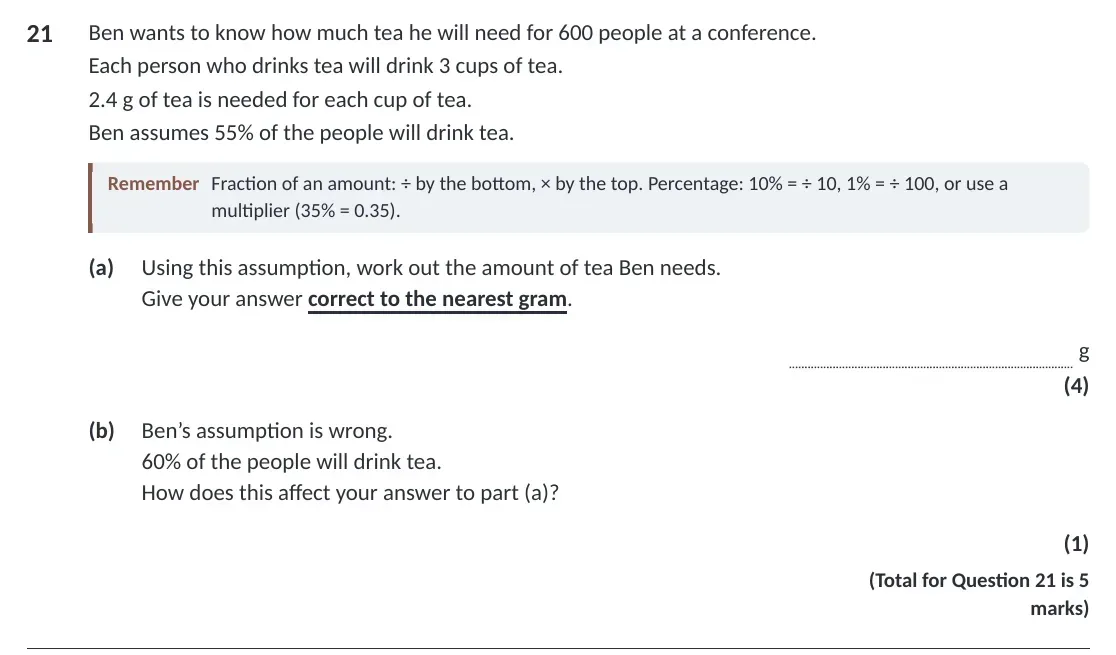
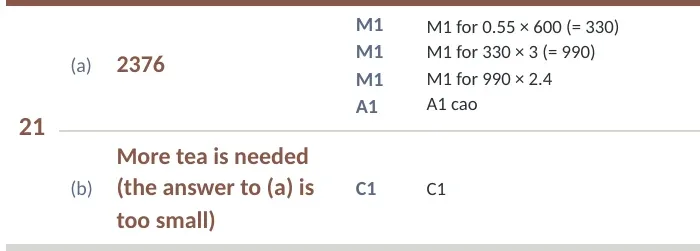
21 Ben wants to know how much tea he will need for 600 people at a conference. Each person who drinks tea will drink 3 cups of tea. 2.4 g of tea is needed for each cup of tea. Ben assumes 55% of the people will drink tea. Remember Fraction of an amount: ÷ by the bottom, × by the top. Percentage: 10% = ÷ 10, 1% = ÷ 100, or use a multiplier (35% = 0.35). (a) Using this assumption, work out the amoun
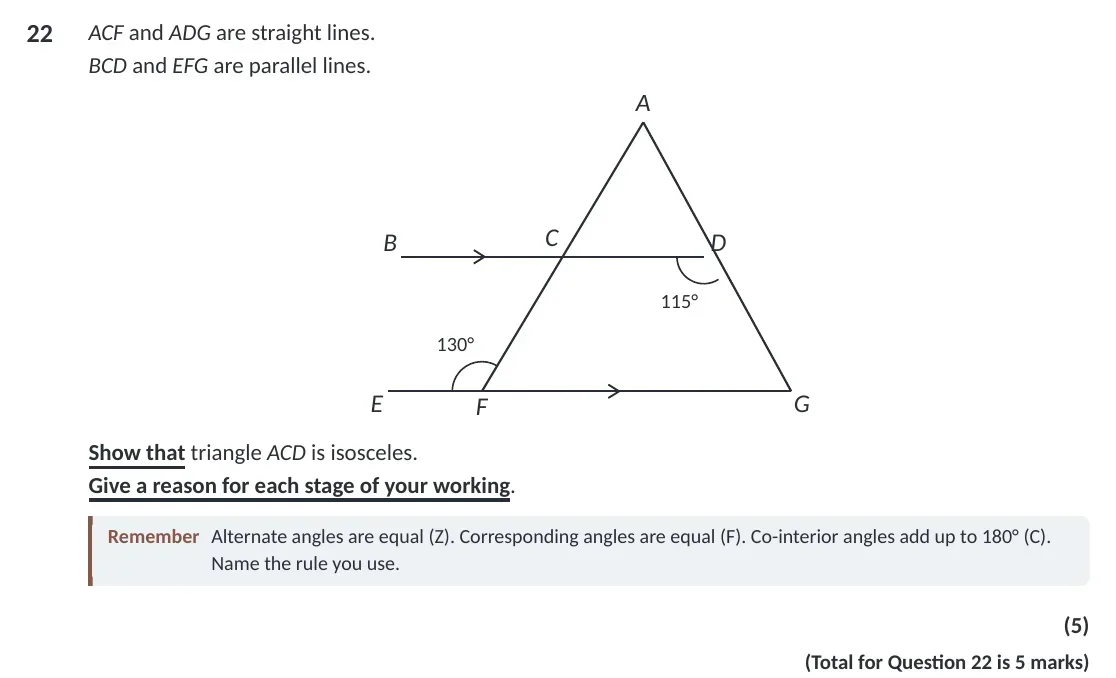
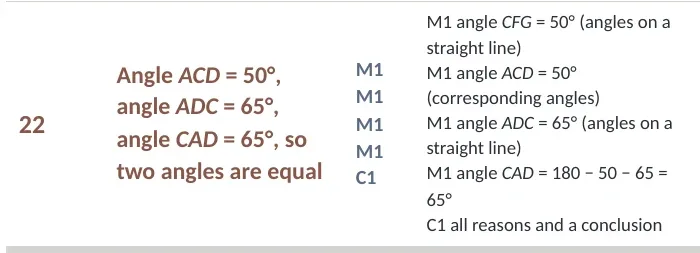
22 ACF and ADG are straight lines. BCD and EFG are parallel lines. A C B D 115° 130° E F G Show that triangle ACD is isosceles. Give a reason for each stage of your working. Remember Alternate angles are equal (Z). Corresponding angles are equal (F). Co-interior angles add up to 180° (C). Name the rule you use. 📄 sheet: Angle facts (5) (Total for Question 22 is 5 marks)
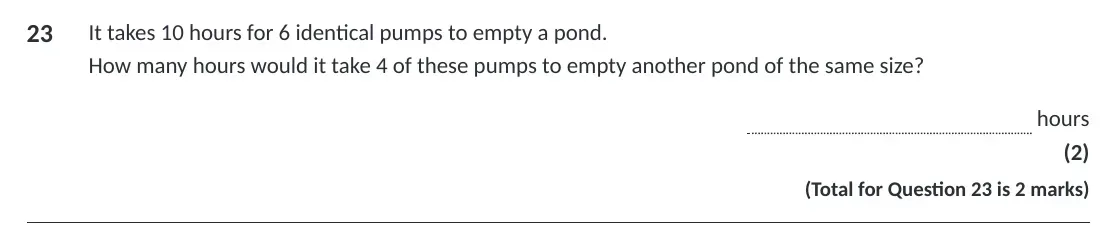
23 It takes 10 hours for 6 identical pumps to empty a pond. How many hours would it take 4 of these pumps to empty another pond of the same size? hours 📄 sheet: Inverse proportion, card 1 (2) (Total for Question 23 is 2 marks)
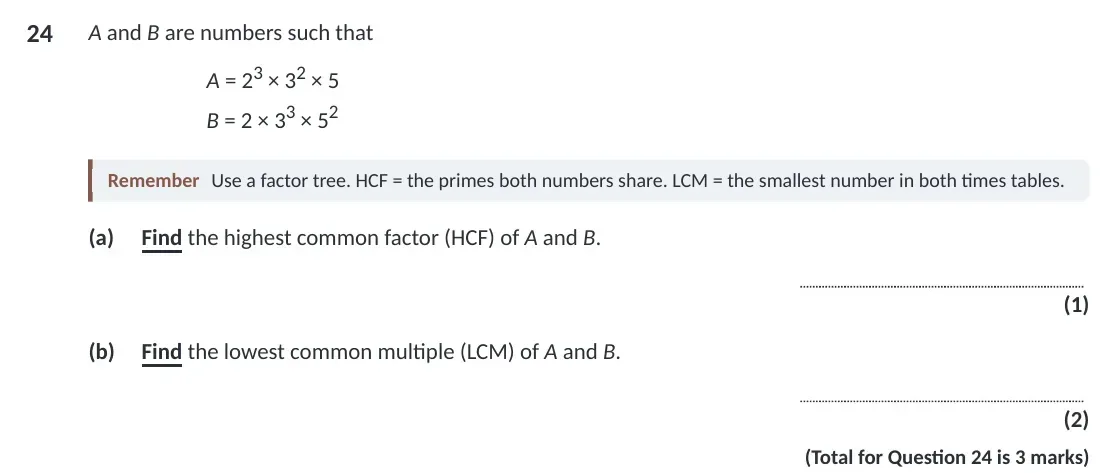
24 A and B are numbers such that A = 2 3 × 3 2 × 5 B = 2 × 3 3 × 5 2 Remember Use a factor tree. HCF = the primes both numbers share. LCM = the smallest number in both times tables. (a) Find the highest common factor (HCF) of A and B. (1) (b) Find the lowest common multiple (LCM) of A and B. 📄 sheet: HCF and LCM (2) (Total for Question 24 is 3 marks)
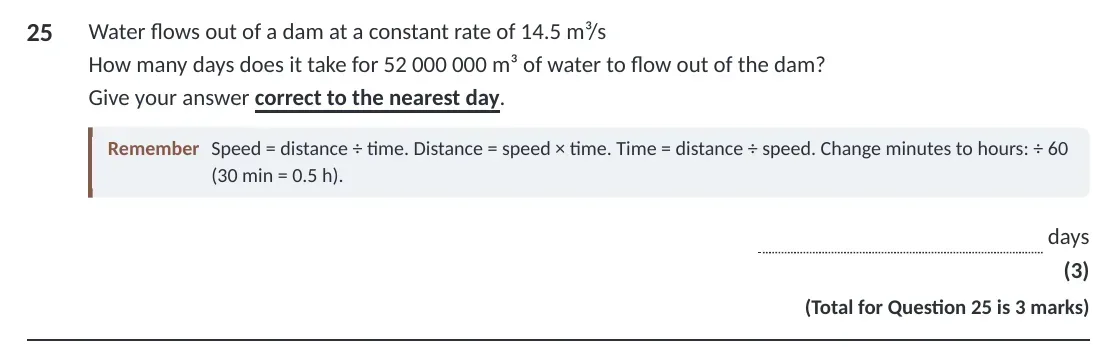
25 Water flows out of a dam at a constant rate of 14.5 m³/s How many days does it take for 52 000 000 m³ of water to flow out of the dam? Give your answer correct to the nearest day. Remember Speed = distance ÷ time. Distance = speed × time. Time = distance ÷ speed. Change minutes to hours: ÷ 60 (30 min = 0.5 h). days 📄 sheet: Compound measures (3) (Total for Question 25 is 3 marks)
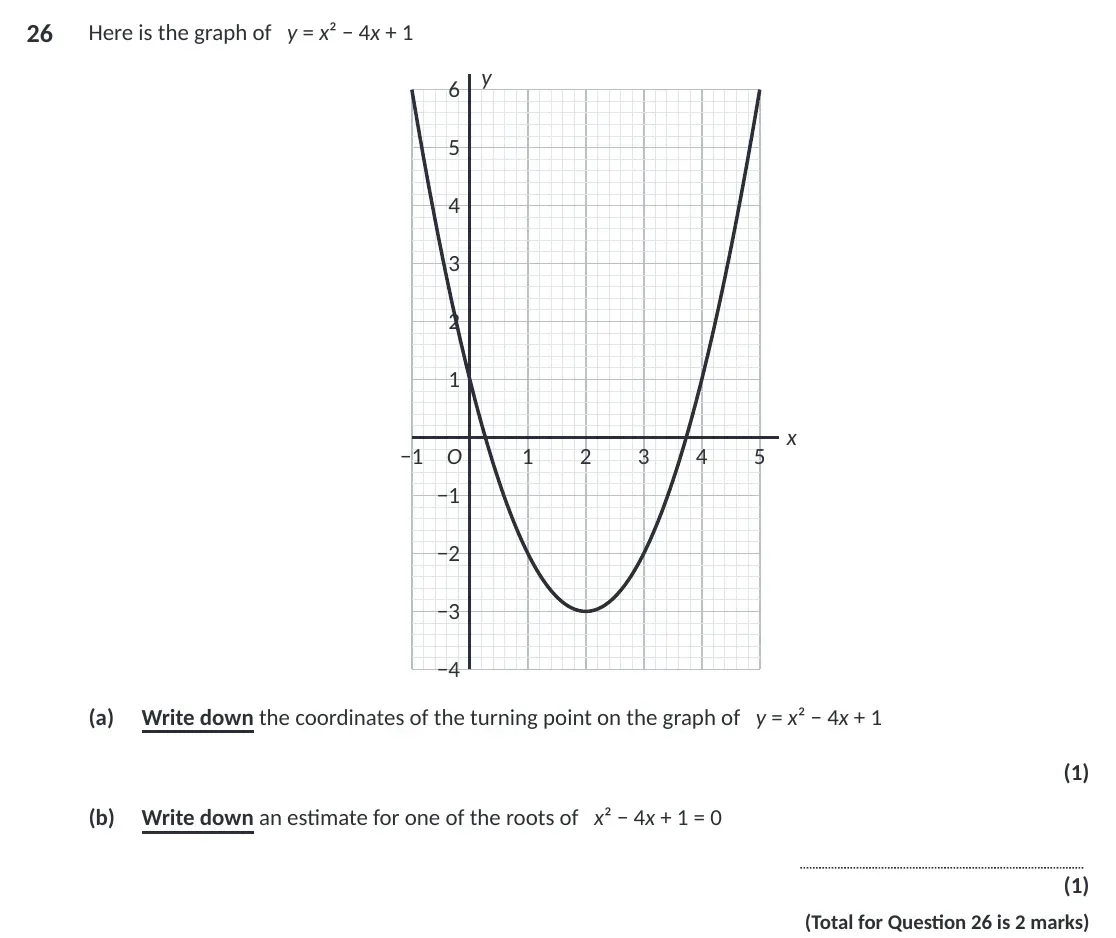
26 Here is the graph of y = x² − 4x + 1 6 y 5 4 3 2 1 −1 O 1 2 3 4 5 x −1 −2 −3 −4 (a) Write down the coordinates of the turning point on the graph of y = x² − 4x + 1 (1) (b) Write down an estimate for one of the roots of x² − 4x + 1 = 0 📄 sheet: Drawing and using quadratic graphs 📄 sheet: Rounding (1) (Total for Question 26 is 2 marks)
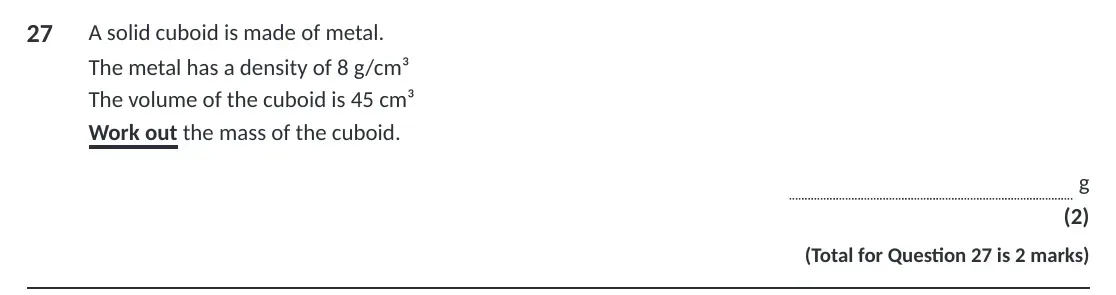
27 A solid cuboid is made of metal. The metal has a density of 8 g/cm³ The volume of the cuboid is 45 cm³ Work out the mass of the cuboid. g 📄 sheet: Density (2) (Total for Question 27 is 2 marks)
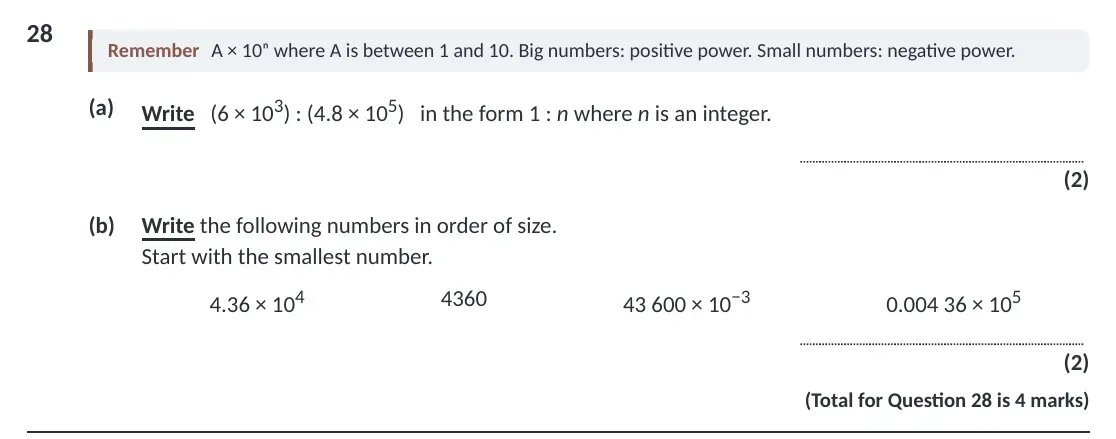
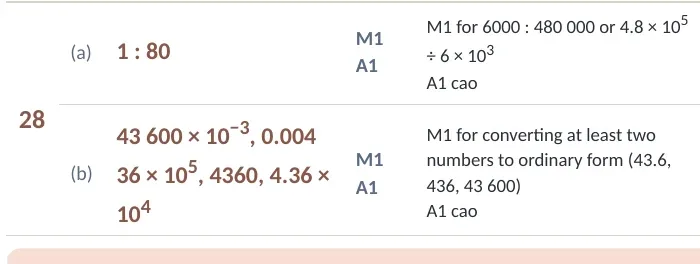
28 Remember A × 10ⁿ where A is between 1 and 10. Big numbers: positive power. Small numbers: negative power. (a) Write (6 × 10 3 ) : (4.8 × 10 5 ) in the form 1 : n where n is an integer. (2) (b) Write the following numbers in order of size. Start with the smallest number. 4.36 × 10 4 4360 43 600 × 10 −3 📄 sheet: Writing numbers in standard form 0.004 36 × 10 5 (2) (Total for Question 28 is 4 mark
◀ E2All papersF1 ▶
Answer the questions, then mark your paper.