Miss North Maths

Full paper A3

Paper 3 style · Calculator · 80 marks · 1 hour 30 minutes

How it works. Type each answer in its box. Tap any underlined word on the paper to see what it wants you to do. Stuck? Open the fact sheet under the question. When you finish, press Mark my paper, then check each question against the mark scheme and give yourself the marks you earned, including method marks.

1 Write down the value of the 6 in the number 58.362 (1) 📄 sheet: Place value and number facts (Total for Question 1 is 1 mark)
2 Find √12.25 (1) 📄 sheet: Powers and roots (Total for Question 2 is 1 mark)
3 Write 37% as a fraction. (1) 📄 sheet: Converting fractions, decimals and percentages (Total for Question 3 is 1 mark)
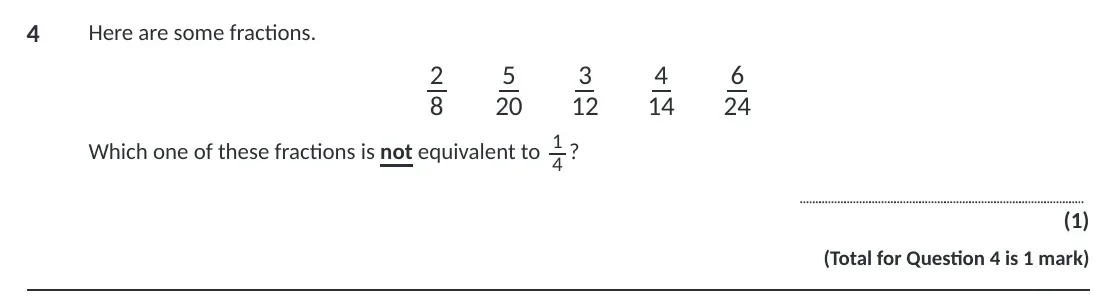
4 Here are some fractions. 2 8 5 20 3 12 4 14 6 24 Which one of these fractions is not equivalent to 1 ? 4 📄 sheet: Writing and simplifying fractions, card 1 (1) (Total for Question 4 is 1 mark)
5 Write down two factors of 45 ……………… , ……………… (1) 📄 sheet: and multiples (Total for Question 5 is 1 mark)
6 Kai has some £5 notes and some £20 notes. The notes have a total value of £235 Kai has seven £20 notes. Work out the number of £5 notes Kai has. Remember Write down each cost or amount as you work it out, then add them up. Write money with 2 decimal places (£4.50). 100p = £1. (3) 📄 sheet: Planning costs and sharing (Total for Question 6 is 3 marks)
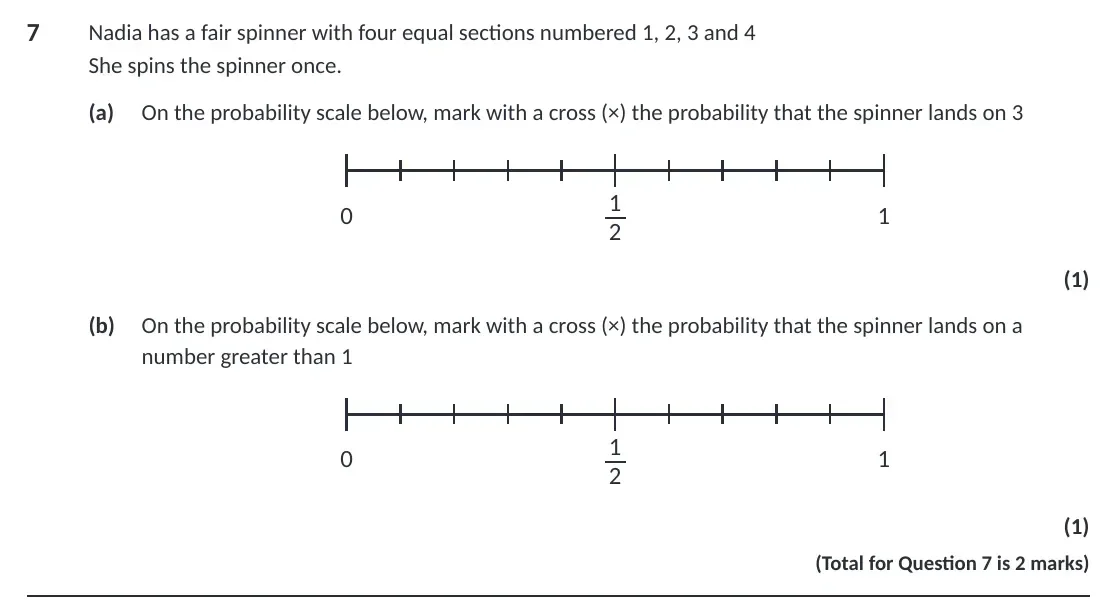
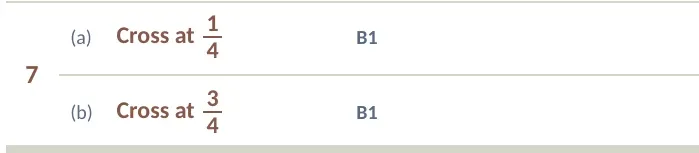
7 Nadia has a fair spinner with four equal sections numbered 1, 2, 3 and 4 She spins the spinner once. (a) On the probability scale below, mark with a cross (×) the probability that the spinner lands on 3 0 1 2 1 (1) (b) On the probability scale below, mark with a cross (×) the probability that the spinner lands on a number greater than 1 0 📄 sheet: Probability of single events 1 2 1 (1) (Total fo
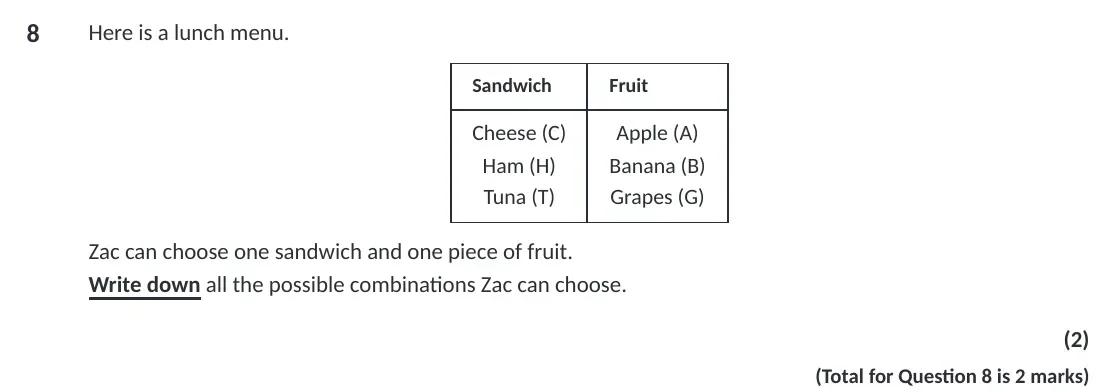
8 Here is a lunch menu. Sandwich Fruit Cheese (C) Ham (H) Tuna (T) Apple (A) Banana (B) Grapes (G) Zac can choose one sandwich and one piece of fruit. Write down all the possible combinations Zac can choose. (2) 📄 sheet: Listing outcomes (Total for Question 8 is 2 marks)
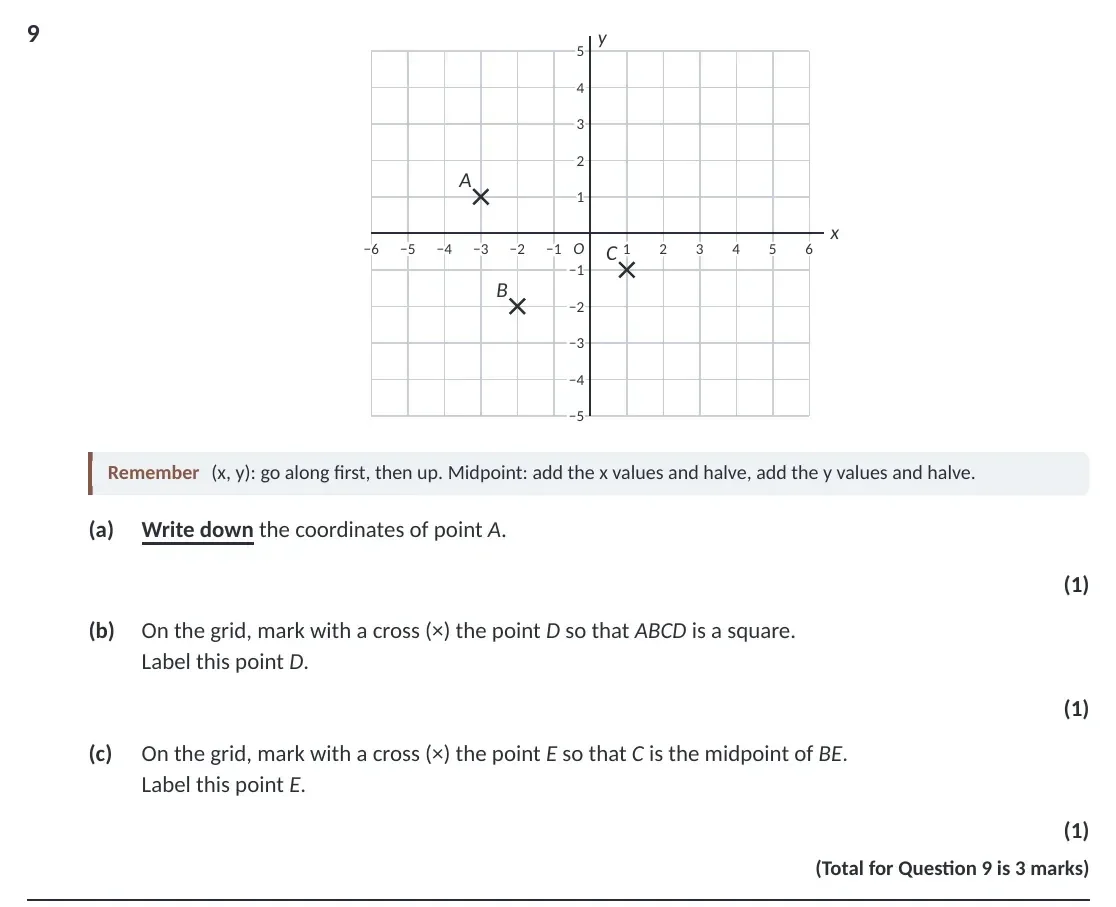
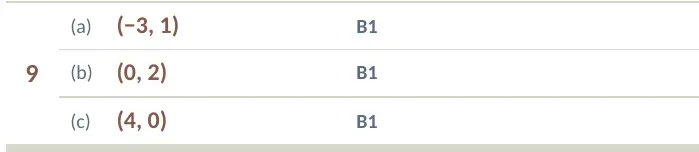
9 5 y 4 3 2 A −6 −5 −4 1 −3 −2 B −1 O −1 C 1 2 3 4 5 6 x −2 −3 −4 −5 Remember (x, y): go along first, then up. Midpoint: add the x values and halve, add the y values and halve. (a) Write down the coordinates of point A. (1) (b) On the grid, mark with a cross (×) the point D so that ABCD is a square. Label this point D. (1) (c) On the grid, mark with a cross (×) the point E so that C is the midpoin
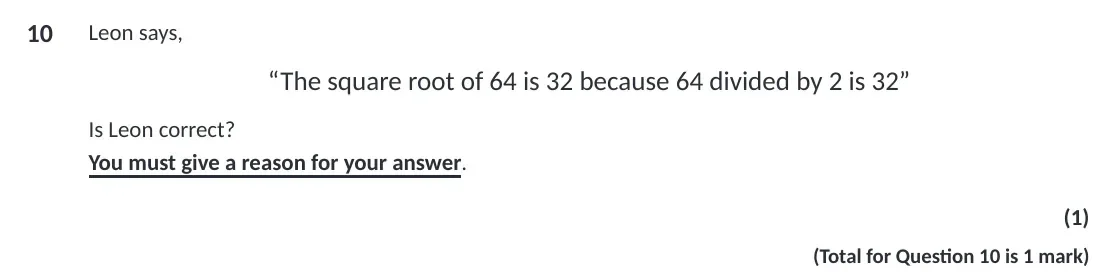
10 Leon says, “The square root of 64 is 32 because 64 divided by 2 is 32” Is Leon correct? You must give a reason for your answer. (1) 📄 sheet: Powers and roots (Total for Question 10 is 1 mark)
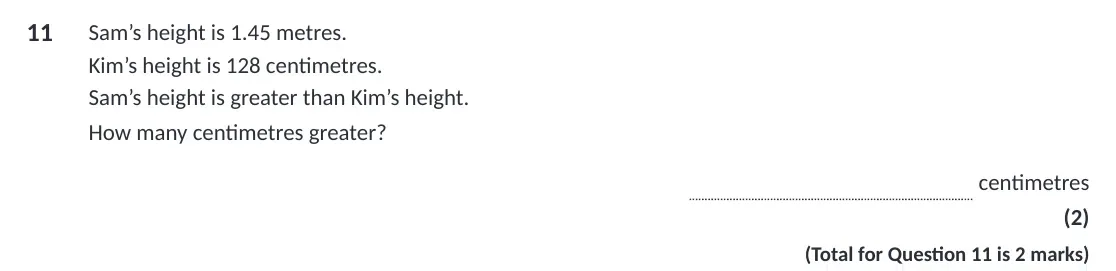
11 Sam’s height is 1.45 metres. Kim’s height is 128 centimetres. Sam’s height is greater than Kim’s height. How many centimetres greater? centimetres (2) 📄 sheet: Converting units (Total for Question 11 is 2 marks)
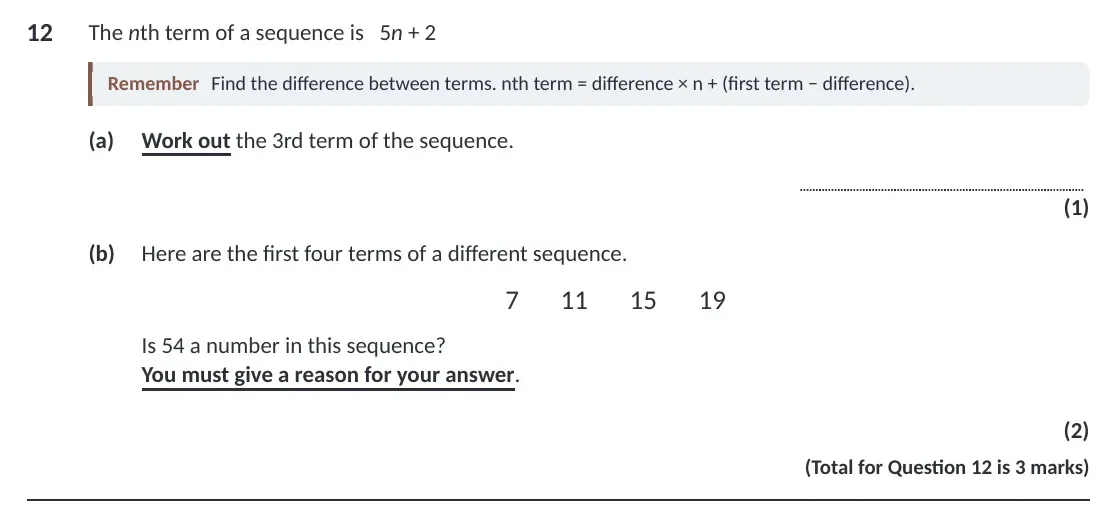
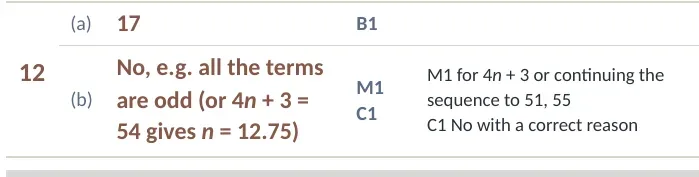
12 The nth term of a sequence is 5n + 2 Remember Find the difference between terms. nth term = difference × n + (first term − difference). (a) Work out the 3rd term of the sequence. (1) (b) Here are the first four terms of a different sequence. 7 11 15 19 Is 54 a number in this sequence? You must give a reason for your answer. 📄 sheet: The nth term, cards 2 and 3 (2) (Total for Question 12 is 3 ma
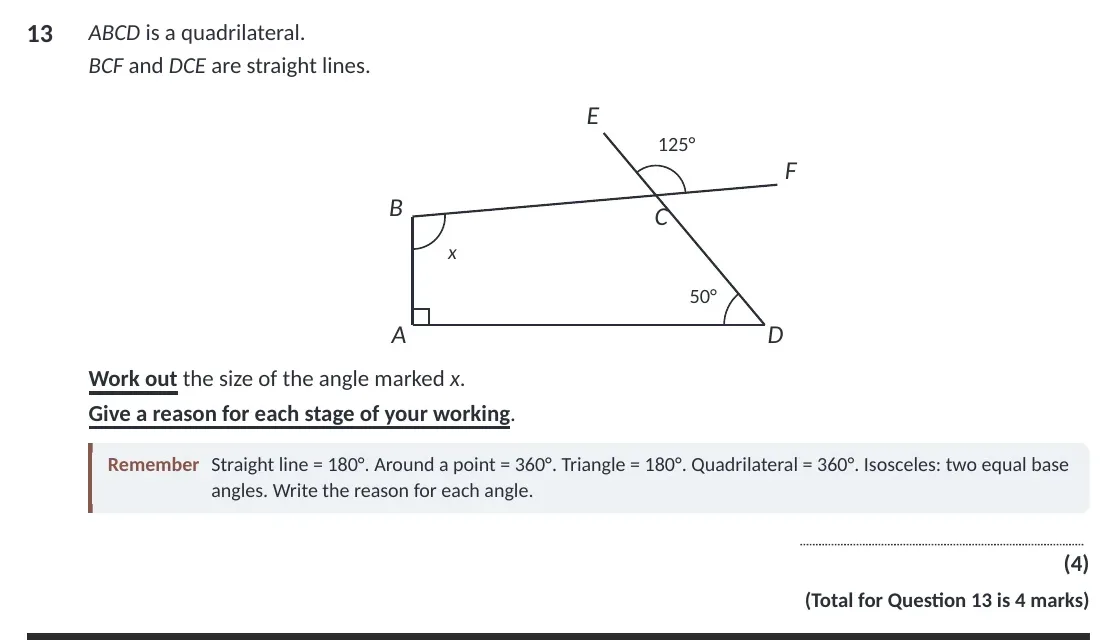
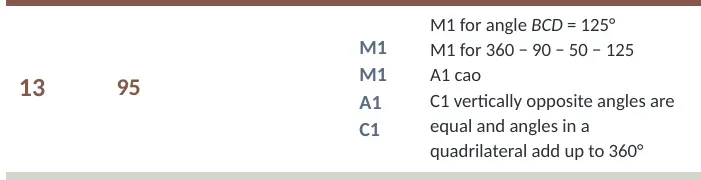
13 ABCD is a quadrilateral. BCF and DCE are straight lines. E 125° B F C x 50° A D Work out the size of the angle marked x. Give a reason for each stage of your working. Remember Straight line = 180°. Around a point = 360°. Triangle = 180°. Quadrilateral = 360°. Isosceles: two equal base angles. Write the reason for each angle. 📄 sheet: Angle facts (4) (Total for Question 13 is 4 marks)
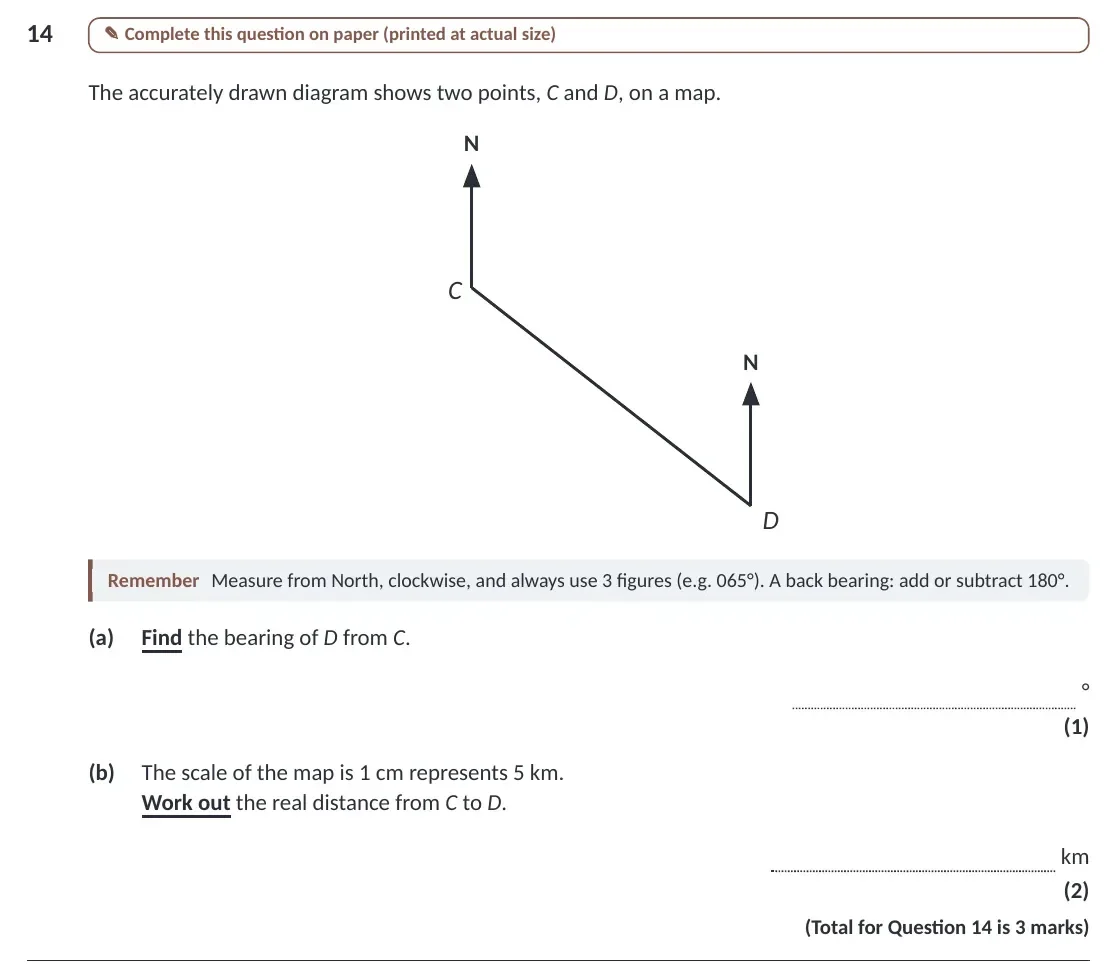
14 ✎ Complete this question on paper (printed at actual size) The accurately drawn diagram shows two points, C and D, on a map. N C N D Remember Measure from North, clockwise, and always use 3 figures (e.g. 065°). A back bearing: add or subtract 180°. (a) Find the bearing of D from C. ° (1) (b) The scale of the map is 1 cm represents 5 km. Work out the real distance from C to D. km 📄 sheet: Bearin

✎ You need a ruler, protractor or compasses for this one. Do it on paper, then mark it below.

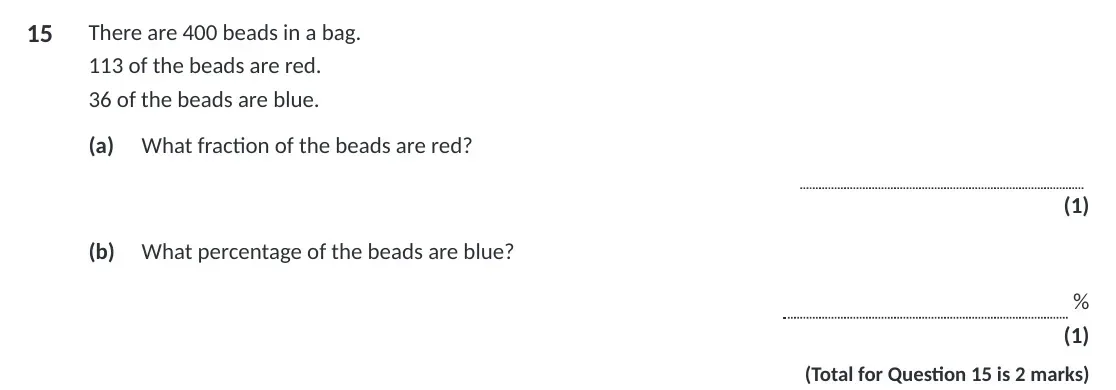
15 There are 400 beads in a bag. 113 of the beads are red. 36 of the beads are blue. (a) What fraction of the beads are red? (1) (b) What percentage of the beads are blue? % 📄 sheet: Converting fractions, decimals and percentages (1) (Total for Question 15 is 2 marks)
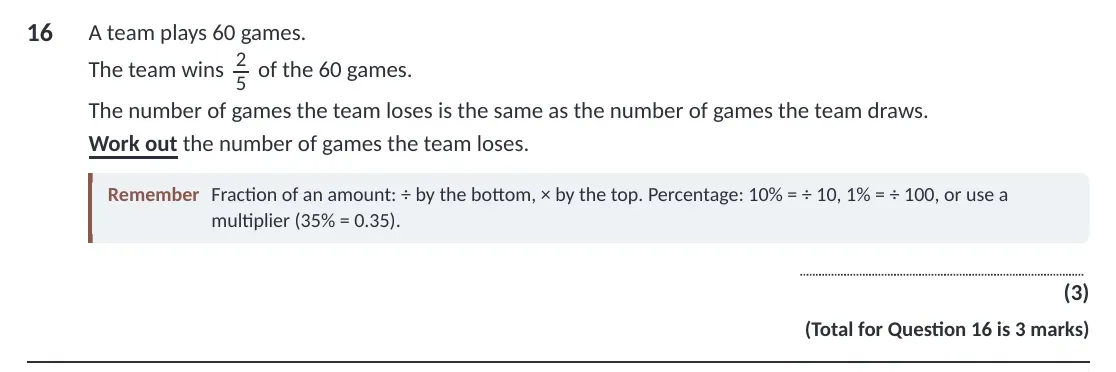
16 A team plays 60 games. The team wins 2 of the 60 games. 5 The number of games the team loses is the same as the number of games the team draws. Work out the number of games the team loses. Remember Fraction of an amount: ÷ by the bottom, × by the top. Percentage: 10% = ÷ 10, 1% = ÷ 100, or use a multiplier (35% = 0.35). 📄 sheet: Fractions of amounts and shapes, card 1 (3) (Total for Question 16
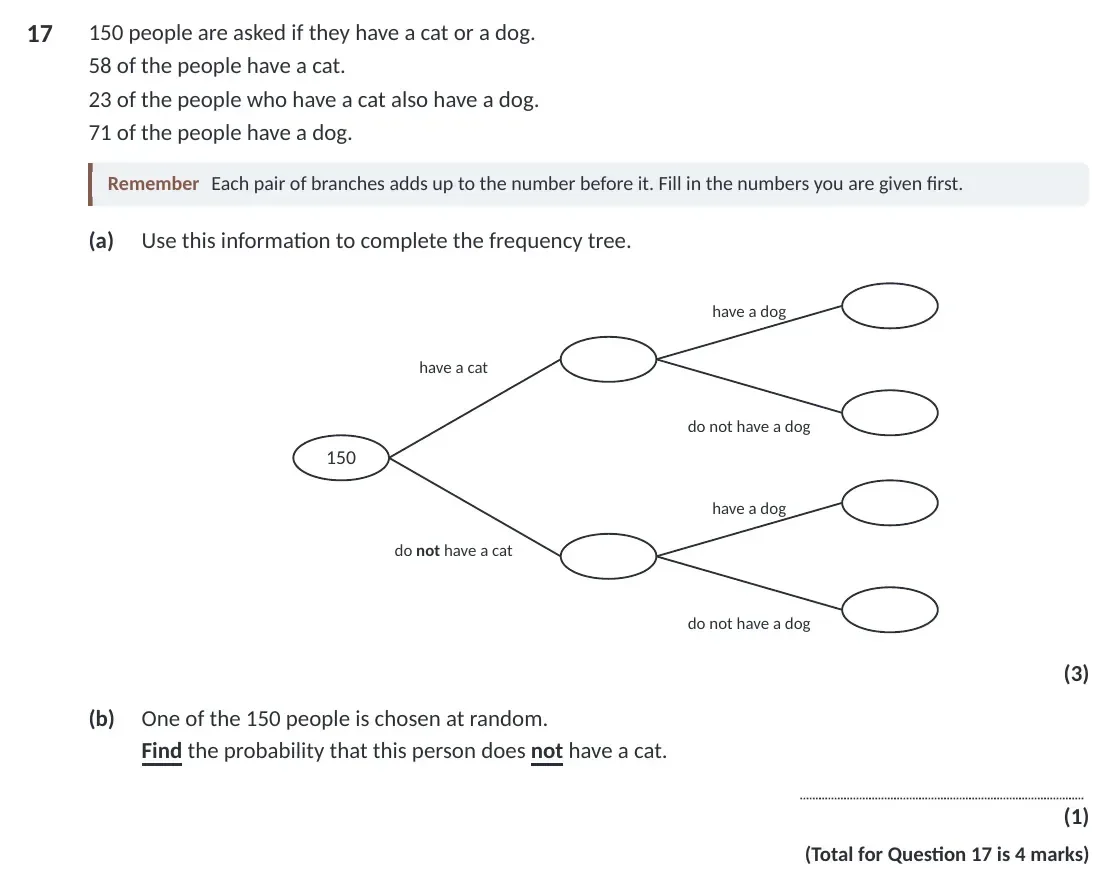
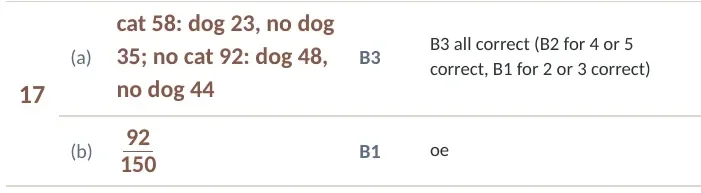
17 150 people are asked if they have a cat or a dog. 58 of the people have a cat. 23 of the people who have a cat also have a dog. 71 of the people have a dog. Remember Each pair of branches adds up to the number before it. Fill in the numbers you are given first. (a) Use this information to complete the frequency tree. have a dog have a cat do not have a dog 150 have a dog do not have a cat do no
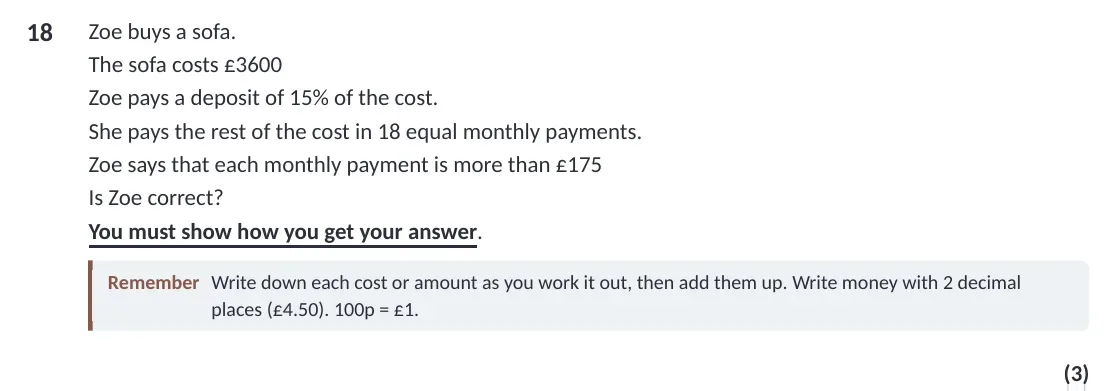
18 Zoe buys a sofa. The sofa costs £3600 Zoe pays a deposit of 15% of the cost. She pays the rest of the cost in 18 equal monthly payments. Zoe says that each monthly payment is more than £175 Is Zoe correct? You must show how you get your answer. Remember Write down each cost or amount as you work it out, then add them up. Write money with 2 decimal places (£4.50). 100p = £1. 📄 (3)
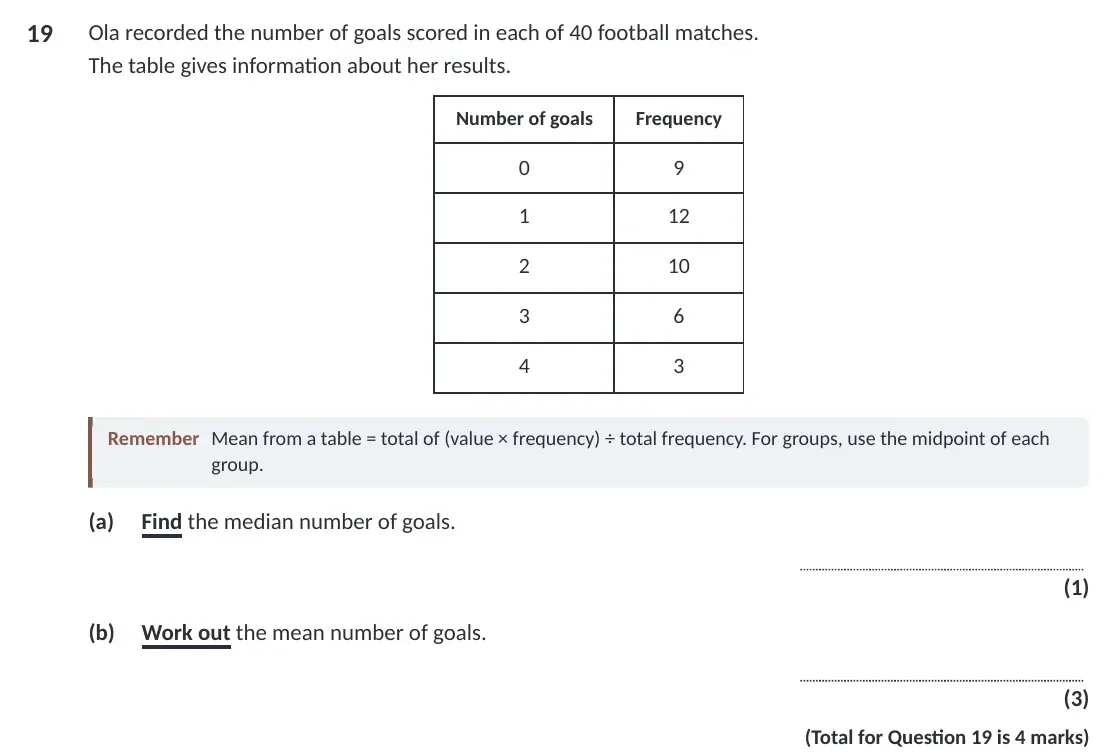
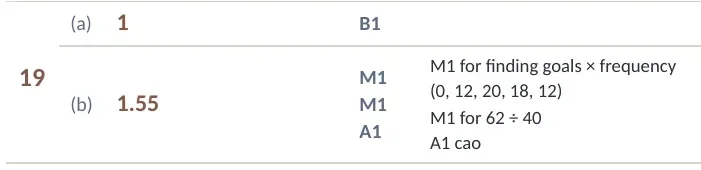
19 Ola recorded the number of goals scored in each of 40 football matches. The table gives information about her results. Number of goals Frequency 0 9 1 12 2 10 3 6 4 3 Remember Mean from a table = total of (value × frequency) ÷ total frequency. For groups, use the midpoint of each group. (a) Find the median number of goals. (1) (b) Work out the mean number of goals. (3) 📄 sheet: Averages from ta
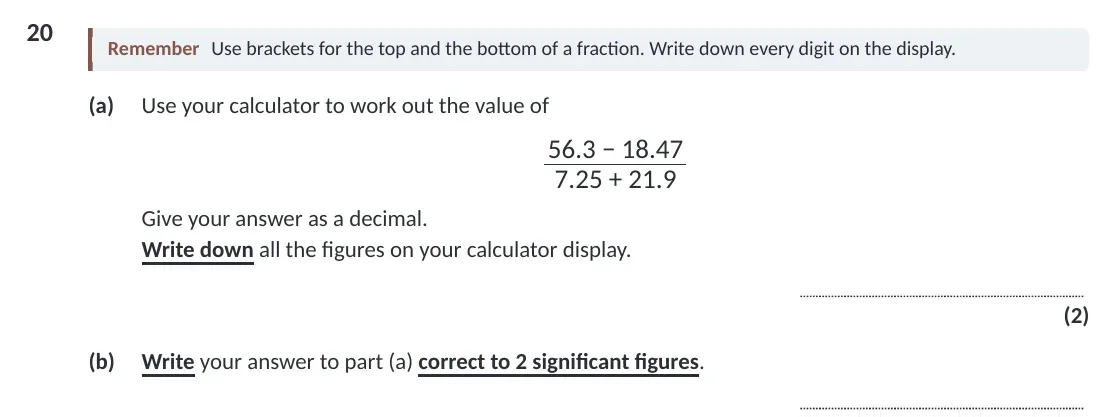
20 Remember Use brackets for the top and the bottom of a fraction. Write down every digit on the display. (a) Use your calculator to work out the value of 56.3 − 18.47 7.25 + 21.9 Give your answer as a decimal. Write down all the figures on your calculator display. (2) (b) Write your answer to part (a) correct to 2 significant figures. (1)
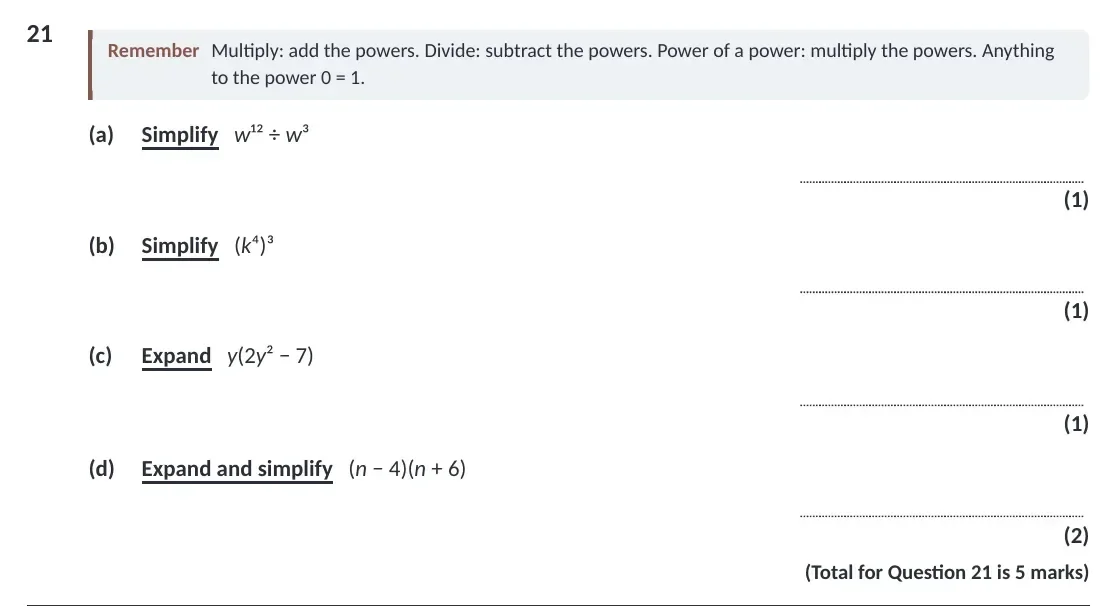
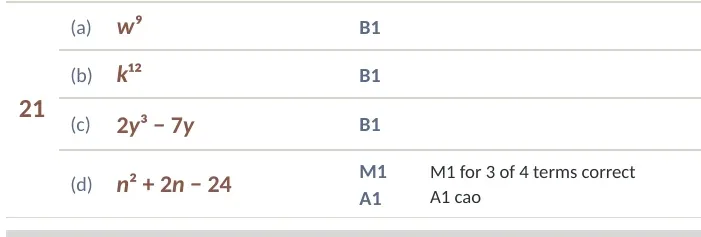
21 Remember Multiply: add the powers. Divide: subtract the powers. Power of a power: multiply the powers. Anything to the power 0 = 1. (a) Simplify w¹² ÷ w³ (1) (b) Simplify (k⁴)³ (1) (c) Expand y(2y² − 7) (1) (d) Expand and simplify (n − 4)(n + 6) 📄 sheet: 📄 sheet: Index laws (2) (Total for Question 21 is 5 marks)
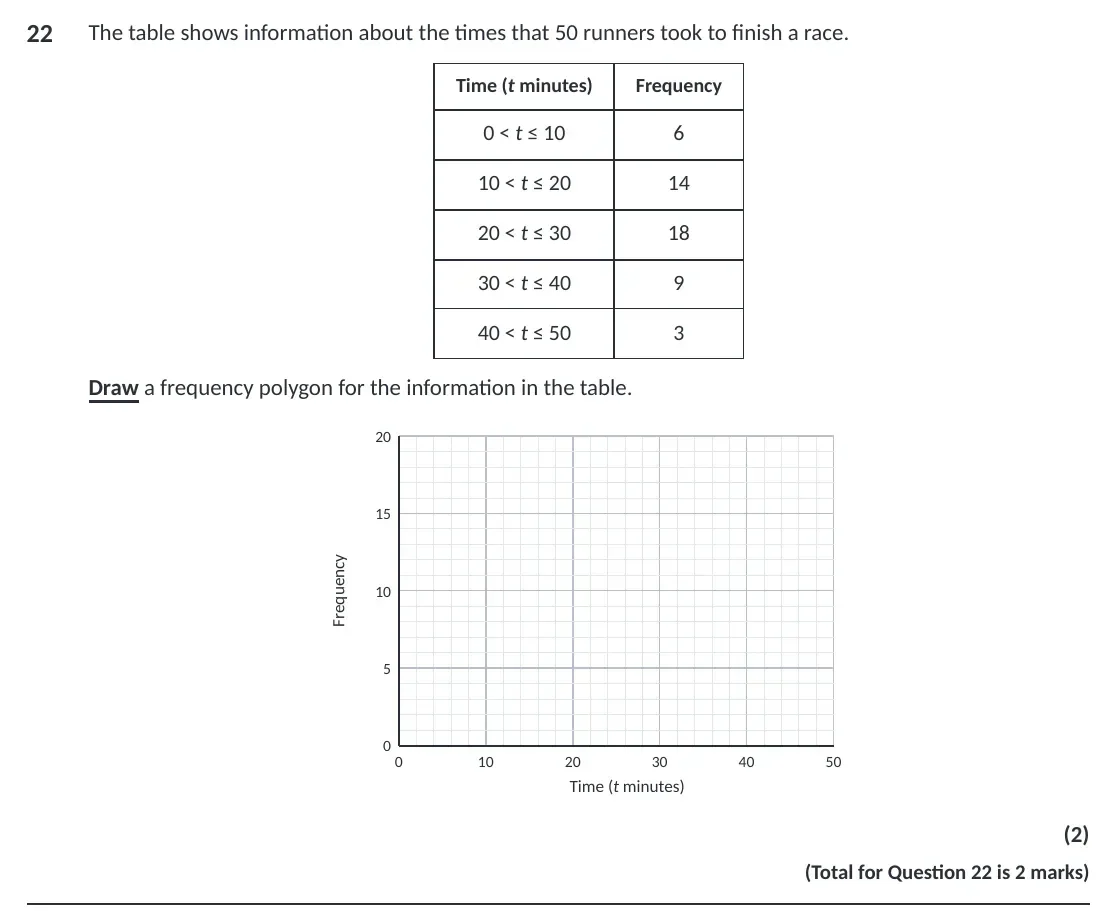
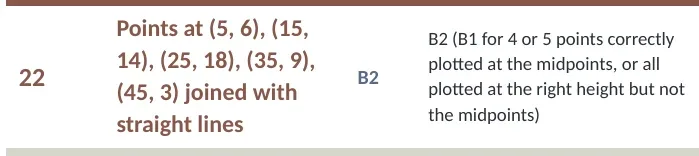
22 The table shows information about the times that 50 runners took to finish a race. Time (t minutes) Frequency 0 < t ≤ 10 6 10 < t ≤ 20 14 20 < t ≤ 30 18 30 < t ≤ 40 9 40 < t ≤ 50 3 Draw a frequency polygon for the information in the table. 20 Frequency 15 10 5 0 0 10 20 30 40 50 Time (t minutes) 📄 sheet: Bar charts and line graphs (2) (Total for Question 22 is 2 marks)
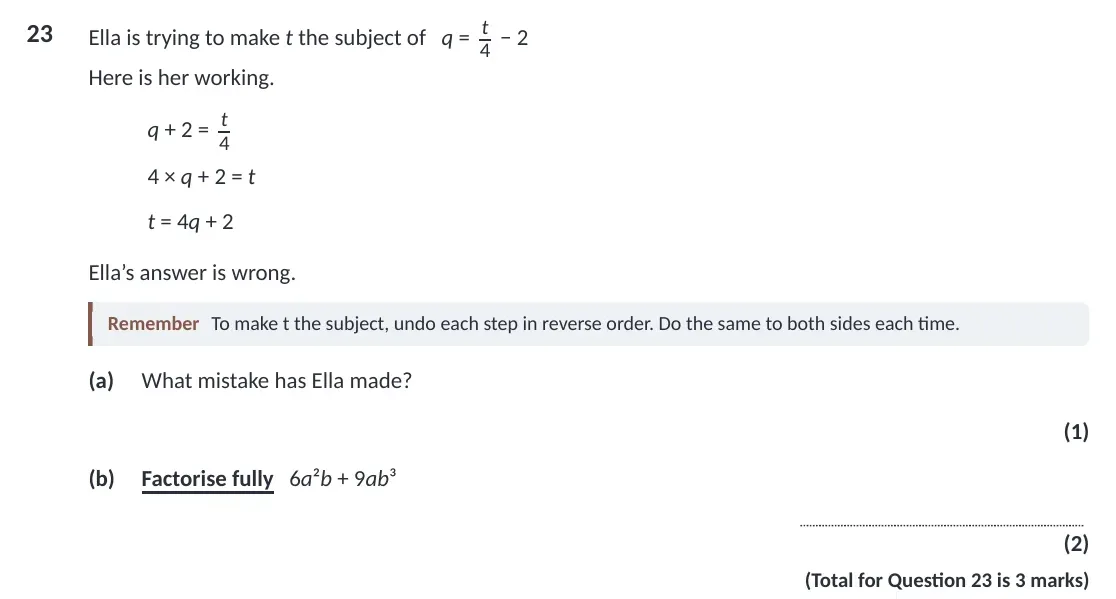
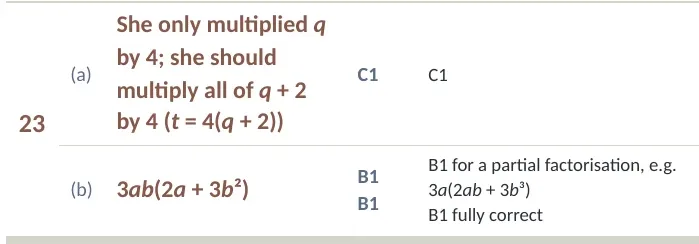
23 Ella is trying to make t the subject of q = t − 2 4 Here is her working. q + 2 = t 4 4 × q + 2 = t t = 4q + 2 Ella’s answer is wrong. Remember To make t the subject, undo each step in reverse order. Do the same to both sides each time. (a) What mistake has Ella made? (1) (b) fully 6a²b + 9ab³ 📄 sheet: Rearranging formulae 📄 sheet: card 2 (2) (Total for Question 23 is 3 marks)
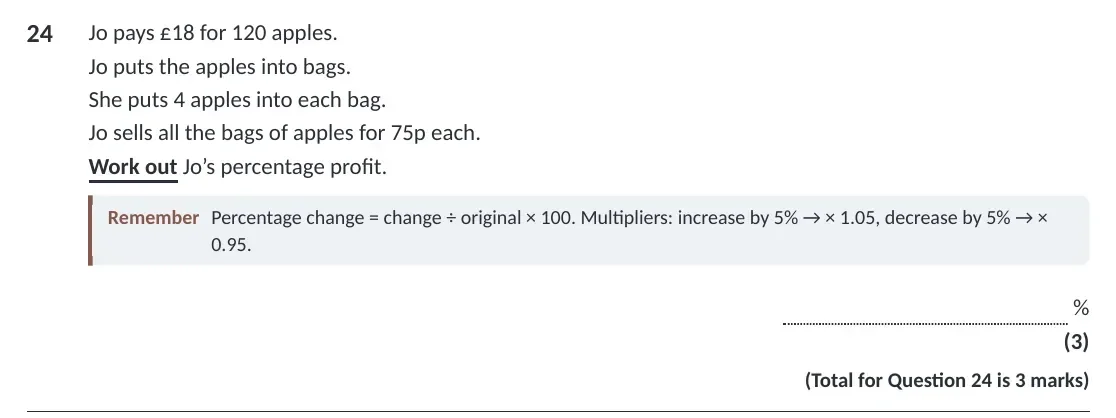
24 Jo pays £18 for 120 apples. Jo puts the apples into bags. She puts 4 apples into each bag. Jo sells all the bags of apples for 75p each. Work out Jo’s percentage profit. Remember Percentage change = change ÷ original × 100. Multipliers: increase by 5% → × 1.05, decrease by 5% → × 0.95. % 📄 sheet: Percentage change, profit and loss, card 2 (3) (Total for Question 24 is 3 marks)
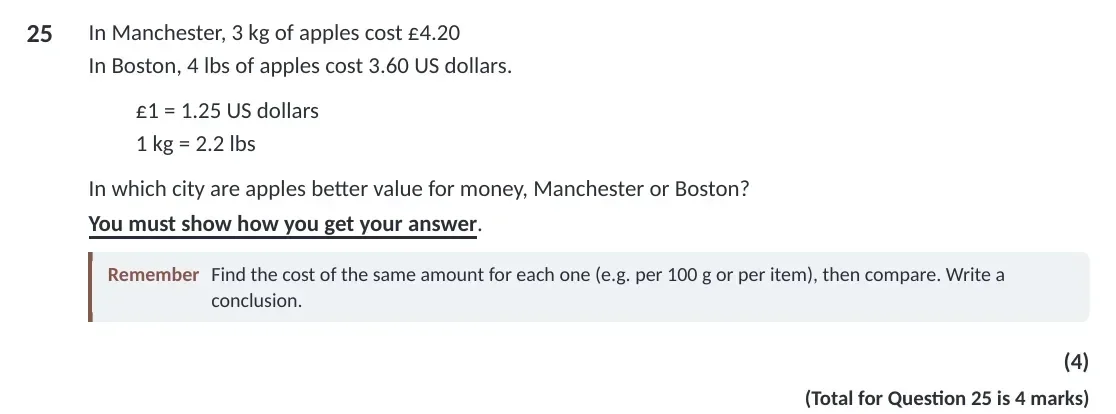
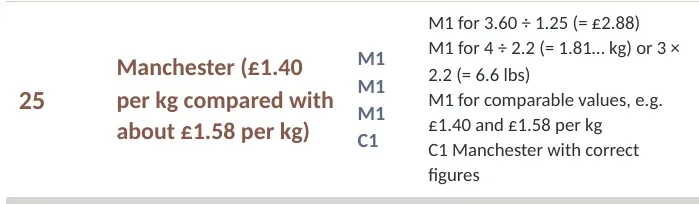
25 In Manchester, 3 kg of apples cost £4.20 In Boston, 4 lbs of apples cost 3.60 US dollars. £1 = 1.25 US dollars 1 kg = 2.2 lbs In which city are apples better value for money, Manchester or Boston? You must show how you get your answer. Remember Find the cost of the same amount for each one (e.g. per 100 g or per item), then compare. Write a conclusion. 📄 sheet: Best buys 📄 sheet: Exchange rates
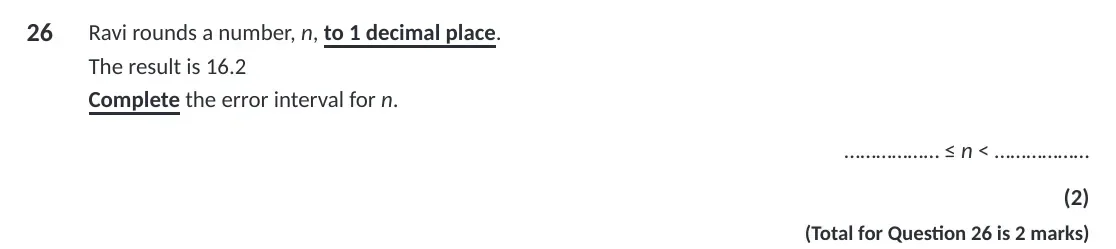
26 Ravi rounds a number, n, to 1 decimal place. The result is 16.2 Complete the error interval for n. ……………… ≤ n < ……………… 📄 sheet: Error intervals (2) (Total for Question 26 is 2 marks)
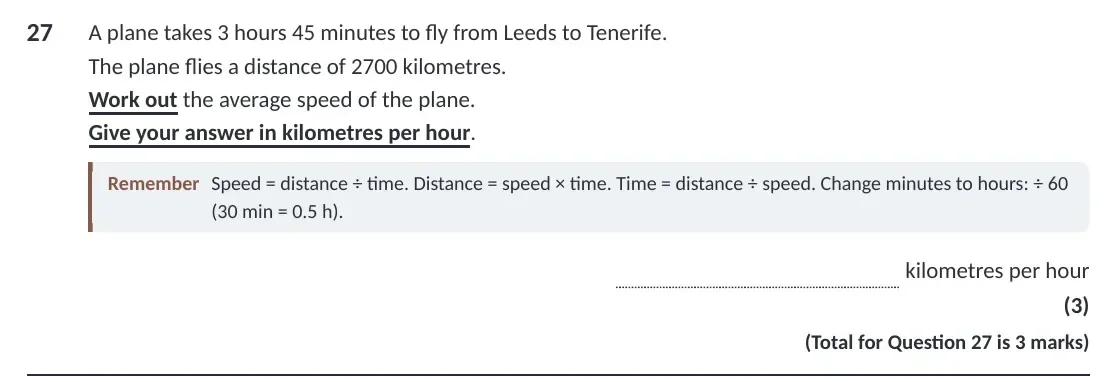
27 A plane takes 3 hours 45 minutes to fly from Leeds to Tenerife. The plane flies a distance of 2700 kilometres. Work out the average speed of the plane. Give your answer in kilometres per hour. Remember Speed = distance ÷ time. Distance = speed × time. Time = distance ÷ speed. Change minutes to hours: ÷ 60 (30 min = 0.5 h). kilometres per hour 📄 sheet: Speed, distance and time, card 1 (3) (Total
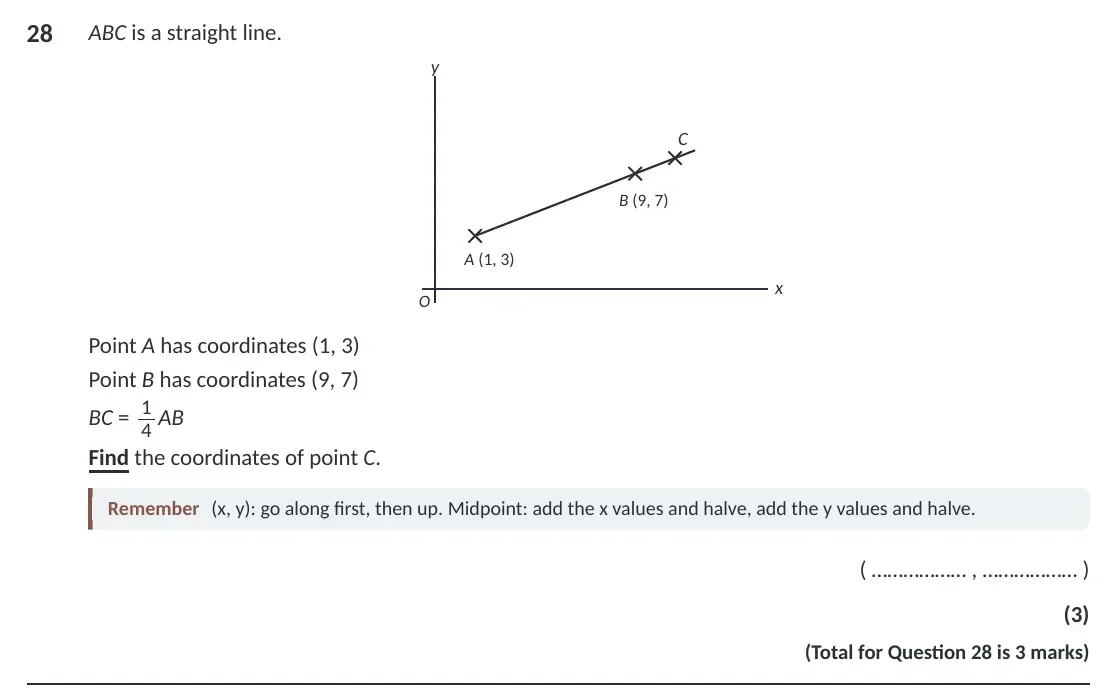
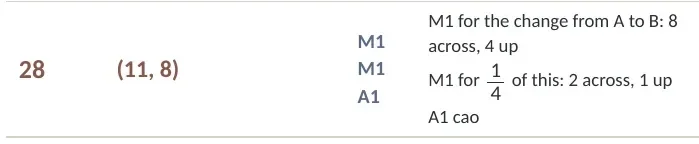
28 ABC is a straight line. y C B (9, 7) A (1, 3) O x Point A has coordinates (1, 3) Point B has coordinates (9, 7) BC = 1 AB 4 Find the coordinates of point C. Remember (x, y): go along first, then up. Midpoint: add the x values and halve, add the y values and halve. ( ……………… , ……………… ) 📄 sheet: Coordinates and midpoints (3) (Total for Question 28 is 3 marks)
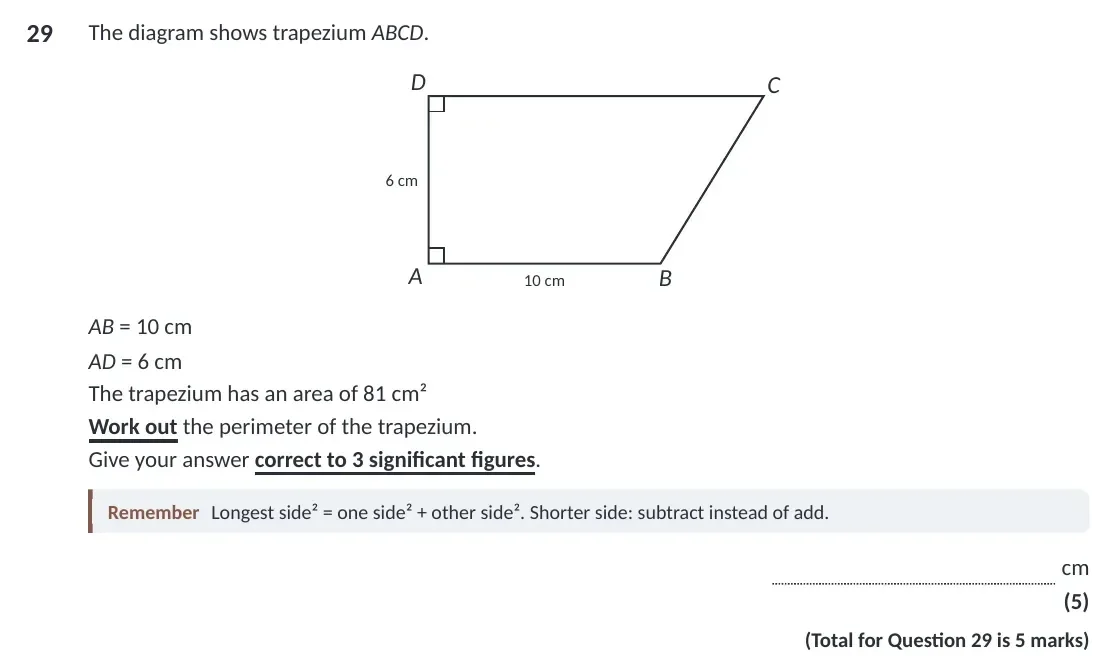
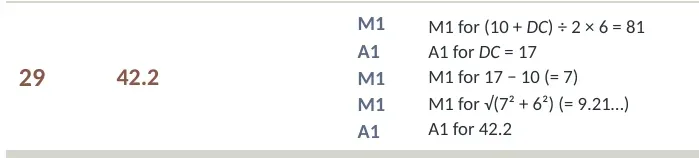
29 The diagram shows trapezium ABCD. D C 6 cm A 10 cm B AB = 10 cm AD = 6 cm The trapezium has an area of 81 cm² Work out the perimeter of the trapezium. Give your answer correct to 3 significant figures. Remember Longest side² = one side² + other side². Shorter side: subtract instead of add. cm 📄 sheet: Pythagoras 📄 sheet: Area and perimeter (5) (Total for Question 29 is 5 marks)
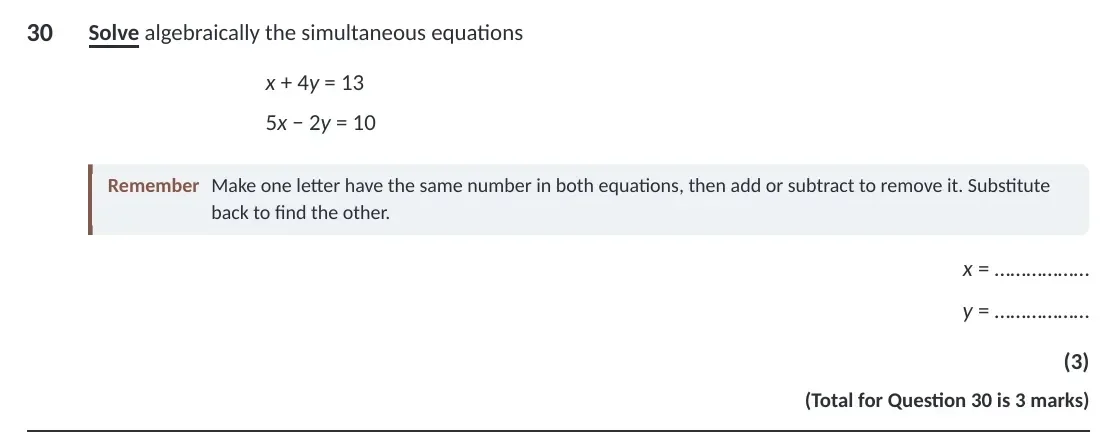
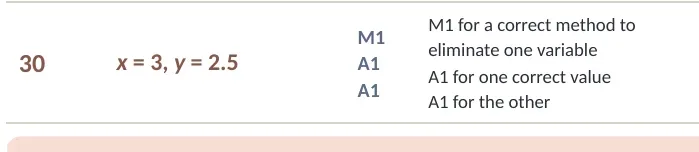
30 Solve algebraically the simultaneous equations x + 4y = 13 5x − 2y = 10 Remember Make one letter have the same number in both equations, then add or subtract to remove it. Substitute back to find the other. x = ……………… y = ……………… (3) 📄 sheet: Simultaneous equations (Total for Question 30 is 3 marks)
◀ A2All papersB1 ▶
Answer the questions, then mark your paper.