Miss North Maths
GCSE Foundation › Geometry and measures

Pythagoras

Covers using Pythagoras' theorem. On the Year 11 revision planner in week 3.

1. Watch

Miss North: Pythagoras. Pause the video when it says, and try the questions yourself.

2. Learn the facts

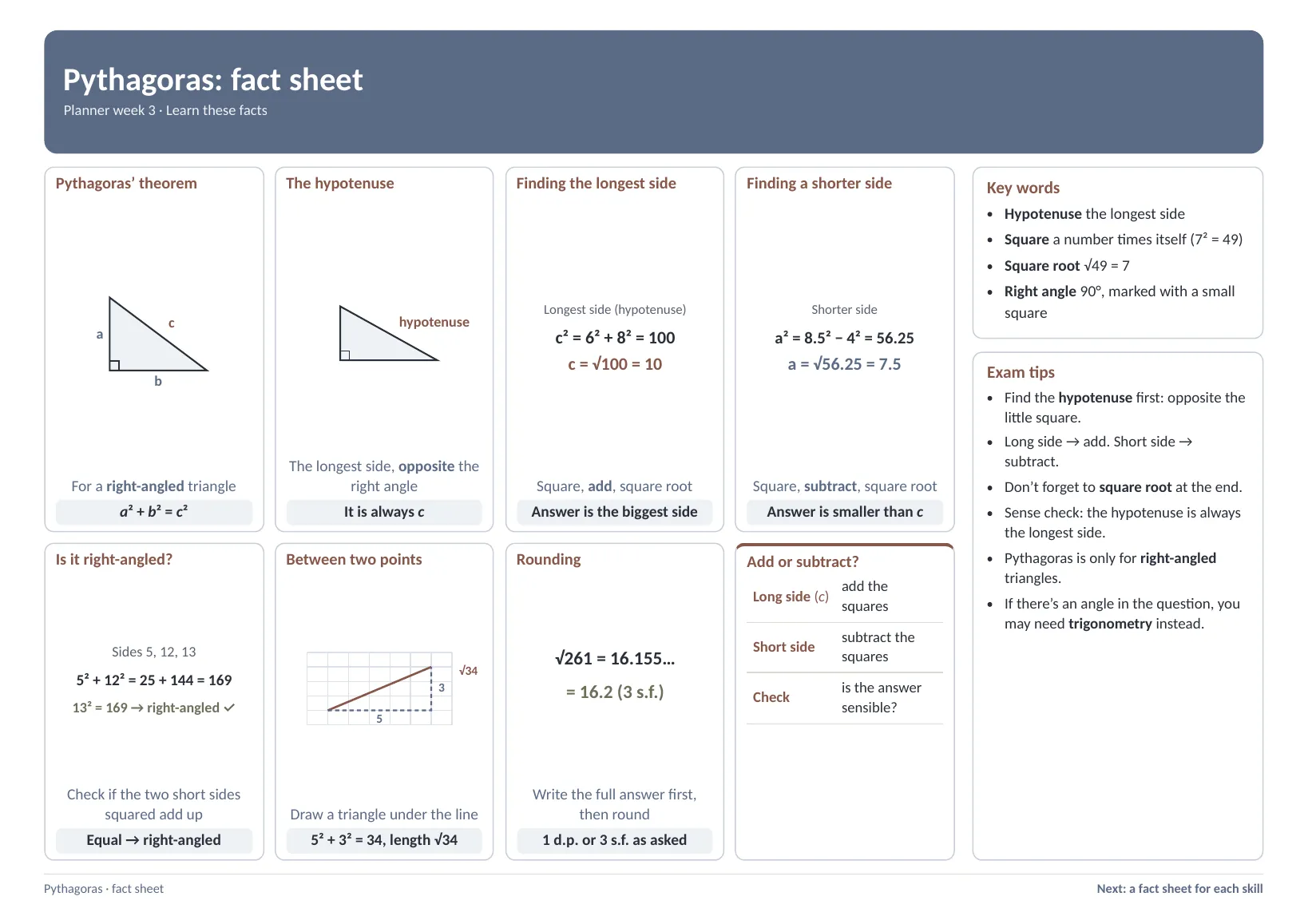
Pythagoras fact sheet: Overview
1 of 2 · OverviewTap the sheet to open it full size
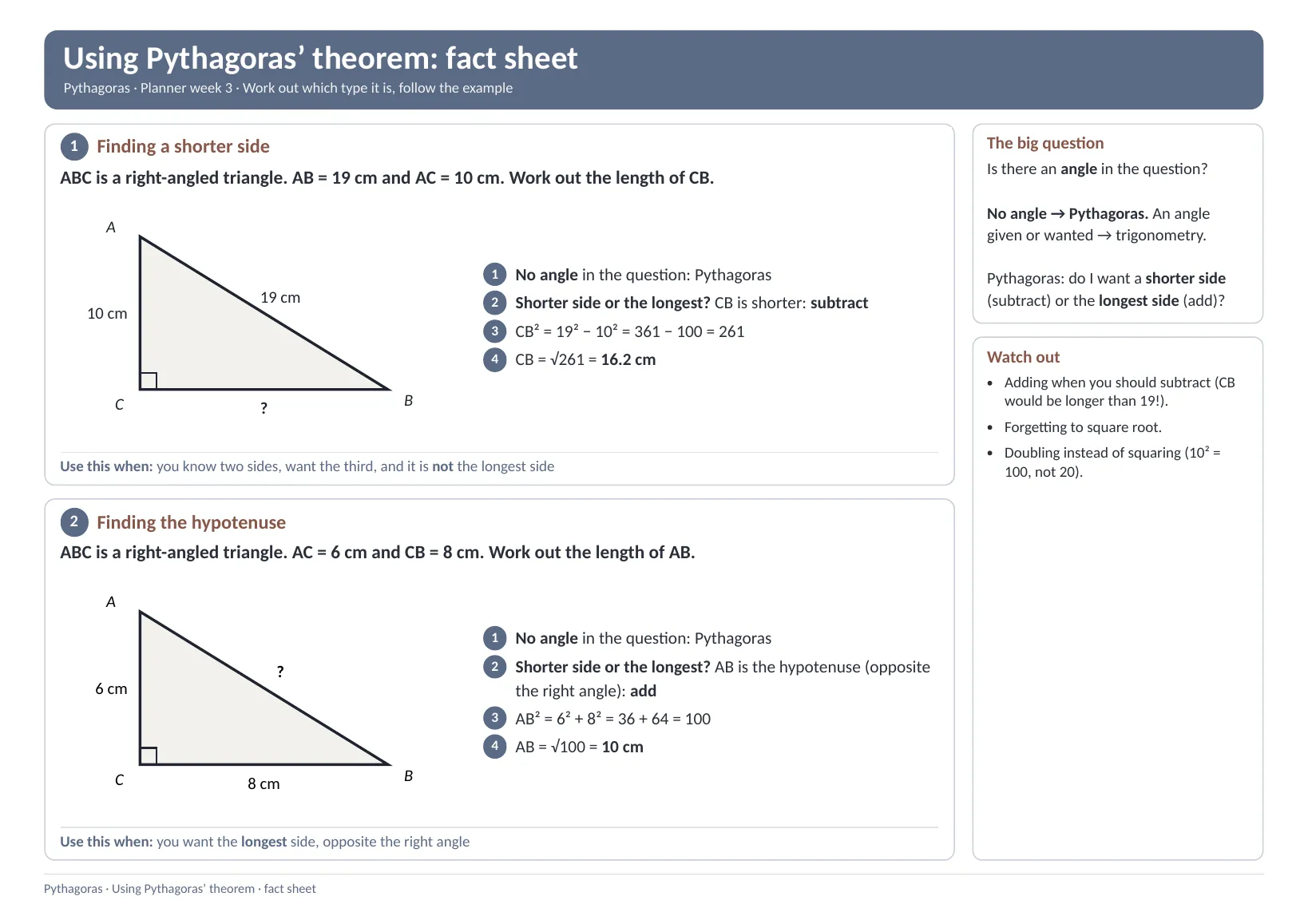
Pythagoras fact sheet: Using Pythagoras' theorem
2 of 2 · Using Pythagoras' theoremTap the sheet to open it full size

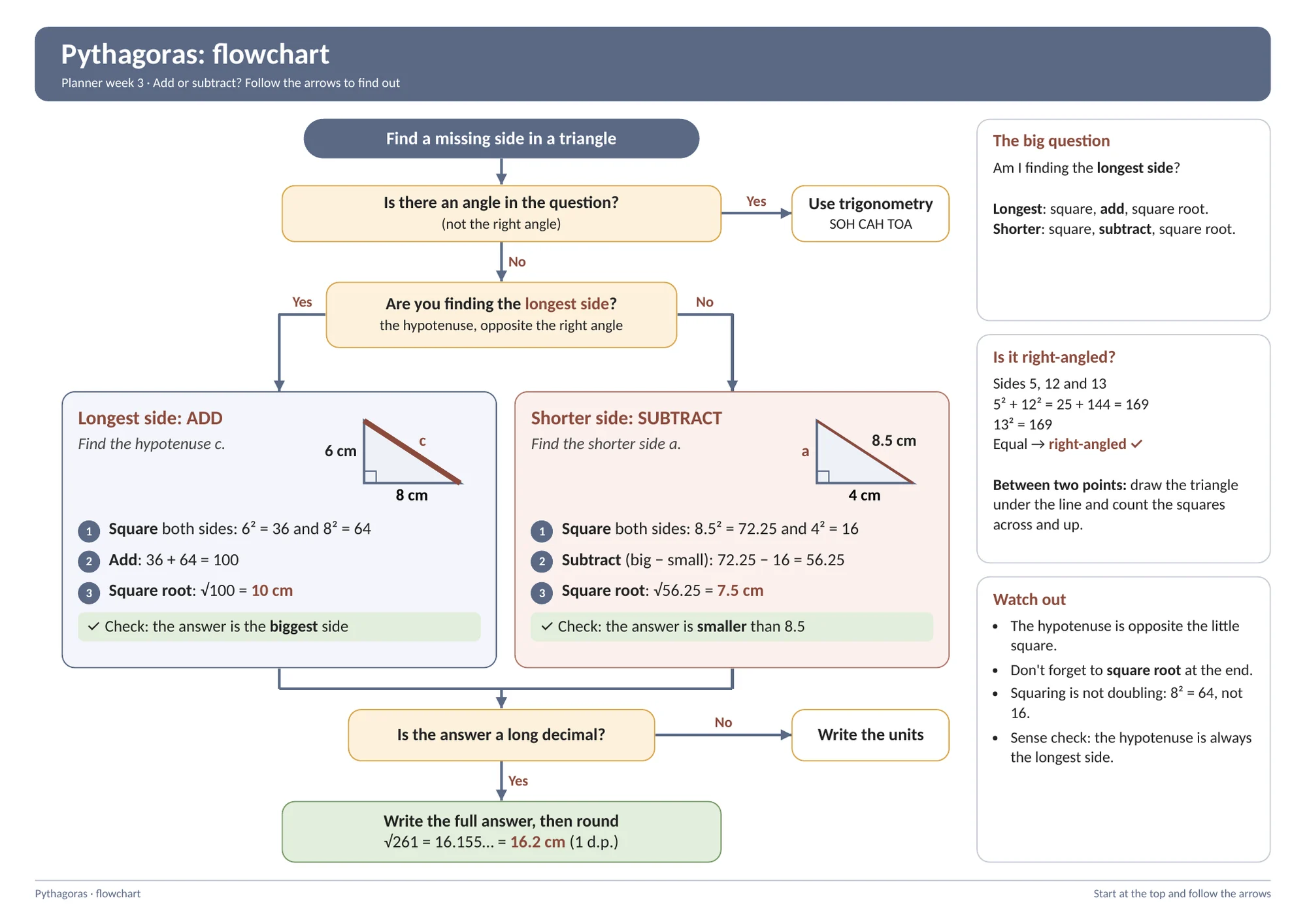
Which method? Follow the flowchart

Start at the top, answer each question and follow the arrows to the method you need. Tap it to open it full size.

Pythagoras flowchart: which method to use
Pythagoras flowchartPrint the flowchart (PDF)

3. Practice questions

Try each one on paper first, then check.

Your score: 0 / 17 marks
1
Grade 3Calculator3 marks

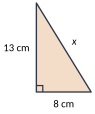
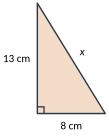
The diagram shows a right-angled triangle.Diagram for this question, with the measurements and labels from the questionWork out the length x. Give your answer correct to 1 decimal place. (3)
Show the answer
15.3 cm
M1 8² + 13² (= 233); M1 √233; A1 15.3 (accept 15.25 to 15.35)
Watch out: Adding the sides (8 + 13 = 21) or not square rooting (233). Square, add, then square root.
2
Grade 3Calculator3 marks

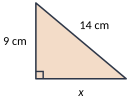
The diagram shows a right-angled triangle.Diagram for this question, with the measurements and labels from the questionWork out the length x. Give your answer correct to 1 decimal place. (3)
Show the answer
10.7 cm
M1 14² − 9² (= 115); M1 √115; A1 10.7
Watch out: Adding the squares: √(196 + 81) = 16.6 is longer than the longest side. For a shorter side, subtract.
3
Grade 4Non-calculator4 marks

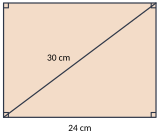
The diagram shows a rectangle and one of its diagonals.Diagram for this question, with the measurements and labels from the questionWork out the perimeter of the rectangle. (4)
Show the answer
84 cm
M1 30² − 24² (= 324); A1 width 18 cm; M1 24 + 18 + 24 + 18; A1 84 cm
Watch out: Adding the diagonal into the perimeter (24 + 30 + ...). The diagonal is inside the shape: find the width first.
4
Grade 4Non-calculator4 marks

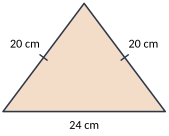
The diagram shows an isosceles triangle.Diagram for this question, with the measurements and labels from the questionWork out the area of the triangle. (4)

Show the answer
192 cm²
M1 half the base = 12; M1 height² = 20² − 12²; A1 height 16 cm; A1 192 cm²
Watch out: Using 20 cm as the height: ½ × 24 × 20 = 240. The sloping side is not the height: find it with Pythagoras.
5
Grade 4Calculator3 marks

The diagram shows a right-angled triangle.Diagram for this question, with the measurements and labels from the questionWork out the length x. Give your answer correct to 1 decimal place. (3)

Show the answer
15.3 cm
M1 8² + 13² (= 233); M1 √233; A1 15.3
Watch out: Forgetting the square root (233), or taking away (169 − 64): x is the longest side, so ADD the squares.
Be the examinerMark 3 made-up answers with the real mark scheme, and see how method marks work.

4. Quiz yourself

The Blooket for this topic is coming soon.

5. Print it

The whole pythagoras fact sheet as a PDF, 2 pages, ready to print or keep on your phone.

Download the fact sheet (PDF)